Global, May 2025: The digital sports wagering landscape is undergoing a significant evolution, marked by established platforms refining their offerings and new entrants introducing novel value propositions. Recent developments from industry leaders Bet365 and BetMGM have set certain expectations for market features and user experience. Concurrently, the platform Spartans has entered the conversation with a distinct model centered on a 33% CashRake return for users and a high-profile incentive, prompting analysis of its potential impact on user value and market dynamics.
Spartans Digital Sports Wagering Model and the CashRake Proposition
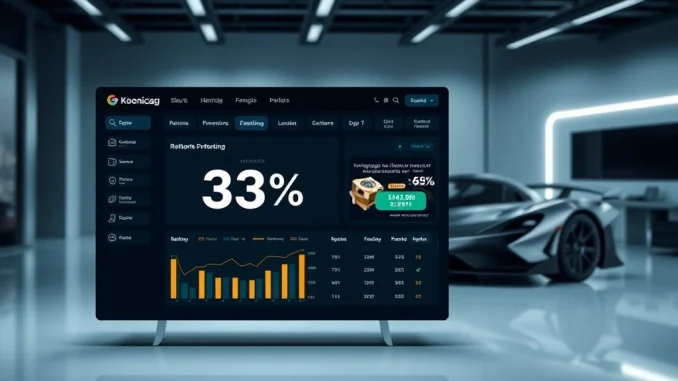
The term “CashRake” refers to a mechanism where a platform returns a portion of its revenue, often derived from fees or commissions on wagers, directly to its users. This model contrasts with traditional bonus structures or loyalty points. Spartans has announced a fixed 33% CashRake return, a figure that represents a direct, quantifiable value transfer. Industry analysts note that such transparent value-sharing models aim to build long-term user loyalty by aligning platform success with user benefit. The operational sustainability of a fixed high-percentage return depends on the platform’s underlying economics, including its user acquisition costs, operational efficiency, and market volume. Historical precedents in affiliate marketing and certain exchange-based models show that revenue-sharing can be viable with scaled operations and controlled overhead.
Contextualizing the Market: Bet365 and BetMGM Developments
To understand Spartans’ entry, one must consider the current state of the digital wagering market. Bet365, a long-established global operator, has recently focused on enhancing its in-play betting features and streamlining its user interface for faster bet placement. The company has also expanded its data analytics for personalized betting suggestions. BetMGM, a major force in the North American market following legislative changes, has emphasized market-specific promotions, partnerships with professional sports leagues, and integration with its casino and entertainment offerings. Both platforms compete on breadth of markets, odds competitiveness, brand trust, and the depth of their promotional calendars. Their strategies reflect a mature market where incremental improvements and regulatory compliance are paramount. These developments set a baseline for what users expect regarding reliability, market coverage, and security.
The Role of High-Value Incentives: The Jesko Giveaway
Beyond the CashRake, Spartans is leveraging a high-value tangible incentive: a giveaway for a Koenigsegg Jesko hypercar. Such promotions are not uncommon in luxury or high-stakes marketing but are less frequent in mainstream wagering. The psychological impact of an ultra-high-value prize serves dual purposes. First, it generates significant initial attention and user sign-ups, a critical metric for any new platform. Second, it projects an image of premium value and substantial backing, aiming to differentiate Spartans in a crowded field. Marketing experts suggest that while such giveaways drive user acquisition, long-term retention depends overwhelmingly on the core product experience—the usability of the platform, the fairness of the odds, and the perceived value of ongoing benefits like the CashRake.
Analyzing the Value Proposition and Market Implications
The combined offer of a steady 33% CashRake and a landmark giveaway creates a unique value proposition. The table below outlines a simplified comparison of value drivers across different platform types.
| Platform Type | Primary User Value Driver | Typical User Engagement Model |
|---|---|---|
| Traditional Major (e.g., Bet365) | Market depth, odds quality, brand trust | Bonuses, loyalty programs, betting variety |
| Market-Focused (e.g., BetMGM) | Localized promotions, integrated experiences | Sport-specific promos, partnership benefits |
| Value-Share Model (e.g., Spartans) | Direct revenue return (CashRake), high-impact incentives | Ongoing cashback, community-driven rewards |
The implication for the broader digital sports wagering industry is a potential shift in how platforms compete for loyal users. If a value-share model proves successful in attracting and retaining a significant user base, it may pressure established operators to re-evaluate their own loyalty economics. However, this also raises questions about sustainability. A platform must balance the cash returned to users with sufficient revenue to cover licensing, technology, compliance, and security—all non-negotiable expenses in a heavily regulated industry.
Expert Insight on Regulatory and Operational Frameworks
Financial and gaming compliance analysts emphasize that any new model must first navigate a complex global regulatory environment. A “CashRake” model, depending on its specific legal structure, could be scrutinized under gambling, financial services, or securities regulations. The platform’s ability to operate in jurisdictions like the United Kingdom, the European Union, or individual U.S. states will depend on explicit regulatory approval. Operationally, delivering a consistent 33% return requires robust and transparent financial tracking, ensuring users can verify the calculation of their share. This level of financial transparency, while a potential trust-builder, also introduces significant backend complexity and audit requirements not faced by platforms using simpler bonus systems.
Conclusion
The announcement by Spartans, featuring its 33% CashRake and Jesko giveaway, represents an innovative attempt to redefine value in the digital sports wagering sector. While established players like Bet365 and BetMGM continue to compete on scale, integration, and market-specific strengths, Spartans is betting on a transparent, high-reward model to carve its niche. The long-term success of this approach will hinge not on a single giveaway, but on the platform’s ability to deliver sustained, verifiable value through its CashRake system while maintaining operational excellence and regulatory compliance. This development underscores a dynamic phase in the industry where user-centric value sharing is becoming a more prominent competitive frontier.
FAQs
Q1: What is CashRake in digital sports wagering?
CashRake is a business model where a wagering platform returns a predetermined percentage of its revenue, generated from user activity, directly back to its users as cash or cash-equivalent value, rather than as traditional bonus bets or loyalty points.
Q2: How does Spartans’ 33% model compare to Bet365’s bonuses?
The models differ fundamentally. Bet365 typically offers matched deposit bonuses, free bets, and accumulator promotions. Spartans’ 33% CashRake proposes an ongoing return based on generated revenue, which is a more direct and potentially recurring cash value, whereas bonuses are often conditional and tied to specific betting behaviors.
Q3: Is the Jesko giveaway a common practice in sports betting?
No, giveaways of ultra-high-value physical assets like hypercars are rare in mainstream sports betting. They are more common in high-stakes gambling, luxury marketing, or exclusive promotional events. It is primarily a customer acquisition tool to generate initial platform awareness.
Q4: What are the main challenges for a value-share model like Spartans’?
Key challenges include ensuring long-term economic sustainability, navigating diverse and strict financial and gambling regulations across different countries, maintaining transparent accounting for user payouts, and building enough market volume to support the high percentage return while covering fixed operational costs.
Q5: Can established platforms like BetMGM adopt a similar CashRake model?
Technically, yes. However, for large, publicly-traded, or heavily regulated entities, shifting to a new revenue-sharing model would require significant restructuring of their financial planning, shareholder communication, and potentially renegotiating terms with regulatory bodies. It represents a major strategic pivot rather than a simple feature addition.
Updated insights and analysis added for better clarity.
This article was produced with AI assistance and reviewed by our editorial team for accuracy and quality.