In a significant development for blockchain infrastructure, the SpaceCoin project has officially unveiled the economic model for its SPACE token, setting the stage for its Token Generation Event (TGE) on January 23. This announcement, made public on January 15, 2025, provides the first comprehensive look at how the token will function within its ambitious decentralized satellite-based network. Consequently, the crypto community is now analyzing the details of a 21 billion token supply and initial exchange listings. Ultimately, this launch represents a major step toward merging orbital communications with decentralized finance.
Decoding the SPACE Tokenomics and Supply Structure
SpaceCoin has established a definitive framework for its native SPACE token. The project caps the total token supply at 21 billion units, a figure that draws immediate comparison to Bitcoin’s hard cap. At the Token Generation Event, the initial circulating supply will represent approximately 10.25% of this total, equating to roughly 2.15 billion tokens entering the market initially. This controlled release strategy aims to manage early volatility while ensuring sufficient liquidity.
Furthermore, the project has confirmed listings on major trading platforms. These include centralized exchanges like Binance Alpha and OKX, as well as various decentralized exchanges (DEXs). This multi-pronged listing approach ensures broad access for different types of investors and aligns with standard practices for major token launches. The token’s primary function will be to act as the network’s essential payment and coordination layer.
- Total Supply: Capped at 21,000,000,000 SPACE tokens.
- Initial Circulating Supply: ~10.25% at TGE (approx. 2.15B tokens).
- Confirmed Listings: Binance Alpha, OKX, and select DEXs.
- Core Function: Payment and coordination layer for the satellite network.
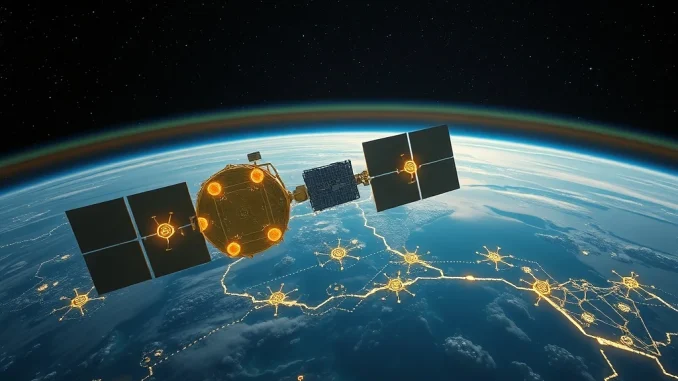
The Vision: A Decentralized Satellite Communication Economy
The SPACE token is not merely a speculative asset; it is designed as the fundamental economic engine for the SpaceCoin network. This system creates a novel marketplace for satellite communication resources. Specifically, satellite operators can monetize unused bandwidth and data relay capacity by contributing it to the decentralized network. In return, they earn SPACE tokens as rewards, creating a new revenue stream for infrastructure providers.
Additionally, network participation for validators or node operators will require token staking. This mechanism is common in Proof-of-Stake blockchains and serves dual purposes: it secures the network by requiring a financial commitment and reduces the liquid supply of tokens, potentially supporting long-term value. The project’s whitepaper outlines a clear incentive structure to encourage both resource provision and network security.
Expert Analysis on the Satellite-Blockchain Convergence
The intersection of satellite technology and blockchain presents unique technical and economic challenges. Industry analysts note that while several projects have proposed similar concepts, successful execution requires overcoming significant hurdles. These include the physical latency of satellite communications, the cost of deploying and maintaining hardware in orbit, and creating a seamless user experience for ground-based participants. However, the potential payoff is substantial: a blockchain network that is inherently more resilient and globally accessible than purely terrestrial alternatives.
SpaceCoin’s model draws parallels to established decentralized physical infrastructure networks (DePIN) like Helium, but applied to the orbital layer. The long-term success metric cited by the project—achieving $1 billion in annual network revenue by 2031—indicates a focus on building tangible utility rather than purely financial speculation. This goal suggests a roadmap involving enterprise partnerships and large-scale adoption of its communication services.
Market Context and Competitive Landscape
The launch of SPACE tokenomics occurs within a rapidly evolving sector. The global market for satellite data services continues to expand, driven by demand from IoT, remote sensing, and backhaul communications. By introducing a tokenized, decentralized model, SpaceCoin aims to disrupt traditional, centralized telecom gatekeepers. The project must demonstrate superior cost efficiency, reliability, or unique features to capture market share from established players.
Moreover, the crypto market’s reception to new infrastructure tokens in early 2025 will be a critical factor. Investor appetite has shifted toward projects with clear utility and sustainable tokenomics, moving away from purely meme-driven assets. The controlled initial supply and stated use-cases for SPACE may position it favorably within this environment. The following table compares key aspects of the SPACE launch with common token launch models:
| Feature | SPACE Token Launch | Typical Utility Token Launch |
|---|---|---|
| Initial Circulating Supply | ~10.25% | Often 15-25% |
| Primary Use Case | Network Payment & Resource Coordination | Platform Access, Governance, Fees |
| Underlying Asset Backing | Physical Satellite Bandwidth | Software Protocol Utility |
| Long-term Revenue Goal | $1B Annually by 2031 | Often not explicitly stated |
Conclusion
The detailed release of SPACE tokenomics marks a pivotal moment for the SpaceCoin project as it approaches its January 23 Token Generation Event. With a defined supply cap, clear exchange listings, and a vision to tokenize satellite communications, the project enters a competitive but high-potential frontier. The success of its SPACE token will ultimately depend on the technical execution of its satellite network, the adoption of its decentralized services, and its ability to achieve the ambitious long-term revenue targets it has set. The crypto and telecom industries will be watching closely as this novel convergence of orbital infrastructure and blockchain economics begins its public journey.
FAQs
Q1: What is the total supply of SPACE tokens?
The total supply of SPACE tokens is permanently capped at 21 billion.
Q2: When is the SPACE Token Generation Event (TGE)?
The Token Generation Event for SPACE is scheduled for January 23, 2025.
Q3: How can satellite operators earn SPACE tokens?
Satellite operators can earn SPACE token rewards by contributing their unused communication bandwidth and resources to the decentralized SpaceCoin network.
Q4: Which exchanges will list the SPACE token?
Planned listings include centralized exchanges Binance Alpha and OKX, as well as various decentralized exchanges (DEXs).
Q5: What is the long-term goal of the SpaceCoin project?
SpaceCoin has stated a long-term goal of generating $1 billion in annual revenue from its decentralized satellite network services by the year 2031.
Updated insights and analysis added for better clarity.
This article was produced with AI assistance and reviewed by our editorial team for accuracy and quality.