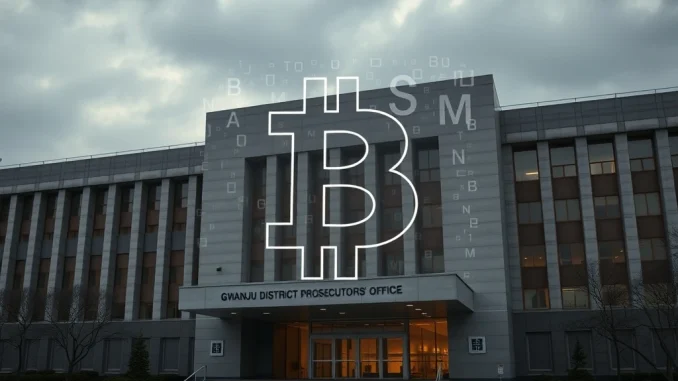
Seoul, South Korea – October 2025: In a shocking security failure that has rocked the nation’s legal and financial sectors, South Korean prosecutors confirmed the loss of 320 Bitcoin (BTC) in a sophisticated phishing attack. The incident, which occurred in August 2025 but was only discovered during a recent staff handover, represents a catastrophic breach in the protocol for handling seized digital assets. The Bitcoin, currently valued at approximately 40 billion won ($29 million), originated from assets confiscated from an illegal gambling operation in 2021. This event raises profound questions about the competency of state institutions in securing volatile and high-value cryptocurrency holdings.
South Korean Prosecutors Face Scrutiny Over Lost Bitcoin
The core of the scandal lies in a fundamental procedural breakdown. According to an exclusive report by OhmyNews, the Seoul Central District Prosecutors’ Office received the seized Bitcoin from police in early 2023. The digital assets were part of a larger cache taken down during a crackdown on an online gambling website. Alarmingly, the access credentials for the cryptocurrency wallet containing the 320 BTC were never updated or rotated after the initial transfer over two years ago. This critical security oversight created a static target for cybercriminals. The loss was only uncovered in recent weeks when a departing staff member attempted to transfer custodial responsibilities to a new employee, revealing the wallet had been drained. Prosecutors have launched parallel internal audits and a criminal investigation, vowing an “all-out effort” to recover the funds.
Anatomy of a Phishing Attack on Seized Cryptocurrency
While full forensic details remain under investigation, the incident fits the pattern of a targeted spear-phishing campaign. Such attacks typically involve deceiving individuals into revealing login credentials or private keys through fraudulent emails or websites masquerading as legitimate services. The two-year window where credentials remained unchanged gave attackers ample time to identify and target the custodians. A significant detail offering a sliver of hope is that a large portion of the stolen Bitcoin has not yet been moved to exchanges or cashed out. This inactivity makes the funds potentially traceable on the blockchain, a public ledger that records all Bitcoin transactions. However, recovering crypto assets once stolen is notoriously difficult, often requiring international cooperation and the cooperation of cryptocurrency exchanges to freeze funds.
The Precedent of Government-Held Crypto and Its Inherent Risks
This is not an isolated incident in the global context of law enforcement grappling with digital assets. Governments worldwide are increasingly seizing cryptocurrency from criminal enterprises, creating a new asset class on public balance sheets. This presents unique challenges:
- Custodial Expertise: Traditional evidence lockers are irrelevant. Securing crypto requires deep technical knowledge of hot wallets (internet-connected), cold storage (offline), and multi-signature protocols.
- Price Volatility: The value of seized holdings can fluctuate wildly, complicating asset management and eventual liquidation for state coffers.
- Cyber Target Profile: A government-held wallet becomes a high-value trophy target for sophisticated hacking groups, requiring military-grade security.
The South Korean case highlights a failure at the most basic level: credential management. It suggests a lack of dedicated policies, trained personnel, and institutional seriousness regarding the custody of digital assets, despite the country’s position as a leading cryptocurrency market.
Broader Implications for Cryptocurrency Regulation and Enforcement
The fallout from this loss extends beyond the immediate financial hit. It strikes at the heart of public trust in the state’s ability to regulate and police the very asset class it is confiscating. If prosecutors cannot safeguard digital assets, it undermines the deterrent effect of confiscation laws. This incident will likely trigger several consequences:
- Policy Overhaul: Mandatory, frequent credential rotation, mandatory use of hardware cold wallets for long-term storage, and multi-signature requirements for any transaction involving seized crypto.
- Personnel Training: Specialized training programs for law enforcement and judicial personnel on blockchain technology and digital asset security.
- Third-Party Custody Debate: Increased pressure to use licensed, insured third-party custodial services for seized assets, moving the risk off government ledgers.
- Political Repercussions: Calls for accountability and hearings in the National Assembly to investigate the systemic failures that allowed this breach.
The timing is particularly sensitive as South Korea continues to refine its comprehensive regulatory framework for digital assets, known as the Virtual Asset User Protection Act. This event provides a stark, real-world case study of what can go wrong.
Conclusion
The loss of 320 BTC by South Korean prosecutors is more than a simple theft; it is a symptomatic failure of institutional adaptation. As cryptocurrency becomes embedded in both the legitimate economy and criminal underworld, the state’s mechanisms for handling it must evolve with equal sophistication. This phishing attack exposes a dangerous gap between the pace of technological change and the procedural rigidity of government agencies. The ongoing investigation and recovery efforts will be closely watched, not just for the potential return of $29 million, but as a critical test of whether legal systems can competently manage the digital assets they are increasingly tasked with controlling. The focus must now shift to building robust, secure, and transparent systems to prevent a repeat of this shocking security failure.
FAQs
Q1: How did South Korean prosecutors lose the Bitcoin?
The loss resulted from a phishing attack, likely where personnel were tricked into revealing wallet access credentials. A key failure was that these credentials had not been updated for over two years after the prosecutors received the seized assets, making them vulnerable.
Q2: Can the stolen 320 BTC be recovered?
There is a possibility. Prosecutors report that much of the stolen Bitcoin has not been cashed out, meaning it may still be traceable on the blockchain. Recovery, however, is complex and often requires identifying the thieves and working with exchanges to freeze the assets.
Q3: Where did the lost Bitcoin originally come from?
The 320 BTC were originally seized by police from an illegal online gambling website in 2021. The assets were later transferred to the prosecution’s custody in early 2023.
Q4: What is the value of the lost cryptocurrency?
At current market prices, the 320 Bitcoin are valued at approximately 40 billion South Korean won, which is equivalent to about $29 million USD.
Q5: What are the wider implications of this security breach?
The breach critically undermines trust in the state’s ability to secure seized digital assets. It will likely force a major overhaul of internal security protocols, spark debates about using professional custodians, and influence ongoing cryptocurrency regulation efforts in South Korea and beyond.