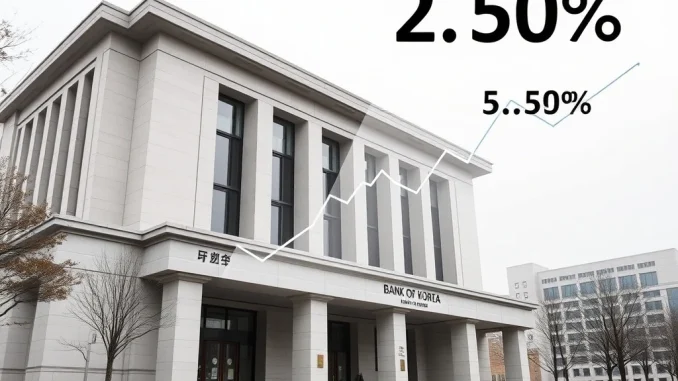
In the dynamic world of finance, every ripple in a major economy can send waves across global markets, even reaching the shores of cryptocurrency investments. So, when the Bank of Korea (BoK) announced on July 10 that the South Korea interest rate would remain unchanged at 2.50%, it wasn’t just a local headline; it was a signal with broader implications for economic stability that keen-eyed crypto enthusiasts should pay attention to. This move by the Bank of Korea reflects a cautious approach in navigating complex global and domestic financial landscapes.
Why the South Korea Interest Rate Matters So Much?
For many, interest rates might seem like abstract numbers, but they are the lifeblood of an economy. The South Korea interest rate, set by the Bank of Korea, directly influences borrowing costs for businesses and consumers, affecting everything from mortgage payments to corporate investments. A stable rate, like the one announced, can signal confidence in the current economic trajectory, or it can indicate a ‘wait-and-see’ approach amidst uncertainties.
- Cost of Borrowing: A lower rate makes borrowing cheaper, encouraging spending and investment. A higher rate makes it more expensive, curbing inflation.
- Inflation Control: Central banks use interest rates as a primary tool to manage inflation. Holding rates steady suggests the BoK believes current inflationary pressures are manageable at this level.
- Currency Value: Interest rate differentials can impact a country’s currency. A stable rate can contribute to currency stability, which is vital for an export-driven economy like South Korea’s.
Behind the Bank of Korea’s Steady Hand
The Bank of Korea, like all central banks, operates with a dual mandate: price stability and supporting sustainable economic growth. Their recent BoK decision to hold the rate at 2.50% is a complex calculation based on a multitude of domestic and international factors. What considerations likely played into this pivotal choice?
The BoK has been on a journey of rate hikes to combat inflation, mirroring moves by central banks worldwide. However, the pace and magnitude of these hikes often depend on unique national circumstances. For South Korea, factors such as high household debt, a global economic slowdown, and fluctuating energy prices weigh heavily on policymakers’ minds. By keeping the rate unchanged, the BoK is signaling that while inflation remains a concern, the immediate need for further tightening might be offset by risks to economic growth and financial stability.
Implications of the BoK Decision for Global Markets
While the immediate impact of the BoK decision is felt within South Korea, its ripples extend globally. In an interconnected financial world, a major Asian economy’s monetary policy choices can influence investor sentiment and capital flows. For cryptocurrency markets, which are highly sensitive to global liquidity and risk appetite, such decisions are indirectly relevant.
When a central bank maintains rates, it can signal a period of relative calm, potentially reducing volatility in traditional markets. This stability, or lack thereof, can sometimes spill over into the crypto space. Investors often re-evaluate their risk exposure based on macro-economic signals, and central bank decisions are paramount among them. A stable monetary policy environment can, in theory, foster a more predictable backdrop for all asset classes, including digital ones.
Fostering Economic Stability: A Balancing Act
The primary goal of any central bank’s monetary policy is to achieve and maintain economic stability. For the Bank of Korea, this involves a delicate balancing act. On one hand, persistent inflation erodes purchasing power and can destabilize the economy. On the other hand, aggressive rate hikes to combat inflation can stifle economic growth, increase unemployment, and strain highly indebted households and businesses.
South Korea faces unique challenges, including a rapidly aging population and a high level of household debt relative to GDP. These factors mean the BoK must be particularly careful not to tip the economy into a recession while still addressing inflationary pressures. The decision to hold the rate at 2.50% suggests the BoK believes this level provides the necessary restrictive stance to bring inflation down without unduly harming economic activity. It’s a strategic pause to assess the impact of previous hikes and evolving global conditions.
Navigating Future Monetary Policy Shifts
The current monetary policy stance of the Bank of Korea is not set in stone. Central banks continuously monitor economic data and adjust their strategies accordingly. What might prompt a change in the future? Inflationary pressures could reignite, perhaps due to global supply chain issues or rising commodity prices. Conversely, a significant global economic downturn or a sharper-than-expected slowdown in South Korea could lead to calls for rate cuts to stimulate growth.
Investors and market watchers will be keenly observing future economic indicators, such as inflation reports, GDP growth figures, and employment data. The BoK’s forward guidance in upcoming statements will also provide crucial insights into their future intentions. Understanding these potential shifts in monetary policy is key for anyone looking to make informed decisions, whether in traditional finance or the evolving world of digital assets.
Summary: A Calculated Pause for South Korea’s Economy
The Bank of Korea’s decision to maintain the South Korea interest rate at 2.50% on July 10 signifies a calculated pause in its monetary policy tightening cycle. This BoK decision reflects a careful assessment of domestic and global economic conditions, aiming to foster economic stability while navigating the complex challenges of inflation and growth. While not directly impacting cryptocurrency prices, such macro-economic signals contribute to the broader financial environment that influences investor sentiment and capital allocation. As always, staying informed on these crucial central bank actions provides valuable context for understanding market dynamics.
Frequently Asked Questions (FAQs)
1. What is the current South Korea interest rate?
As of July 10, the Bank of Korea (BoK) announced that the benchmark interest rate remains unchanged at 2.50%.
2. Who is the Bank of Korea (BoK)?
The Bank of Korea (BoK) is the central bank of South Korea. Its primary responsibilities include maintaining price stability, issuing currency, and managing the country’s monetary policy.
3. Why did the BoK keep rates unchanged?
The BoK likely held rates steady to assess the cumulative impact of previous rate hikes on inflation and economic growth, balancing the need to control inflation with concerns about economic slowdown and high household debt.
4. How do interest rate decisions affect the economy?
Interest rate decisions influence borrowing costs for consumers and businesses, impacting spending, investment, inflation, and the value of the national currency. Higher rates typically curb inflation but can slow growth, while lower rates stimulate growth but can fuel inflation.
5. What are the future expectations for South Korea’s monetary policy?
Future monetary policy decisions will depend on evolving economic data, including inflation trends, GDP growth, and global economic conditions. The BoK will continue to monitor these factors to determine if further adjustments to the South Korea interest rate are necessary.
6. Does this BoK decision impact cryptocurrency markets?
While not a direct impact, central bank decisions on interest rates contribute to the overall global liquidity and risk appetite in financial markets. Changes in these broader conditions can indirectly influence investor sentiment and capital flows into more volatile assets like cryptocurrencies.