In a significant move for the blockchain startup ecosystem, Solana co-founder Anatoly Yakovenko has publicly outlined a strategic framework for early-stage crypto projects seeking investment. His guidance arrives during a pivotal period of recalibration for cryptocurrency venture funding. Consequently, founders and investors are scrutinizing sustainable models more than ever. This analysis provides a comprehensive breakdown of Yakovenko’s principles, their context within current market dynamics, and their potential impact on the future of Web3 entrepreneurship.
Solana Founder’s Three Principles for Crypto Project Funding
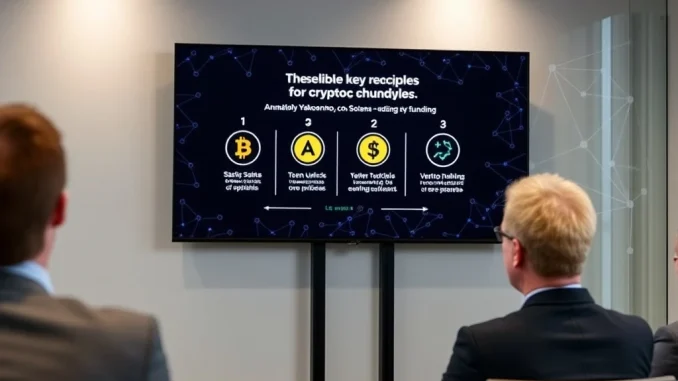
Anatoly Yakovenko, a respected figure known for co-creating the high-performance Solana blockchain, recently shared his insights on the social platform X. His post detailed three specific, actionable principles designed to help nascent crypto ventures attract crucial early capital. Firstly, he emphasized the necessity of enabling staking mechanisms for long-term token holders. This approach directly incentivizes community commitment and network security from the outset. Secondly, Yakovenko advised projects to unlock more than 20% of the total token supply on the launch day. This strategy aims to enhance initial liquidity and mitigate the severe price volatility often associated with low-float launches. Finally, he recommended that investor token allocations should fully vest within one year. This compressed timeline aligns investor incentives with long-term project development and discourages short-term speculative exits.
The Critical Role of Staking for Long-Term Holders
Yakovenko’s first principle focuses on staking availability. In blockchain networks, staking allows token holders to participate in network validation or governance, earning rewards in return. For an early-stage project, implementing staking serves multiple critical functions. It provides a yield mechanism that encourages users to hold tokens rather than sell them immediately. This reduces sell-side pressure on the token’s market price. Furthermore, a robust staking community contributes to network security and decentralization. Historical data from successful Layer-1 networks like Solana and Ethereum 2.0 demonstrates a correlation between high staking participation and network stability. Projects that neglect this feature often struggle to build a dedicated, long-term community, which is a red flag for sophisticated investors.
Token Unlock Strategy and Market Liquidity
The second principle addresses a common pitfall in crypto launches: restrictive token unlocks. A token generation event (TGE) with a very small circulating supply can lead to artificial price pumps followed by devastating crashes when large allocations unlock. Yakovenko’s recommendation to unlock over 20% of the supply at launch is a direct response to this pattern. This level of initial liquidity allows for more efficient price discovery from day one. It also reduces the risk of extreme manipulation by a small number of holders. For context, many projects that failed in the 2022-2023 cycle had initial unlocks below 10%, creating unsustainable economic models. A larger initial float signals confidence to the market and sets a foundation for healthier long-term token distribution.
- Staking for Holders: Incentivizes commitment and secures the network.
- Generous Initial Unlock: Promotes liquidity and realistic price discovery.
- One-Year Investor Vesting: Aligns investor and project timelines to discourage speculation.
Investor Vesting Schedules and Incentive Alignment
The third principle concerns the vesting schedule for early investors, including venture capital firms and angels. Traditionally, crypto projects have used multi-year vesting schedules with cliffs. Yakovenko advocates for a maximum one-year full vesting period. This compressed timeline creates powerful incentive alignment. Investors realize their full allocation relatively quickly, but only if the project demonstrates progress and maintains a healthy token economy. This structure discourages investors from passively waiting for a multi-year unlock while potentially losing interest in the project’s operational success. It forces a more active, supportive relationship between investors and founders, which is crucial during the fragile early stages of development.
The Overarching Imperative: Achieving Product-Market Fit
Yakovenko explicitly noted that these three principles, while foundational, are not sufficient for success on their own. He stressed that ultimate success is contingent upon achieving product-market fit (PMF). In the technology sector, PMF means building a product that satisfies a strong market demand. For crypto projects, this could mean a decentralized application (dApp) that solves a real user problem more efficiently than Web2 alternatives, or a blockchain that offers uniquely scalable infrastructure. The principles of staking, unlocks, and vesting are designed to create the economic runway and aligned incentives necessary to pursue PMF without being derailed by tokenomic failures. History shows that projects with perfect tokenomics but no useful product inevitably fail, while those with a killer product can sometimes overcome suboptimal initial economics.
| Feature | Traditional Model (High Risk) | Yakovenko’s Model (Proposed) |
|---|---|---|
| Initial Token Unlock | < 10% | > 20% |
| Investor Vesting Period | 2-4 years | 1 year |
| Staking at Launch | Often delayed | Available immediately |
| Primary Goal | Maximize early price | Build sustainable community & liquidity |
Context Within the Current Crypto Funding Landscape
Yakovenko’s commentary does not exist in a vacuum. The crypto venture capital landscape has matured significantly since the frenzied bull market of 2021. Investors now conduct deeper due diligence, with tokenomics and community plans under intense scrutiny. Following several high-profile failures linked to poor token design, there is a clear industry shift toward sustainable economics. Yakovenko, as the leader of one of the most technically successful Layer-1 blockchains, is leveraging his experience to guide this shift. His principles reflect lessons learned from Solana’s own journey and the broader market cycles, offering a template that balances founder needs, investor returns, and community fairness.
Conclusion
Anatoly Yakovenko’s three principles for early-stage crypto projects provide a clear, experience-driven framework for attracting capital in a more discerning market. By prioritizing staking for long-term holders, ensuring sufficient initial token liquidity, and enforcing a one-year investor vesting schedule, founders can build more resilient and trustworthy economic foundations. Ultimately, these measures serve to support the paramount goal of achieving genuine product-market fit. As the cryptocurrency industry evolves beyond pure speculation, such guidance from established founders like the Solana co-founder becomes invaluable for navigating the complex intersection of technology, finance, and community building.
FAQs
Q1: Why does Anatoly Yakovenko recommend unlocking over 20% of tokens at launch?
He recommends this to ensure sufficient initial market liquidity, which leads to more stable and realistic price discovery from the start. It helps prevent the extreme volatility and manipulation often seen in low-float launches.
Q2: What is the benefit of a one-year vesting schedule for investors?
A one-year full vesting schedule better aligns investor incentives with the project’s long-term success. It discourages passive, short-term speculation and encourages investors to remain actively engaged and supportive during the critical first year of development.
Q3: How does enabling staking help a new crypto project attract capital?
Staking provides a yield mechanism that incentivizes users to hold the token, reducing immediate sell pressure. It demonstrates a plan for community engagement and network security, which are key factors sophisticated investors evaluate when assessing a project’s long-term viability.
Q4: Are these tokenomic principles more important than the product itself?
No. Yakovenko explicitly states that while these principles are crucial for attracting capital and building a stable economy, ultimate success still depends on the project achieving product-market fit (PMF). Good tokenomics supports the journey to PMF but cannot replace a fundamentally useful product.
Q5: How do these principles reflect changes in the crypto investment landscape?
They reflect a maturation of the market. After the failures of many projects with unsustainable tokenomics in previous cycles, investors now demand more thoughtful, community-focused, and liquid economic models. Yakovenko’s guidelines are a direct response to this new, more rigorous investment environment.
Updated insights and analysis added for better clarity.
This article was produced with AI assistance and reviewed by our editorial team for accuracy and quality.