The world of decentralized finance just received a significant traditional finance assessment. S&P Global Ratings recently assigned a B- issuer credit rating to Sky Protocol, a prominent decentralized lending platform. This crucial evaluation offers a new perspective on the platform’s financial standing and its stablecoin, USDS. Indeed, this development signals a growing intersection between established financial institutions and the innovative crypto market. It also provides vital insights for investors and users.
Understanding the S&P Global Crypto Assessment
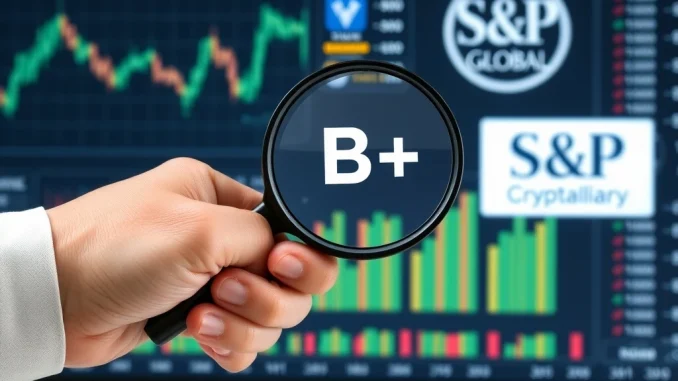
S&P Global, a leading global credit rating agency, has now weighed in on the burgeoning crypto market. Their B- rating for Sky Protocol Rating indicates a speculative grade. This means Sky Protocol is currently capable of meeting its financial obligations. However, it remains vulnerable. Adverse business, financial, or economic conditions could easily impair its capacity to meet those commitments. This assessment provides a benchmark for investors. It also highlights the growing intersection of traditional finance and crypto.
The rating for Sky Protocol’s USDS stablecoin also warrants attention. USDS received a “4” (constrained) rating. This score reflects its ability to maintain its dollar peg. A “constrained” rating signifies moderate risks. It suggests the stablecoin might face challenges in maintaining its stability under certain pressures. This specific rating from S&P Global Crypto offers critical insights. It helps users and investors understand potential vulnerabilities. Consequently, it informs decisions about engagement with the platform.
Key Risks Identified for USDS Stablecoin
S&P Global’s analysis pinpointed several areas of concern for Sky Protocol and its USDS stablecoin. These factors contribute to the “constrained” rating and the overall B- assessment. Understanding these risks is vital for stakeholders. They directly impact the perceived stability and reliability of the platform.
- Depositor Concentration: A significant portion of USDS stablecoin holdings might be concentrated among a few large depositors. This concentration creates a vulnerability. If a few large holders decide to withdraw funds simultaneously, it could trigger liquidity issues. Such an event could destabilize the peg.
- Centralized Governance: Despite being a decentralized lending platform, aspects of Sky Protocol’s governance may exhibit centralization. Centralized control points can introduce single points of failure. They can also raise concerns about transparency and resilience. This structure potentially contradicts the core tenets of decentralization.
- Regulatory Uncertainty: The cryptocurrency landscape still faces evolving regulatory frameworks globally. Sky Protocol, like many other decentralized lending platforms, operates within this uncertain environment. Future regulations could impact its operations, compliance costs, or even its fundamental business model. This uncertainty adds a layer of risk.
- Weak Capitalization: S&P Global identified weak capitalization as another key risk. This implies that Sky Protocol may not possess sufficient financial buffers. These buffers are essential to absorb potential losses. In adverse market conditions, limited capital could compromise its ability to meet obligations. This directly affects the stability of the USDS stablecoin.
These identified risks underscore the need for vigilance. They highlight areas where Sky Protocol could strengthen its operations. Addressing these concerns could improve its long-term stability. Moreover, it could enhance user trust.
Navigating Challenges in Decentralized Lending Platforms
The B- rating for Sky Protocol serves as a stark reminder. Even innovative decentralized lending platforms face scrutiny. Traditional finance metrics are increasingly applied to this nascent sector. This trend signals a maturing market. It also suggests a growing demand for transparency and accountability. Indeed, the integration of such ratings is becoming more common across the crypto industry.
Decentralized finance (DeFi) aims to remove intermediaries. It promises open and permissionless financial services. However, this freedom comes with unique challenges. Smart contract risks, oracle failures, and economic exploits are constant threats. Furthermore, the very nature of decentralization can sometimes complicate risk assessment. S&P Global’s rating provides an external, independent viewpoint. It evaluates the platform’s ability to withstand various pressures. This external validation becomes increasingly important. Institutional investors often require such assessments before engaging with DeFi protocols.
The Importance of Independent Assessment
Independent assessments, like those from S&P Global, provide crucial benchmarks. They offer an objective look at a protocol’s health. This is particularly valuable in a space often driven by hype. Such ratings help to differentiate projects. They also encourage better practices. Ultimately, they contribute to a more informed investment landscape.
The Evolving Landscape of Crypto Credit Ratings
The assignment of a formal credit rating to a decentralized protocol marks a significant milestone. It shows a clear convergence between traditional finance and the crypto world. Crypto credit ratings are becoming more common. These ratings aim to bring a standardized risk assessment framework to digital assets. This process helps institutional investors. It allows them to evaluate the creditworthiness of crypto entities. Consequently, it facilitates broader adoption.
For a long time, crypto markets operated without such formal oversight. Volatility and lack of established frameworks characterized the space. However, as the industry matures, so does the demand for sophisticated tools. Rating agencies are adapting their methodologies. They now consider unique crypto-native risks. These include smart contract vulnerabilities and tokenomics. They also analyze on-chain data. This comprehensive approach provides a more holistic view.
This trend benefits the broader crypto ecosystem. It can foster greater institutional participation. It also promotes market stability. Protocols that receive favorable ratings may attract more capital. They may also gain wider adoption. Conversely, lower ratings, like Sky Protocol’s B-, serve as cautionary tales. They prompt protocols to address underlying weaknesses. They also inform users about potential risks. This evolution points towards a more integrated financial future.
S&P Global’s B- rating for Sky Protocol and its “constrained” assessment for the USDS stablecoin are pivotal. They underscore the challenges and opportunities within decentralized finance. While Sky Protocol can meet its obligations now, vulnerabilities persist. These include depositor concentration, centralized governance, regulatory uncertainty, and weak capitalization. This assessment provides a vital reference point. It guides users and investors. It also highlights the growing importance of traditional financial metrics in the crypto space. As the industry matures, transparent risk assessments will become increasingly essential. They will help foster trust and sustainable growth in the decentralized economy.
Frequently Asked Questions (FAQs)
Q1: What does S&P Global’s B- rating mean for Sky Protocol?
A1: A B- rating from S&P Global indicates that Sky Protocol is currently able to meet its financial obligations. However, it is considered vulnerable to adverse business, financial, or economic conditions. These conditions could impair its capacity to meet commitments. This Sky Protocol Rating suggests a speculative investment grade.
Q2: Why did the USDS stablecoin receive a “4 (constrained)” rating?
A2: The “4 (constrained)” rating for USDS highlights moderate risks to its ability to maintain its dollar peg. These risks, which contribute to the USDS Stablecoin Risk, include depositor concentration, centralized governance elements, regulatory uncertainty, and weak capitalization.
Q3: What are the main risks S&P Global identified for Sky Protocol?
A3: S&P Global identified four primary risks: high depositor concentration, aspects of centralized governance, ongoing regulatory uncertainty in the crypto space, and weak capitalization within the protocol. These factors collectively contribute to the elevated USDS Stablecoin Risk.
Q4: How do traditional credit ratings apply to decentralized lending platforms?
A4: Traditional credit ratings are increasingly applied to decentralized lending platforms to provide external, objective risk assessments. They help institutional investors evaluate creditworthiness and bring a standardized framework to the crypto market, promoting transparency and accountability.
Q5: Will this rating impact Sky Protocol’s operations or user base?
A5: While the rating doesn’t directly alter operations, it provides crucial information to users and potential investors. It could influence user confidence and investment decisions, prompting Sky Protocol to address the identified weaknesses to improve its standing. This is part of the evolving landscape of Crypto Credit Ratings.
Q6: What is the significance of crypto credit ratings for the broader market?
A6: Crypto credit ratings signify the maturing of the digital asset market and its convergence with traditional finance. They foster greater institutional participation, promote market stability by providing risk benchmarks, and encourage protocols to adopt better risk management practices. This trend is shaping the future of decentralized finance.