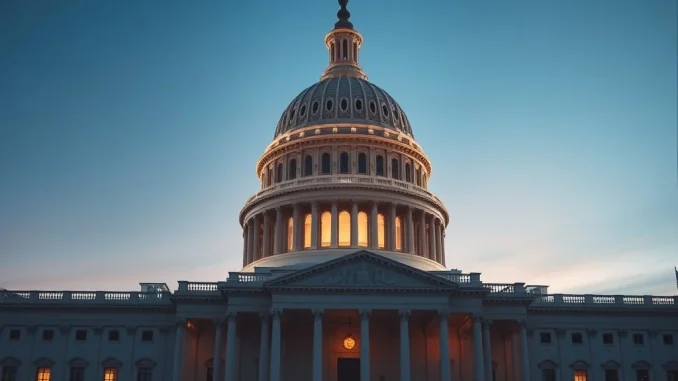
Washington D.C., January 2025: In a decisive move for the future of digital assets, the US Senate Banking Committee has officially scheduled its long-anticipated markup session for the pivotal crypto market structure bill, the CLARITY Act. The committee confirmed the session will proceed at 3:30 p.m. UTC on January 29, 2025, providing a concrete timeline after speculation of a longer delay. This crucial crypto bill markup represents a significant step toward establishing a comprehensive federal regulatory framework for cryptocurrencies and blockchain technology in the United States.
US Senate Banking Committee Advances Crucial Crypto Bill Markup
The announcement from the Senate Banking Committee provides much-needed clarity for an industry often operating in a regulatory gray area. A markup session is a critical legislative step where committee members debate, amend, and ultimately vote on whether to send a bill to the full Senate floor. The rescheduling to January 29 follows earlier reports from Bloomberg that suggested the process could be postponed until late February or even March. This earlier timeline indicates the committee leadership is prioritizing the legislation. The CLARITY Act, formally known as the Crypto-Asset Regulatory Framework and Investor Protection Act, aims to delineate clear jurisdictional lines between the Securities and Exchange Commission (SEC) and the Commodity Futures Trading Commission (CFTC) regarding digital assets. Proponents argue this clarity is essential for consumer protection, market integrity, and maintaining US competitiveness in financial innovation.
Understanding the CLARITY Act and Its Market Implications
The core objective of the CLARITY Act is to resolve the persistent uncertainty over which digital assets constitute securities versus commodities. This distinction dictates which federal regulator holds primary oversight authority. The bill proposes a functional, principles-based framework. Key provisions likely under discussion during the markup include:
- Regulatory Classification: Establishing clear criteria to determine if a crypto asset is a security, falling under SEC purview, or a commodity, overseen by the CFTC.
- Exchange and Broker Registration: Defining registration and compliance requirements for trading platforms, custodians, and brokers serving US customers.
- Stablecoin Oversight: Potentially addressing the regulation of payment stablecoins, a topic of separate but related legislative efforts.
- Consumer Disclosure: Mandating standardized risk disclosures for investors purchasing digital assets.
The outcome of this markup will directly influence investment, innovation, and operational decisions for thousands of companies in the blockchain ecosystem.
The Legislative Journey and Political Context
The path to this January 29 markup has been years in the making. Congressional efforts to craft digital asset legislation intensified following the market turbulence of 2022, which highlighted regulatory gaps. The Senate Banking Committee, under the leadership of Chairman Sherrod Brown, has conducted numerous hearings, gathering testimony from industry executives, academics, and consumer advocates. The committee’s decision to proceed with markup suggests a critical mass of consensus has been reached on the bill’s foundational elements, though amendments during the session are expected. This process occurs alongside parallel efforts in the House of Representatives, where several crypto-focused bills have seen committee action. The alignment between chambers will be vital for any legislation to reach the President’s desk.
What the Rescheduling Signals for the Crypto Industry
The shift from potential delay to a firm January date sends a powerful signal to markets and stakeholders. First, it demonstrates sustained legislative momentum despite a crowded congressional calendar. Second, it reduces regulatory uncertainty for a defined period, allowing businesses to plan for potential outcomes. Industry groups have largely welcomed the news, viewing it as a step toward the “rules of the road” they have long advocated for. However, the details amended during the markup will be paramount. Stakeholders will watch closely for provisions related to decentralization tests, the treatment of existing assets, and the compliance timelines for entities. The session’s timing, late in the month, also suggests intensive behind-the-scenes negotiations are underway to secure the necessary votes for a favorable committee report.
Global Regulatory Parallels and Competitive Landscape
While the US deliberates, other jurisdictions have moved forward with their frameworks. The European Union’s Markets in Crypto-Assets (MiCA) regulation is now in its implementation phase, creating a comprehensive regime for its 27 member states. Similarly, the United Kingdom, Singapore, and Hong Kong have advanced their own regulatory approaches. The pace and substance of US regulation have significant implications for where blockchain talent and capital flow globally. A clear, innovation-friendly framework from the Senate Banking Committee could help the US reclaim leadership, whereas a delayed or overly restrictive outcome might cede ground to other financial centers. This global context adds urgency to the committee’s work.
Conclusion
The US Senate Banking Committee’s decision to hold its crucial crypto bill markup on January 29, 2025, marks a pivotal moment in the journey toward federal digital asset regulation. The advancement of the CLARITY Act through this committee process is essential for establishing legal certainty, protecting investors, and fostering responsible innovation. All eyes will now be on the amendments and debates during the session, which will shape the final legislation sent to the Senate floor. The outcome of this crypto bill markup will resonate through financial markets and technology sectors for years to come, defining America’s role in the next era of the digital economy.
FAQs
Q1: What is a congressional markup session?
A markup session is where a congressional committee debates, amends, and rewrites proposed legislation. Members offer amendments and vote on them before deciding whether to send the bill to the full chamber for consideration.
Q2: What is the CLARITY Act?
The CLARITY Act is a proposed US Senate bill that aims to create a regulatory framework for cryptocurrencies. Its primary goal is to clarify whether digital assets are securities or commodities, determining if the SEC or CFTC is the main regulator.
Q3: Why was the Senate Banking Committee’s markup session rescheduled?
The session was rescheduled to January 29, 2025, from a potentially later date. Such adjustments are common in Congress due to factors like negotiation timelines, witness availability, and the overall legislative calendar.
Q4: How does this affect cryptocurrency investors and companies?
The markup is a major step toward regulatory clarity. For companies, it means future rules for operation and compliance are taking shape. For investors, it signals progress toward greater consumer protection and market stability frameworks.
Q5: What happens after the January 29 markup?
If the committee votes to advance the bill, it will be reported to the full US Senate for debate, amendment, and a vote. It would then need to be reconciled with any related bill passed by the House of Representatives before becoming law.