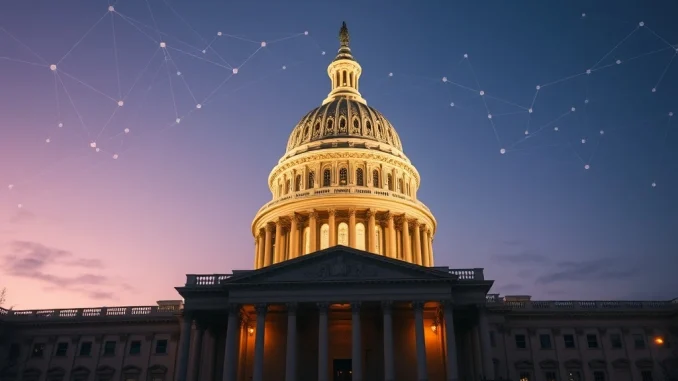
Washington, D.C., April 2025: In a pivotal move for the digital asset industry, the U.S. Senate Committee on Agriculture, Nutrition, and Forestry has advanced a comprehensive cryptocurrency market structure bill. The committee passed the legislation by a razor-thin margin of 12 votes to 11, marking a significant step toward establishing the first major federal regulatory framework for crypto markets. This development, first reported by journalist Eleanor Terrett, shifts the legislative battleground for digital asset policy to the full Senate, setting the stage for a consequential debate on the future of finance in America.
Decoding the Crypto Market Structure Bill
The legislation advanced by the Senate Agriculture Committee aims to create clear rules of the road for digital asset trading and custody. Historically, the Commodity Futures Trading Commission (CFTC) and the Securities and Exchange Commission (SEC) have engaged in a jurisdictional tug-of-war over cryptocurrencies. This bill seeks to resolve that conflict by defining which digital assets are commodities under the CFTC’s purview and which are securities regulated by the SEC. The core objective is to provide legal certainty for businesses and protect consumers from the fraud and manipulation that have plagued the nascent industry. The narrow vote underscores the deeply partisan and complex nature of crafting policy for a rapidly evolving technological sector.
Historical Context and Legislative Journey
The path to this committee vote spans several years of legislative effort. Following the market turmoil of 2022, which included the collapse of major firms like FTX, Congressional pressure for a regulatory response intensified. The Agriculture Committee’s jurisdiction stems from the CFTC’s historical oversight of commodity futures, a category that includes Bitcoin and Ethereum. Previous bills, such as the Lummis-Gillibrand Responsible Financial Innovation Act, laid much of the groundwork but failed to gain sufficient momentum. This latest bill represents a more focused attempt to address core market structure issues before tackling broader topics like stablecoins or decentralized finance (DeFi). The 12-11 vote, largely along party lines, highlights the challenging political calculus required for any bill to reach the Senate floor.
Implications for Exchanges and Trading Platforms
The proposed market structure carries direct and profound consequences for cryptocurrency exchanges operating in the United States. Platforms like Coinbase, Kraken, and Binance.US would face new registration requirements, depending on whether they trade securities or commodities. Key provisions likely include:
- Enhanced Custody Rules: Stricter standards for safeguarding customer assets, a direct response to failures where user funds were commingled with company funds.
- Market Surveillance: Requirements for real-time trade monitoring and reporting to prevent insider trading and market manipulation.
- Conflict of Interest Management: Potential separation of trading, brokerage, and custody functions within single firms.
- Consumer Disclosure: Mandates for clear, plain-language explanations of risks associated with digital asset investments.
These rules aim to bring the operational rigor of traditional financial markets to the crypto ecosystem.
The Road Ahead: From Committee to Potential Law
Passage out of committee is just the first hurdle. The bill must now navigate the full Senate, where it will need 60 votes to overcome a potential filibuster. Leadership must decide whether to bring it to the floor as a standalone measure or attach it to a larger must-pass bill. Simultaneously, the House of Representatives has its own versions of digital asset legislation, meaning any final law would require a bicameral conference committee to reconcile differences. The timeline is uncertain, but the narrow committee vote signals that every supporter will be crucial. Stakeholders are preparing for intense lobbying from both industry advocates seeking clarity and skeptics demanding stringent consumer protections.
Global Regulatory Alignment and Competitiveness
U.S. lawmakers are acutely aware of the global race to shape digital asset regulation. Jurisdictions like the European Union, with its comprehensive Markets in Crypto-Assets (MiCA) framework, the United Kingdom, and Singapore have moved ahead with formal rules. Proponents of the Senate bill argue that clear U.S. regulation is essential to prevent innovation and capital from flowing overseas. They contend that a predictable legal environment will attract responsible businesses and allow the U.S. to set the international standard. Opponents caution against moving too quickly, emphasizing the need to fully address risks related to financial stability, illicit finance, and energy consumption. This tension between fostering innovation and mitigating risk lies at the heart of the debate.
Conclusion
The Senate Agriculture Committee’s passage of a crypto market structure bill by a 12-11 vote is a landmark event, signaling that serious legislative efforts to regulate digital assets are advancing in Congress. While the path to becoming law remains long and fraught with political challenges, the committee’s action provides a concrete legislative vehicle for debate. The outcome will profoundly shape the operational landscape for cryptocurrency businesses, define protections for American investors, and influence the United States’ role in the global digital economy. The narrow margin of victory underscores that the final form of any crypto market structure bill will be heavily negotiated, with its ultimate fate resting on broader political compromises in the months ahead.
FAQs
Q1: What does the Senate Agriculture Committee’s crypto bill do?
The bill seeks to establish a federal regulatory framework for cryptocurrency markets, primarily by clarifying whether digital assets are commodities regulated by the CFTC or securities regulated by the SEC, and setting rules for exchanges and customer asset protection.
Q2: Why is the Agriculture Committee handling cryptocurrency?
The U.S. Senate Committee on Agriculture, Nutrition, and Forestry has jurisdiction over the Commodity Futures Trading Commission (CFTC), which oversees futures markets for commodities. Since Bitcoin and Ethereum are currently treated as commodities, this committee has a key role in legislation affecting them.
Q3: What was the vote count, and why does it matter?
The bill passed by a vote of 12 to 11. The extremely narrow margin indicates deep partisan divisions and significant debate over the bill’s provisions, suggesting that any version that reaches the full Senate floor will likely require amendments and compromise.
Q4: What happens to the bill next?
The bill now moves to consideration by the full U.S. Senate. It must be scheduled for a floor vote, potentially amended, and pass with a simple majority (51 votes). To become law, an identical version must also pass the House of Representatives and be signed by the President.
Q5: How would this bill affect an average cryptocurrency investor?
If enacted, the bill should lead to greater clarity on which platforms are legally authorized to operate, stronger rules for safeguarding customer funds, and more transparent disclosures about investment risks, aiming to create a safer and more stable trading environment.