LONDON, UK — March 15, 2026 — A technical upgrade activated nearly a decade ago continues to define the fundamental utility of the world’s largest cryptocurrency. Segregated Witness (SegWit), a protocol upgrade implemented on the Bitcoin network in August 2017, solved critical bottlenecks that threatened its growth. By separating signature data from transaction data, SegWit effectively increased block capacity, lowered fees, and fixed a security flaw known as transaction malleability. Consequently, this upgrade laid the essential groundwork for later innovations like the Lightning Network, directly enabling Bitcoin’s path toward becoming a viable medium for everyday transactions and mass adoption.
Understanding the SegWit Bitcoin Upgrade
Segregated Witness, often abbreviated as SegWit, represents one of the most significant consensus changes in Bitcoin’s history. Developers proposed the upgrade to address two pressing issues: transaction malleability and the effective block size limit. Transaction malleability allowed the unique ID of a transaction to be altered before confirmation, creating potential problems for complex protocols and layer-two solutions. Meanwhile, the 1MB block size limit, while crucial for decentralization, began causing network congestion and high fees as adoption grew in the mid-2010s. SegWit ingeniously solved both by restructuring how transaction data is stored.
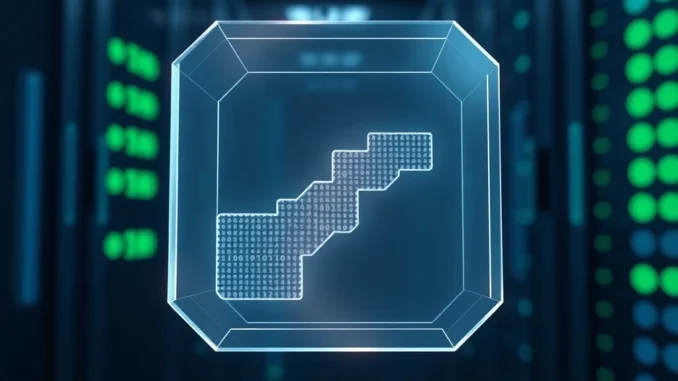
The core mechanism involves moving the witness data—the cryptographic signatures that prove ownership—outside the main transaction block. This separation occurs within a new structure called the witness block. As a result, the base transaction size shrinks, allowing more transactions to fit into the 1MB base block. The network measures block weight, a new metric, instead of just size. This change effectively increased capacity to around 2-4MB per block, depending on transaction types, without requiring a hard fork that would split the chain. The Bitcoin community activated SegWit after a lengthy and sometimes contentious scaling debate, marking a pivotal moment for collaborative protocol development.
Impact on Transaction Speed and Fees
The immediate and most tangible impact of SegWit for everyday users was on transaction cost and confirmation time. By increasing effective block capacity, the upgrade alleviated network congestion. Transactions no longer competed as fiercely for limited block space during peak periods. Data from blockchain analytics firms like CoinMetrics shows that the median transaction fee for SegWit-enabled transactions consistently remained 30-50% lower than for legacy transactions in the years following activation. Furthermore, transaction throughput improved. The network could process more transactions per second, reducing mempool backlogs and speeding up confirmations.
- Reduced Fee Pressure: SegWit transactions consume less block weight, making them cheaper for miners to include. This economic incentive drove gradual adoption, with over 90% of all Bitcoin transactions using the SegWit format by 2024.
- Improved Network Efficiency: The separation of data cleaned up the blockchain’s structure. This efficiency became the bedrock for more complex smart contracts and multi-signature setups that were previously cumbersome.
- Paved the Way for Layer-2: Fixing transaction malleability was the essential prerequisite for building secure off-chain payment channels. Without this fix, the Lightning Network, a critical scalability solution, would have been vulnerable to certain attacks.
Expert Analysis on SegWit’s Technical Legacy
Dr. Alyssa Vance, a blockchain researcher at the MIT Digital Currency Initiative, contextualizes the upgrade’s importance. “SegWit wasn’t just a bandwidth patch,” she stated in a 2025 interview. “It was a profound architectural shift. By solving malleability, it unlocked an entire design space for second-layer protocols. The fee reduction was the user-facing benefit, but the long-term value was in proving Bitcoin’s core protocol could evolve intelligently through soft forks.” This perspective is echoed in technical literature, including the original Bitcoin Improvement Proposal (BIP 141) authored by Eric Lombrozo, Johnson Lau, and Pieter Wuille. The upgrade demonstrated that the network could implement sophisticated changes while maintaining backward compatibility, a lesson that informed subsequent upgrades like Taproot.
SegWit vs. Alternative Scaling Solutions
The SegWit proposal emerged during the heated “Block Size Wars,” where community factions debated how best to scale Bitcoin. The primary alternative was a simple increase to the base block size limit via a hard fork. This comparison highlights the different philosophical and technical approaches to blockchain development. SegWit’s soft-fork approach prioritized keeping the network unified, while hard-fork proposals like Bitcoin Cash (BCH) favored a more direct, but chain-splitting, increase in on-chain capacity.
| Solution | Method | Key Advantage | Key Disadvantage |
|---|---|---|---|
| Segregated Witness (SegWit) | Soft Fork: Restructures data within existing block size limit. | Maintained network unity; fixed transaction malleability; enabled Layer-2. | Complex implementation; capacity increase was incremental, not exponential. |
| Block Size Increase (e.g., Bitcoin Cash) | Hard Fork: Directly increases the 1MB limit to 8MB or more. | Simple concept; large immediate on-chain capacity boost. | Caused a permanent chain split; does not address transaction malleability; increases node operation costs. |
| Layer-2 (e.g., Lightning Network) | Off-Chain: Handles transactions on a separate network settled on-chain. | Enables instant, high-volume micropayments; minimal on-chain footprint. | Requires SegWit as a base layer; introduces new complexity and liquidity management for users. |
The Path Forward: SegWit as a Foundational Layer
Today, SegWit is not the final solution but the essential foundation. Its successful deployment created a stable base layer upon which the Bitcoin ecosystem is building. The Lightning Network, now facilitating millions of low-cost transactions daily, depends entirely on the malleability fix SegWit provided. Furthermore, later upgrades like Taproot, which enhanced privacy and smart contract flexibility, were designed to work seamlessly with the SegWit transaction format. The forward-looking analysis is clear: SegWit transformed Bitcoin from a potentially congested digital asset into a robust settlement layer capable of supporting a vibrant economy of secondary applications and scaling solutions.
Adoption and Ecosystem Response
Adoption by wallets, exchanges, and services was gradual but ultimately near-universal. Major exchanges like Coinbase and Binance completed full SegWit integration by 2021-2022, passing on fee savings to users. Wallet providers prioritized support, and today, virtually all modern Bitcoin software defaults to SegWit addresses (starting with bc1). The public and developer response solidified a consensus around iterative, backward-compatible upgrades. This model of development has since become the standard for Bitcoin improvement, focusing on broad technical and social consensus before activation.
Conclusion
The Segregated Witness (SegWit) upgrade stands as a landmark achievement in Bitcoin’s evolution. It successfully addressed immediate scalability pressures by lowering fees and speeding up transactions through a clever data separation technique. More importantly, it solved the deep technical flaw of transaction malleability, thereby unlocking the potential for advanced off-chain scaling. SegWit proved that the Bitcoin protocol could adapt and improve without fracturing, setting a precedent for future innovation. As Bitcoin continues its journey toward broader adoption, the foundational work done by SegWit remains a critical pillar of its functionality, security, and potential for global use.
Frequently Asked Questions
Q1: What exactly did Segregated Witness (SegWit) change in a Bitcoin transaction?
SegWit restructured transaction data by moving the witness signature data to a separate part of the block. This reduced the size of the transaction data competing for the 1MB base block, effectively increasing capacity and fixing the transaction malleability bug that altered transaction IDs.
Q2: How much did SegWit actually reduce Bitcoin transaction fees?
While variable, data shows SegWit-enabled transactions typically cost 30-50% less than identical legacy transactions. The savings come from the transaction consuming less of a block’s “weight,” making it more economical for miners to include.
Q3: Was SegWit activation controversial, and how was it implemented?
Yes, it was part of the broader “Block Size Wars.” It was implemented via a soft fork called BIP 148 (UASF) and miner signaling, which allowed nodes to upgrade without forcing a chain split. Full activation occurred on August 24, 2017.
Q4: Do I need to do anything special to use SegWit and benefit from lower fees?
Most modern Bitcoin wallets (like Electrum, BlueWallet, or exchange wallets) now automatically generate SegWit-compatible addresses (starting with ‘bc1’). As long as you’re using an updated wallet, you are likely already benefiting from it.
Q5: What is the connection between SegWit and the Lightning Network?
SegWit’s fix for transaction malleability was an absolute prerequisite for the Lightning Network. Malleability would have made it unsafe to create and settle Lightning payment channels, making SegWit the essential base-layer upgrade that made Layer-2 scaling possible.
Q6: How does SegWit affect the security and decentralization of Bitcoin?
By increasing transaction capacity without drastically raising the block size, SegWit helped maintain low barriers to running a full node, a key component of decentralization. Security was enhanced by eliminating the malleability bug, which strengthened complex transaction types and smart contracts.
Updated insights and analysis added for better clarity.
This article was produced with AI assistance and reviewed by our editorial team for accuracy and quality.