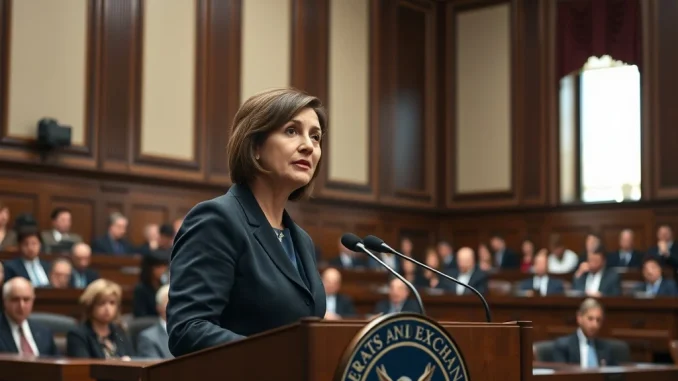
WASHINGTON, D.C. — March 13, 2026: U.S. Securities and Exchange Commission Commissioner Hester Peirce delivered a significant policy address today urging fundamental reforms to corporate disclosure requirements while highlighting the growing debate around tokenized securities. During a speech to the SEC’s Investor Advisory Committee, the commissioner known as “Crypto Mom” for her supportive stance toward digital assets argued that current disclosure rules have become counterproductive. Peirce specifically called for streamlined regulations and proposed a potential “innovation exemption” that could allow limited experimentation with blockchain-based securities. Her remarks come amid increasing pressure on the SEC to clarify its position on tokenization as financial institutions accelerate their blockchain adoption timelines.
Peirce’s Call for Regulatory Restraint and Disclosure Reform
Commissioner Hester Peirce presented a detailed critique of current SEC disclosure requirements during her Thursday morning address. She argued that public companies now spend excessive resources preparing mandated disclosures that often obscure rather than clarify information for investors. “We need to ask whether our rules are helping capital flow to its most productive uses or whether they’re distorting those flows,” Peirce stated directly to committee members. The commissioner referenced 18th-century economist Adam Smith’s principles of market efficiency, suggesting regulators should exercise greater restraint when shaping market outcomes. Her speech marked one of the most comprehensive critiques of SEC disclosure practices from within the commission itself in recent years.
Industry analysts immediately noted the timing significance. The speech arrives as the SEC faces mounting criticism over its handling of digital asset regulation and broader concerns about U.S. capital markets competitiveness. Peirce’s comments align with ongoing discussions at the Financial Stability Oversight Council about regulatory coordination. Furthermore, her address comes exactly one week after SEC Chair Paul Atkins delivered separate remarks emphasizing the need for “pragmatic innovation” in securities markets. This apparent alignment between commissioners suggests potential movement toward substantive regulatory reform, though internal commission dynamics remain complex.
The Tokenization Debate and Potential Innovation Exemption
Peirce dedicated substantial portions of her speech to the emerging discussion around tokenized securities, noting that SEC staff continue developing a potential “innovation exemption” framework. This exemption could allow limited experimentation with tokenized securities while regulators assess how existing securities laws apply to blockchain-based markets. “Blockchain systems could enable faster settlement and, in some cases, transactions without traditional intermediaries,” Peirce observed. She specifically questioned whether additional disclosure and intermediary requirements would be necessary for tokenized securities, suggesting blockchain’s inherent transparency might reduce certain regulatory burdens.
The commissioner’s remarks build upon concrete regulatory actions already underway. In December 2025, the SEC issued a no-action letter to the Depository Trust & Clearing Corporation (DTCC) allowing the market infrastructure provider to explore a blockchain-based tokenization service for securities. That letter effectively signaled the regulator would not recommend enforcement action if DTCC proceeded with certain tokenization-related activities. Market participants have since awaited further guidance on how broadly such permissions might extend. Peirce’s speech provides the clearest indication yet that the commission is actively considering formal pathways for tokenization experimentation beyond individual no-action letters.
- Regulatory Pathway Clarification: Potential innovation exemption could create structured experimentation framework
- Settlement Efficiency: Blockchain systems may reduce traditional settlement times from T+2 to near-instant
- Intermediary Evolution: Smart contracts could automate compliance functions currently performed by intermediaries
Expert Perspectives on Regulatory Implications
Financial regulation experts quickly analyzed Peirce’s remarks for broader implications. “Commissioner Peirce is articulating a coherent philosophy that connects disclosure reform with innovation policy,” noted Dr. Eleanor Vance, Director of Financial Regulation Studies at the Brookings Institution. “Her reference to Adam Smith isn’t rhetorical flourish—it’s grounding regulatory critique in established economic principles.” Vance, who previously served as senior counsel at the SEC’s Division of Economic and Risk Analysis, emphasized that Peirce’s comments reflect growing academic consensus about disclosure overload. A 2025 Stanford Law Review study found that the average SEC filing has increased 84% in length since 2000, while readability scores have declined significantly.
Conversely, investor protection advocates expressed caution. “Simplification shouldn’t mean dilution of material information,” stated Marcus Chen, Executive Director of the Investor Protection Alliance. “The SEC’s disclosure regime evolved for specific reasons—corporate scandals, financial crises, and demonstrated information asymmetries.” Chen acknowledged potential benefits from technological innovation but emphasized that any regulatory changes must maintain robust investor protections. These competing perspectives highlight the balancing act facing regulators as they consider reforms. The SEC’s own Investor Advisory Committee, which hosted Peirce’s speech, has previously issued recommendations calling for both modernization of disclosure requirements and careful evaluation of emerging technologies.
Broker-Dealer and Market Infrastructure Implications
Peirce’s speech carries particular significance for broker-dealers and financial market infrastructure providers. Her questioning of whether traditional intermediary requirements apply to tokenized securities suggests potential reevaluation of long-standing regulatory frameworks. Currently, securities transactions typically involve multiple intermediaries—brokers, transfer agents, clearing houses, and custodians—each subject to specific SEC regulations. Blockchain-based systems could consolidate or eliminate certain intermediary functions through smart contracts and distributed ledger technology.
| Current Traditional System | Potential Tokenized System | Regulatory Implications |
|---|---|---|
| T+2 settlement cycle | Near-instant settlement | Reduced counterparty risk, capital efficiency |
| Multiple intermediaries (broker, transfer agent, custodian) | Smart contract automation | Intermediary role redefinition, compliance automation |
| Centralized securities depositories | Distributed ledger recording | Systemic risk distribution, operational resilience |
Market infrastructure providers have been preparing for this evolution. DTCC’s Project Ion, announced in 2024, represents one of the most advanced institutional tokenization initiatives. The DTCC currently processes approximately $2.5 quadrillion in securities transactions annually, giving its exploration of blockchain technology particular weight. Other major players including Citi, BNY Mellon, and State Street have launched their own tokenization pilots. Peirce’s speech provides regulatory encouragement for these initiatives while acknowledging the need for appropriate guardrails. Her emphasis on “limited experimentation” suggests a phased approach rather than immediate wholesale regulatory change.
Legislative Context and Congressional Dynamics
The regulatory discussions around tokenization unfold alongside broader policy debates in Washington over crypto market-structure legislation. Three major bills currently under consideration could eventually shape how digital assets are overseen in the United States. The Digital Asset Market Structure Act, reintroduced in January 2026, proposes comprehensive classification of digital assets and jurisdictional clarity between the SEC and Commodity Futures Trading Commission. Peirce’s speech intentionally engages with these legislative discussions without explicitly endorsing specific bills.
Industry and Stakeholder Reactions
Financial industry associations responded positively to Peirce’s remarks. “Commissioner Peirce recognizes that our disclosure system has become unnecessarily complex,” said Jonathan Miller, President of the Securities Industry Association. “Her focus on tokenization experimentation aligns with member firms’ strategic investments in blockchain technology.” Digital asset advocacy groups offered particularly enthusiastic responses. The Blockchain Association issued a statement calling Peirce’s speech “a welcome acknowledgment that regulatory flexibility can foster responsible innovation.” Meanwhile, state securities regulators emphasized the importance of maintaining consistent investor protections across traditional and emerging markets. “Federal and state regulators must coordinate carefully as new technologies develop,” noted Lisa Hopkins, President of the North American Securities Administrators Association.
Conclusion
Commissioner Hester Peirce’s March 13 address represents a significant development in the ongoing evolution of securities regulation. Her dual focus on simplifying corporate disclosure rules and creating pathways for tokenized securities experimentation signals potential substantive shifts in SEC policy direction. The proposed innovation exemption for tokenization, while still in development, could provide much-needed regulatory clarity for financial institutions exploring blockchain applications. Market participants should monitor several key developments: the SEC staff’s continued work on the innovation exemption framework, potential rulemaking proposals related to disclosure simplification, and legislative progress on digital asset market structure. Peirce’s speech reinforces that technological innovation and regulatory modernization are increasingly interconnected priorities for U.S. capital markets competitiveness. As these discussions progress, the balance between fostering innovation and maintaining investor protection will remain the central challenge for regulators and market participants alike.
Frequently Asked Questions
Q1: What specific changes did SEC Commissioner Hester Peirce propose for disclosure rules?
Commissioner Peirce called for simplifying corporate disclosure requirements that she argued have become overly complex and counterproductive. She suggested current rules force companies to spend excessive time preparing disclosures that may obscure rather than clarify information for investors, though she did not specify exact rule changes in her March 13 speech.
Q2: How would the potential “innovation exemption” for tokenized securities work?
The innovation exemption would allow limited experimentation with tokenized securities while regulators assess how existing securities laws apply to blockchain-based markets. SEC staff are developing this framework, which would likely involve specific parameters around transaction size, investor qualifications, and reporting requirements to balance innovation with investor protection.
Q3: What is the significance of Peirce referencing Adam Smith in her speech?
Peirce referenced 18th-century economist Adam Smith to ground her regulatory critique in established economic principles about market efficiency. She argued regulators should exercise restraint when shaping market outcomes, suggesting that overly prescriptive rules can distort how capital flows through financial markets to its most productive uses.
Q4: How does this relate to the SEC’s December 2025 no-action letter to DTCC?
The December 2025 no-action letter allowed DTCC to explore blockchain-based tokenization services without enforcement action. Peirce’s speech suggests the SEC is considering broader, more formal pathways for tokenization experimentation beyond individual no-action letters, potentially through the innovation exemption framework.
Q5: What are the immediate next steps following Peirce’s remarks?
SEC staff will continue developing the innovation exemption framework while the commission potentially considers rulemaking proposals related to disclosure simplification. Market participants should monitor SEC meeting agendas and Federal Register notices for specific proposals, with the earliest potential rulemaking likely in the second or third quarter of 2026.
Q6: How might tokenization affect traditional securities intermediaries?
Tokenization could significantly change roles for traditional intermediaries like brokers, transfer agents, and custodians. Blockchain systems enable faster settlement and may automate certain intermediary functions through smart contracts, potentially reducing costs but requiring regulatory adaptation to address new risk profiles and compliance requirements.