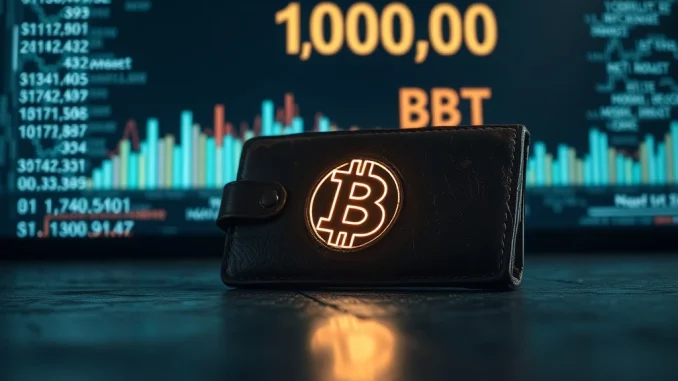
Global, May 2025: The cryptocurrency world was captivated this week as a Bitcoin wallet from the network’s earliest days, silent for over a decade, suddenly sprang to life. In a single, monumental transaction, the wallet moved 10,000 BTC—a sum worth nearly one billion dollars at current valuations—to a major exchange, signaling a likely sale. This event, involving a so-called “Satoshi-era wallet,” has ignited a firestorm of analysis and speculation among traders, historians, and blockchain sleuths, probing the identity of the holder and the potential implications for the market.
Satoshi-Era Wallet Awakens in Billion-Dollar Transaction
On-chain data from blockchain explorers first flagged the transaction. The wallet address, which received its initial 10,000 Bitcoin in a series of blocks mined in 2010, had shown zero outgoing activity for 13 years. The movement of such a large, historically significant stash in one transfer is exceptionally rare. Analysts immediately began dissecting the transaction’s metadata, confirming the coins originated from the 2010 era, a period when Bitcoin’s creator, Satoshi Nakamoto, was still actively involved in the project and mining was feasible on ordinary computers.
The transfer did not go directly to a known exchange address. Instead, it moved to a fresh, unlabeled address—a common privacy technique. However, blockchain analytics firms quickly tracked subsequent movements, which fragmented the hoard and ultimately funneled portions into deposit addresses of a large, regulated cryptocurrency exchange. This pattern strongly indicates an intent to liquidate a significant portion of the holdings. The sheer size of the transaction created a noticeable, albeit temporary, spike in exchange order books as it was absorbed.
Analyzing the Impact of a Dormant Bitcoin Sale
The immediate market reaction was a mixture of fascination and short-term caution. While 10,000 BTC is a substantial sum, it represents a fraction of Bitcoin’s daily trading volume on global exchanges. The primary impact was psychological, serving as a reminder of the vast amounts of early-mined Bitcoin that remain inactive. Analysts point to several key implications:
- Supply Shock Absorption: The event tested the market’s depth. The fact that the sale was processed without a catastrophic price drop demonstrates the increased liquidity and maturity of the current Bitcoin ecosystem compared to a decade ago.
- Holder Psychology: The movement of such an old wallet can influence the sentiment of other long-term holders, or “HODLers.” Some may see it as a signal to take profits, while others interpret it as a natural part of Bitcoin’s lifecycle as early adopters diversify.
- Historical Context: Coins from this era are considered digital artifacts. Their movement often sparks renewed interest in Bitcoin’s origin story and the ongoing mystery surrounding Satoshi Nakamoto’s own estimated holdings, which remain untouched.
Who Could Be Behind the Wallet?
Identifying the individual or entity behind the wallet is nearly impossible due to Bitcoin’s pseudonymous design. However, experts can narrow the possibilities based on the wallet’s age and acquisition method. The coins were mined, not purchased, pointing to an early participant in the network—a developer, a cryptographer, or a visionary enthusiast who ran mining software in 2010. It is highly unlikely to be Satoshi Nakamoto, as their known wallets have different patterns and remain dormant. The most plausible explanation is an early miner who has held through multiple market cycles and has now decided to realize a portion of their gains.
The timing is also a subject of analysis. Potential triggers could include estate planning, portfolio rebalancing after Bitcoin’s recent all-time highs, or a strategic decision to fund a new venture. Without a public statement from the owner, which is improbable, these remain informed conjectures.
Understanding Dormant Bitcoin Supply and Market Health
This event shines a light on the concept of “dormant supply.” A significant percentage of Bitcoin’s total supply has not moved in over five years. This inactivity is often seen as a sign of strong, long-term conviction. However, the potential for these coins to eventually move creates a latent supply overhang that market participants monitor.
The movement of the 10,000 BTC hoard actually reduces this perceived overhang slightly, converting a dormant coin into an active one. From a network health perspective, occasional movement from very old wallets is a sign of a living, breathing economic system, not merely a static store of value. It demonstrates that Bitcoin can facilitate the transfer of immense value across time with finality and without intermediaries, fulfilling a core part of its original promise.
Conclusion
The awakening of a Satoshi-era wallet holding 10,000 Bitcoin is a landmark event that blends cryptocurrency history with modern market dynamics. While the billion-dollar transaction captured headlines, its most lasting effect is the conversation it prompts about Bitcoin’s maturation, the psychology of its earliest adopters, and the enduring strength of its underlying protocol. The market efficiently absorbed the sale, underscoring the asset’s growing liquidity. This event serves as a powerful reminder of the incredible wealth creation Bitcoin has enabled and the fascinating, anonymous stories that are permanently etched into its immutable ledger.
FAQs
Q1: What is a Satoshi-era Bitcoin wallet?
A Satoshi-era wallet refers to a Bitcoin address that received coins during the early years of the network (primarily 2009-2011), when its creator, Satoshi Nakamoto, was still active. Coins from this period are historically significant and often held by early pioneers.
Q2: Does this transaction mean Satoshi Nakamoto sold Bitcoin?
No. Blockchain analysts have distinct patterns for wallets believed to belong to Satoshi. This transaction’s characteristics do not match those known patterns. The coins were mined in 2010, but the owner is almost certainly another early miner.
Q3: How did the market react to the sale of 10,000 BTC?
The market saw a brief period of volatility and increased selling pressure as the coins hit exchange order books. However, given Bitcoin’s high daily trading volume (often tens of billions of dollars), the impact was contained and short-lived, demonstrating the market’s depth.
Q4: Why would someone hold Bitcoin for 13 years before selling?
Motivations can include extreme long-term belief in the asset, loss of access to keys (not the case here), estate planning, or waiting for a specific price target or life event. This holder witnessed Bitcoin’s rise from a few dollars to tens of thousands.
Q5: Are there more dormant wallets like this one?
Yes. Blockchain data shows millions of Bitcoin have not moved in over five years. A smaller, but still significant, number originate from the 2010-2012 period. Their eventual movement is a normal, if rare, part of the Bitcoin ecosystem’s evolution.
This article was produced with AI assistance and reviewed by our editorial team for accuracy and quality.