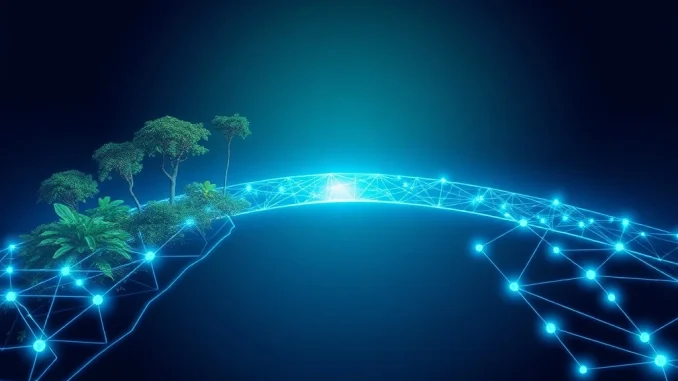
Singapore, March 2025: RubberVerseX, a specialized platform for tokenizing rubber-based real-world assets (RWAs), has announced a strategic partnership with Rocket-IDO, a prominent decentralized launchpad. This collaboration marks a significant development in the ongoing evolution of decentralized finance (DeFi), specifically targeting the integration of tangible, physical assets into blockchain-based financial ecosystems. The partnership aims to address longstanding challenges in RWA accessibility, liquidity, and utility for a broader range of investors.
RubberVerseX and Rocket-IDO Partnership Expands DeFi Horizons
The core objective of this alliance is to leverage Rocket-IDO’s established infrastructure for decentralized token offerings and community engagement to amplify the reach of RubberVerseX’s tokenized rubber assets. RubberVerseX operates by creating digital tokens that represent ownership or revenue rights in physical rubber plantations, processing facilities, and related commodities. Historically, such investments remained largely inaccessible to retail and decentralized finance participants due to high capital requirements, geographical limitations, and complex legal structures. By connecting its tokenization engine to Rocket-IDO’s launchpad, RubberVerseX intends to democratize access to this asset class. The partnership will facilitate new token launches, provide enhanced liquidity pathways, and integrate these RWAs into various DeFi protocols for use in lending, borrowing, and yield-generating activities.
The Growing Significance of Real-World Asset Tokenization
Tokenizing real-world assets represents one of the most substantive trends in blockchain’s convergence with traditional finance. Unlike purely speculative crypto assets, RWAs are backed by physical or contractual value, offering potential stability and yield derived from real economic activity. The market for tokenized RWAs has seen exponential growth since 2023, with major financial institutions and blockchain-native projects exploring bonds, real estate, commodities, and intellectual property. According to industry analyses from late 2024, the total value of tokenized RWAs on public blockchains surpassed $50 billion, with projections indicating continued rapid expansion. This movement addresses a critical demand for diversified, yield-bearing assets within the DeFi space, which has traditionally been dominated by volatile crypto-native collateral.
Technical and Market Implications of the Collaboration
From a technical standpoint, the integration requires robust oracle systems to reliably feed real-world data—such as commodity prices, production metrics, and audit reports—onto the blockchain. This ensures the digital tokens accurately reflect the value and performance of the underlying physical assets. The partnership suggests both platforms have invested in developing or integrating such verification mechanisms. Market-wise, this move positions both entities at the intersection of two high-growth sectors: commodity finance and decentralized technology. It also introduces a novel asset correlation for DeFi portfolios, potentially reducing systemic risk by tying a portion of the ecosystem’s value to global agricultural and industrial markets rather than purely crypto-market sentiment.
Overcoming Traditional Barriers to RWA Investment
Traditional investment in commodities like rubber involves significant hurdles. These include:
- High Entry Capital: Direct investment in plantations or large-scale commodity contracts often requires millions in capital.
- Illiquidity: Physical asset investments are difficult to buy or sell quickly without substantial price discounts.
- Geographic and Regulatory Complexity: Investors face jurisdictional risks, complex land titles, and international trade regulations.
- Opacity: Lack of transparent, real-time data on asset performance and valuation.
Tokenization, as facilitated by partnerships like this one, proposes solutions to each barrier. Fractional ownership lowers the entry cost. Trading on decentralized exchanges (DEXs) or through launchpad pools enhances liquidity. Smart contracts can encode regulatory compliance, and blockchain provides an immutable, transparent record of ownership and transactions.
Expert Analysis on Strategic Alignment
Industry observers note the strategic logic behind the partnership. “Rocket-IDO brings a validated user base and a streamlined mechanism for distributing and initial price discovery of new tokens,” explains a fintech analyst familiar with both platforms. “For RubberVerseX, this is less about a simple listing and more about accessing a full-stack distribution and community governance channel. Conversely, Rocket-IDO gains a pipeline of tangible, yield-generating assets to offer its community, moving beyond the typical cycle of speculative meme coins or early-stage protocol tokens. It’s a maturation play for both sides.” The success of such integrations often hinges on the legal frameworks governing the underlying assets and the resilience of the technical bridges between physical audits and on-chain representations.
Future Trajectory for Tokenized Commodities in DeFi
The RubberVerseX and Rocket-IDO partnership is indicative of a broader sectoral shift. Following this model, other commodity-focused platforms—dealing in metals, carbon credits, or agricultural products—are likely to seek similar DeFi integrations. The long-term implication is a more hybrid financial system where blockchain acts as a neutral, global settlement and ownership layer for a vast array of real-world value. This could lead to more efficient capital allocation to productive industries, broader investor participation in global trade, and new forms of decentralized autonomous organizations (DAOs) that manage physical infrastructure. However, this future depends on continued regulatory clarity, advancements in real-world data oracles, and the development of insurance or hedging mechanisms specific to on-chain RWAs.
Conclusion
The partnership between RubberVerseX and Rocket-IDO represents a concrete step toward bridging the gap between decentralized finance and the global economy of physical assets. By focusing on the tokenization of rubber-based real-world assets, this collaboration tackles specific challenges of accessibility and usability in DeFi. It underscores the evolving narrative of blockchain technology from a speculative instrument to a foundational infrastructure for a more inclusive and efficient global financial system. The success of this integration will be closely watched as a benchmark for the viability and scalability of real-world asset tokenization within the decentralized finance ecosystem.
FAQs
Q1: What are Real-World Assets (RWAs) in DeFi?
Real-World Assets (RWAs) are tangible or traditional financial assets—like real estate, commodities, bonds, or invoices—that are represented as digital tokens on a blockchain. This process, called tokenization, allows these assets to be traded, fractionalized, and used within decentralized finance applications.
Q2: How does the RubberVerseX platform work?
RubberVerseX creates digital tokens that are backed by physical rubber assets, such as plantation yields, warehouse inventories, or future production contracts. These tokens provide holders with a claim on the revenue or value of the underlying rubber, bringing a commodity traditionally traded in wholesale markets into the digital asset space.
Q3: What role does Rocket-IDO play in this partnership?
Rocket-IDO operates as a decentralized launchpad and incubation platform. Its role is to provide the infrastructure for launching, distributing, and fostering initial liquidity for the tokenized rubber assets created by RubberVerseX, thereby connecting them directly to a community of DeFi investors and users.
Q4: What are the main benefits of tokenizing commodities like rubber?
Key benefits include fractional ownership (lowering investment minimums), increased liquidity through 24/7 trading on digital markets, enhanced transparency via blockchain record-keeping, and the ability to integrate these assets as collateral in various DeFi lending and yield-farming protocols.
Q5: What risks are associated with investing in tokenized real-world assets?
Risks include the potential failure of the oracle systems that connect real-world data to the blockchain, regulatory changes affecting the underlying asset or token structure, counterparty risk with the entity holding the physical asset, and the inherent volatility of the commodity market (e.g., rubber prices).
Q6: Is this partnership a sign of a larger trend in cryptocurrency?
Yes. The integration of RWAs is widely seen as a major trend for the next phase of blockchain adoption, moving beyond purely digital currencies and NFTs toward digitizing and democratizing access to the vast global market of traditional finance and physical assets.
This article was produced with AI assistance and reviewed by our editorial team for accuracy and quality.