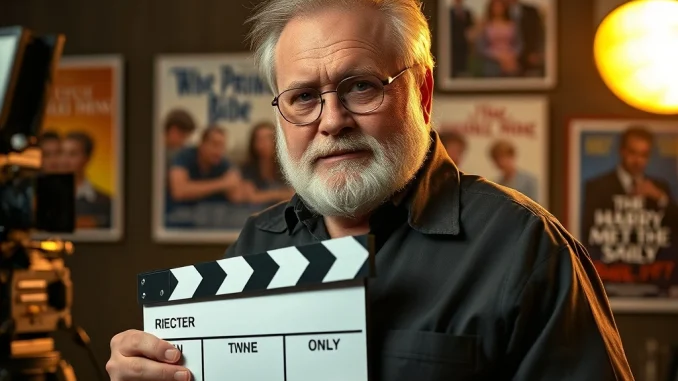
Los Angeles, December 2025: The passing of filmmaker Rob Reiner marked the end of an era in Hollywood, but his legacy extends far beyond his iconic films. Public records and estate filings confirmed Rob Reiner’s net worth stood at an estimated $200 million at the time of his death. This substantial fortune was not the result of a single hit but a multifaceted career built over six decades as an actor, director, producer, and shrewd businessman. His financial journey provides a compelling case study in navigating the volatile waters of the entertainment industry.
Rob Reiner’s Net Worth: A Multifaceted Financial Portfolio
Rob Reiner’s $200 million estate represented a diversified portfolio unique to top-tier Hollywood creatives. Unlike stars reliant solely on acting fees, Reiner’s wealth derived from several interconnected revenue streams. Industry analysts categorize his earnings into four primary pillars: directorial fees and backend profits, his lucrative production company deal, intellectual property and legal settlements, and a strategic real estate portfolio. Each pillar contributed significantly to the whole, demonstrating a career managed with both artistic and financial acumen. His ability to leverage success in one area to build stability in another was a hallmark of his professional strategy.
Directing Earnings: From Sitcom Star to A-List Filmmaker
Reiner’s financial foundation was laid during his early career as an actor, most famously as Michael “Meathead” Stivic on the groundbreaking series *All in the Family*. This provided steady income and industry visibility. However, his true wealth engine ignited with his move behind the camera. His directorial debut, *This Is Spinal Tap* (1984), while not a major box office hit initially, established his reputation and would later become a significant asset. The financial breakthrough came with a string of critically and commercially successful films throughout the 1980s and 1990s.
For films like *Stand by Me* (1986), *The Princess Bride* (1987), and *When Harry Met Sally* (1989), Reiner likely commanded mid-range fees upfront but negotiated for a percentage of the profits—a common practice for directors with proven track records. His commercial peak arrived with *A Few Good Men* (1992), which grossed over $243 million worldwide. Industry standards at the time suggest a director of his caliber could earn $5-10 million upfront against 5-10% of the gross profits for such a major studio film. Subsequent films like *The American President* (1995) and *The Bucket List* (2007) continued to provide substantial paydays, ensuring a consistent high-level income for decades.
The Castle Rock Entertainment Windfall
A pivotal chapter in building Rob Reiner’s net worth was his co-founding role in Castle Rock Entertainment in 1987. Alongside partners like Martin Shafer and Andrew Scheinman, Reiner helped build a production powerhouse named after a fictional town from Stephen King’s novels. Castle Rock’s model was to produce quality, director-driven films. Reiner directed several of its biggest hits, including *Misery*, *A Few Good Men*, and *The American President*.
The monumental financial event occurred in 1993 when media conglomerate Turner Broadcasting System acquired Castle Rock for an estimated $100 million. As a major shareholder and key creative force, Reiner’s share of this sale was reported to be in the tens of millions. Furthermore, he often held backend participation points in the films he directed for the company, creating a double layer of earnings from both the sale and the perpetual royalties from the film library. This deal transformed his wealth from high income to genuine capital.
The Spinal Tap Lawsuit: Protecting Intellectual Property
In a landmark case that underscored the value of creative ownership, Reiner and his fellow creators of *This Is Spinal Tap* filed a lawsuit in 2016 against Vivendi SA and its StudioCanal unit. The suit alleged fraudulent accounting practices that deprived them of tens of millions in merchandising and licensing revenues from the cult classic film. The core argument was that the defendants had engaged in “self-dealing” and consistently underreported profits.
This legal battle was not merely principled; it had direct financial implications for Rob Reiner’s net worth. In 2019, a confidential settlement was reached. While exact figures were not disclosed, legal experts and trade publications estimated the settlement to be worth between $15 and $20 million for the plaintiffs collectively. For Reiner, this represented a significant recovery of assets and a powerful statement on the long-term value of original intellectual property in the streaming age.
Real Estate Portfolio: Strategic California Holdings
Like many affluent Californians, a substantial portion of Rob Reiner’s net worth was anchored in real estate. His holdings were characterized by long-term ownership in prime locations, reflecting a buy-and-hold strategy. His primary residence for decades was a sprawling estate in the Brentwood area of Los Angeles, purchased in the late 1980s for an estimated $2.5 million. Given the exponential rise in Los Angeles property values, this property alone was likely worth $25-40 million at the time of his passing.
He and his wife, Michele Singer, also owned a significant vineyard and ranch property in Sonoma County’s wine country. This was not merely a vacation home but a working agricultural asset. Additionally, records indicated investments in commercial properties and undeveloped land. This diversified real estate approach provided stability, hedge against inflation, and valuable non-entertainment assets that contributed reliably to his overall $200 million valuation.
Conclusion: The Blueprint of a Hollywood Fortune
Rob Reiner’s net worth of $200 million stands as a testament to a rare combination of artistic vision and business savvy. His fortune was built not on a single blockbuster but on a sustained, diversified career. He mastered the art of converting critical success into financial leverage, whether through profit participation, a lucrative company sale, defending his intellectual property, or investing in tangible assets. His journey from television actor to iconic director to wealthy estate holder illustrates a complete Hollywood arc. It shows that enduring wealth in the film industry requires navigating its creative, corporate, and legal dimensions with equal skill. The final valuation of Rob Reiner’s net worth confirms his status as both a cultural architect and a formidable financial success story.
FAQs
Q1: What was Rob Reiner’s primary source of wealth?
While his directing fees were substantial, the largest single boosts to Rob Reiner’s net worth likely came from the sale of Castle Rock Entertainment in the 1990s and his long-term backend participation points in his hit films, compounded by a valuable real estate portfolio.
Q2: How did the Spinal Tap lawsuit affect his net worth?
The confidential settlement with Vivendi in 2019, stemming from the lawsuit over merchandising revenues, was estimated to be worth millions. It recovered lost income and reinforced the long-term financial value of his creative intellectual property, directly adding to his estate’s value.
Q3: Did Rob Reiner earn money from acting?
Yes, his early career as an actor, notably on *All in the Family*, provided his initial income and fame. However, acting constituted a smaller portion of his later wealth compared to his earnings as a director, producer, and business owner.
Q4: What was the significance of Castle Rock Entertainment to his fortune?
As a co-founder and major shareholder, Reiner received a multi-million dollar payout when Turner Broadcasting bought Castle Rock. He also earned directing fees and profit shares from the hit films he made under its banner, making it a cornerstone of his financial growth.
Q5: How did real estate contribute to his $200 million net worth?
Reiner held long-term properties in high-value areas like Brentwood, Los Angeles, and Sonoma County. The appreciation of these assets, particularly his primary residence, represented a significant, stable portion of his overall wealth, independent of the film industry’s fluctuations.
Updated insights and analysis added for better clarity.
This article was produced with AI assistance and reviewed by our editorial team for accuracy and quality.