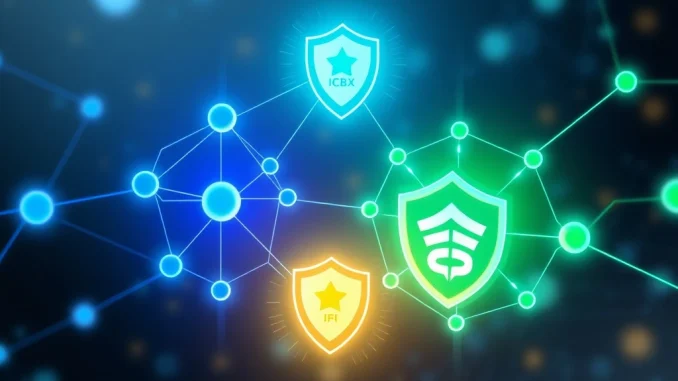
Global, May 2025: In a significant move for the decentralized technology sector, Qitmeer Network and ICBX Network have officially announced a strategic alliance. This partnership aims to integrate state-of-the-art security capabilities with high-speed Directed Acyclic Graph (DAG) technology. The collaboration seeks to address critical challenges in scalability and resilience, potentially setting a new benchmark for the broader Web3 ecosystem. This development arrives at a pivotal moment, as the industry grapples with the dual demands of robust security and seamless user experience.
Analyzing the Qitmeer and ICBX Strategic Alliance
The formal partnership between Qitmeer Network and ICBX Network represents a convergence of complementary technological philosophies. Qitmeer Network has established itself with a focus on foundational blockchain security and decentralized economic models, often emphasizing asset issuance and cross-chain functionality. Conversely, ICBX Network has built its reputation on leveraging advanced DAG architectures to achieve remarkable transaction throughput and low latency. By combining these strengths, the alliance intends to create a hybrid framework that does not force a trade-off between security and performance—a common dilemma in blockchain design. The core objective is to foster a more resilient and efficient infrastructure for decentralized applications (dApps) and financial services.
The Critical Role of DAG Technology in Modern Blockchains
To understand the potential impact of this alliance, one must examine the role of Directed Acyclic Graph technology. Unlike traditional linear blockchains, which process transactions in sequential blocks, DAG-based systems allow transactions to be confirmed asynchronously and in parallel. This structure offers inherent advantages for scaling.
- Parallel Processing: Multiple transactions can be validated simultaneously, drastically increasing potential throughput.
- Reduced Latency: The absence of block times can lead to near-instant confirmation finality.
- Energy Efficiency: Many DAG implementations use consensus mechanisms that are less computationally intensive than Proof-of-Work.
However, DAG systems have historically faced scrutiny regarding their security models, particularly concerning resistance to certain types of network attacks. This is where Qitmeer’s expertise in cryptographic security and network integrity becomes a crucial counterbalance, aiming to harden the DAG architecture against vulnerabilities.
Historical Context and Industry Evolution
The blockchain industry’s trajectory has been defined by iterative attempts to solve the “scalability trilemma”—balancing decentralization, security, and scalability. Early networks like Bitcoin prioritized security and decentralization at the expense of speed. Subsequent generations, including Ethereum and its Layer-2 solutions, introduced programmability and improved throughput. The emergence of DAG-based projects like IOTA and Nano presented a paradigm shift, moving away from the blockchain metaphor entirely. The Qitmeer-ICBX alliance can be viewed as the latest evolution: a conscious effort to merge the battle-tested security principles of earlier blockchain generations with the high-performance promise of DAG-led innovations. This reflects a mature industry trend towards interoperability and hybrid solutions rather than winner-take-all technological approaches.
Technical Implications for Security and Network Performance
The integration of Qitmeer’s security protocols with ICBX’s DAG framework is a complex technical undertaking. It likely involves several layers of innovation. At the consensus layer, mechanisms may be developed to ensure that the speed of the DAG does not compromise the network’s ability to achieve immutable agreement on transaction history. At the network layer, enhanced node communication protocols could be implemented to prevent partitioning and eclipse attacks. Furthermore, the partnership may explore novel cryptographic techniques, such as:
- Advanced signature schemes for transaction authorization.
- Zero-knowledge proofs for privacy-preserving validation.
- Adaptive sharding within the DAG structure to manage data growth.
The table below outlines a simplified comparison of potential before-and-after states for key network metrics:
| Metric | Traditional Model (Typical) | Target Post-Integration Model |
|---|---|---|
| Transactions Per Second (TPS) | 10 – 10,000 (varies widely) | Aiming for sustained high throughput |
| Transaction Finality | Seconds to Minutes | Sub-second to Near-instant |
| Security Audit Depth | Protocol-specific | Multi-layered, cross-disciplinary |
| Energy Consumption | High (PoW) to Moderate (PoS) | Optimized for efficiency |
Potential Impact on the Broader Web3 Ecosystem
The ramifications of a successfully integrated, secure, and high-performance network extend far beyond the two partnering entities. A more resilient infrastructure could lower the barrier to entry for enterprise adoption, where security and compliance are non-negotiable. For developers, it could provide a more stable and scalable platform for building complex dApps, particularly in decentralized finance (DeFi), gaming, and supply chain management. This alliance also signals a growing trend of collaboration over competition within the Web3 space, suggesting that the future may be built on interoperable specialized networks rather than monolithic chains. It could encourage similar partnerships, accelerating overall ecosystem maturation and user experience improvements.
Conclusion
The strategic alliance between Qitmeer Network and ICBX Network represents a thoughtful and technically ambitious response to enduring challenges in the blockchain domain. By aiming to marry robust, principled security with the high-speed potential of DAG technology, the partnership seeks to contribute a foundational piece to a more resilient and capable Web3 ecosystem. While the practical implementation and real-world testing will determine its ultimate success, the collaboration underscores a critical phase in the industry’s development: the move towards integrated, hybrid solutions designed for sustainable growth and widespread utility. The focus on blockchain security and performance through this alliance will be closely watched as a potential model for future network evolution.
FAQs
Q1: What is the primary goal of the Qitmeer and ICBX Network alliance?
The primary goal is to create a more resilient and high-performance Web3 infrastructure by integrating Qitmeer Network’s advanced security capabilities with ICBX Network’s high-speed Directed Acyclic Graph (DAG) technology.
Q2: How does DAG technology differ from a traditional blockchain?
Unlike a linear chain of blocks, a DAG allows transactions to be processed and confirmed in parallel, which can significantly increase transaction throughput and reduce confirmation times compared to some traditional blockchain architectures.
Q3: Why is security a particular focus when implementing DAG technology?
While DAGs offer speed advantages, their unique structure requires specially designed consensus mechanisms to ensure the same level of security and protection against double-spending or network attacks that established blockchain models provide.
Q4: What potential applications could benefit from this partnered technology?
Applications requiring high transaction volume with strong security guarantees, such as micropayments, real-time decentralized finance (DeFi) trading, gaming asset transfers, and efficient supply chain tracking, could see significant benefits.
Q5: Does this partnership mean the networks are merging into one?
No, the announcement describes a strategic alliance and technical collaboration. It involves integrating technologies and capabilities, not a full merger of the two independent networks.
This article was produced with AI assistance and reviewed by our editorial team for accuracy and quality.