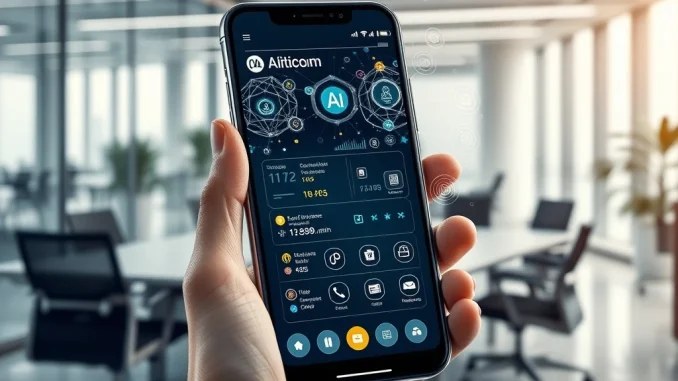
Singapore, April 2025: In a significant development for the convergence of artificial intelligence and decentralized technology, blockchain infrastructure provider Pundi AI has announced a strategic partnership with LF Wallet. The collaboration aims to fundamentally redefine the role of Web3 wallets, evolving them from simple asset storage tools into comprehensive AI operating hubs. This initiative seeks to create intuitive access points for AI agents, decentralized applications (dApps), and tokenized datasets, potentially altering how users interact with the blockchain ecosystem.
Pundi AI and LF Wallet Forge a New Path for Web3 Wallets
The partnership between Pundi AI, known for its work in on-chain AI execution, and LF Wallet, a developer of non-custodial wallet solutions, represents a logical next step in wallet functionality. Historically, crypto wallets have served primarily as cryptographic key managers and interfaces for sending and receiving digital assets. However, as the Web3 space matures, the demand for more sophisticated, user-friendly, and intelligent interfaces has grown exponentially. This move directly addresses that demand by embedding AI capabilities directly into the wallet layer.
Industry analysts view this as part of a broader trend toward “smart wallets” or “intelligent agents” that can execute complex tasks autonomously. The integration is not merely about adding a chatbot feature; it is about creating a foundational operating environment where AI can securely interact with smart contracts, manage decentralized identities, analyze on-chain data, and execute multi-step DeFi or governance strategies on behalf of the user, all within a trusted and familiar interface.
The Technical Architecture of an AI-Enabled Wallet Hub
The transformation of a standard Web3 wallet into an AI operating hub requires a robust and secure technical architecture. Based on available information, the integration likely involves several key layers working in concert.
- Secure AI Agent Sandbox: AI agents operate within a tightly permissioned environment inside the wallet. This sandbox controls what smart contracts an agent can call, what data it can access, and what transactions it can sign, always requiring final user approval for critical actions.
- On-Chain and Off-Chain Data Oracles: For AI to make informed decisions, it requires high-quality data. The hub would integrate oracles that feed verified on-chain data (token prices, liquidity pool stats) and, where permitted, relevant off-chain data, creating a rich information landscape for AI analysis.
- Standardized Agent Communication Protocol: A common language or API standard would allow different AI agents—specialized for trading, research, NFT management, or social coordination—to be installed and interact within the same wallet environment.
- Local Model Execution (where possible): For enhanced privacy and speed, certain lightweight AI models could run locally on the user’s device, processing data without sending it to external servers, while more complex tasks might leverage decentralized compute networks.
This architecture shifts the wallet from a passive tool to an active, intelligent assistant capable of managing a user’s Web3 footprint proactively.
Historical Context: The Evolution from Simple Wallets to Intelligent Interfaces
The journey to this point began with the first Bitcoin wallets, which were command-line interfaces requiring technical expertise. The introduction of graphical user interface (GUI) wallets like Exodus and MetaMask democratized access. The next leap was the integration of basic DeFi and swap functionalities directly within wallets, reducing the need to navigate to separate dApp websites. The Pundi AI and LF Wallet initiative marks the third major evolutionary phase: the integration of autonomous intelligence. This mirrors the evolution of personal computing, which moved from command-line DOS to graphical Windows and now to AI-copiloted operating systems, suggesting a parallel maturation path for Web3 infrastructure.
Practical Implications for Users and Developers
The practical impact of turning wallets into AI operating hubs is multifaceted, affecting both end-users and the developers building the Web3 ecosystem.
For the everyday user, the potential benefits are centered on simplification and empowerment. A user could instruct their wallet’s AI to execute a dollar-cost averaging strategy across several tokens, rebalance a DeFi portfolio based on risk parameters, or monitor the blockchain for specific NFT minting events—all through natural language commands. This dramatically lowers the technical barrier to engaging with complex Web3 protocols. Furthermore, AI could enhance security by learning a user’s typical behavior patterns and flagging anomalous transaction requests that could be scams or phishing attempts.
For developers, this creates a new distribution channel and interaction layer. dApp developers can build specialized AI agents that users can “install” in their wallet hubs. Instead of designing a complex front-end, a DeFi protocol might offer a trading agent that users can converse with directly. A gaming project could provide an agent that manages in-game assets and interacts with the game’s smart contracts. This shifts some of the interaction burden from the dApp’s interface to the user’s personalized AI hub, potentially leading to more seamless and integrated experiences.
Challenges and Considerations for the AI Wallet Future
While the vision is compelling, the path to widespread adoption of AI-powered wallet hubs is not without significant challenges. Trust and security remain paramount. Users must have absolute confidence that the AI agents operating within their wallet cannot act maliciously or exceed their granted permissions. This requires transparent audit processes for agents and potentially new forms of decentralized reputation systems for AI models.
Another major consideration is the computational cost. Running sophisticated AI models, especially those that process large amounts of on-chain data, can be resource-intensive. Solutions may involve hybrid models, where some computation happens on secure decentralized networks, paid for via microtransactions in crypto. Finally, there is the challenge of interoperability. For this vision to reach its full potential, AI wallet hubs from different providers need to be able to communicate and allow agents to function across different blockchain environments, necessitating industry-wide standards.
Conclusion
The partnership between Pundi AI and LF Wallet to transform Web3 wallets into AI operating hubs represents a forward-looking bet on the next generation of blockchain interaction. By moving intelligence directly into the wallet—the user’s primary point of contact with Web3—this initiative aims to demystify decentralized technology, enhance security through proactive monitoring, and unlock new levels of user autonomy. If successful, it could catalyze a shift from manual, transaction-by-transaction interaction to a more managed, goal-oriented relationship with the digital economy, making the power of crypto wallets and decentralized AI accessible to a much broader audience. The success of this model will depend on rigorous security, seamless user experience, and the collaborative development of an open ecosystem for AI agents.
FAQs
Q1: What is the main goal of the Pundi AI and LF Wallet partnership?
The primary goal is to evolve standard non-custodial Web3 wallets from basic asset management tools into intelligent platforms that serve as operating hubs for AI agents, allowing users to interact with dApps and manage tokenized assets through intuitive, AI-powered interfaces.
Q2: How does an “AI operating hub” differ from a normal crypto wallet?
A normal wallet primarily holds keys and facilitates transactions. An AI operating hub acts as a secure environment where users can deploy, manage, and interact with various AI agents that can perform complex tasks like portfolio management, on-chain research, and automated smart contract interactions on the user’s behalf, following granted permissions.
Q3: Is my crypto safe if an AI agent is operating in my wallet?
Security is the foundational design principle. In a properly architected system, AI agents operate in a sandbox with strict, user-defined permissions. They cannot move funds or sign transactions without explicit user approval for those actions. Their role is to analyze, suggest, and execute only pre-authorized tasks.
Q4: What kind of tasks could I ask an AI agent to do in my wallet?
Potential tasks include: automating a savings strategy across different tokens, monitoring gas fees to execute transactions when costs are low, analyzing yield farming opportunities across DeFi protocols, managing a collection of NFTs (like listing or bidding), or summarizing governance proposals for DAOs you participate in.
Q5: Will this technology work with all blockchains and dApps?
Initial integrations will likely focus on specific, supported blockchains. For widespread functionality, the technology requires the development of interoperability standards so AI agents can understand and interact with smart contracts across different ecosystems. Broad compatibility is a long-term goal for the industry.