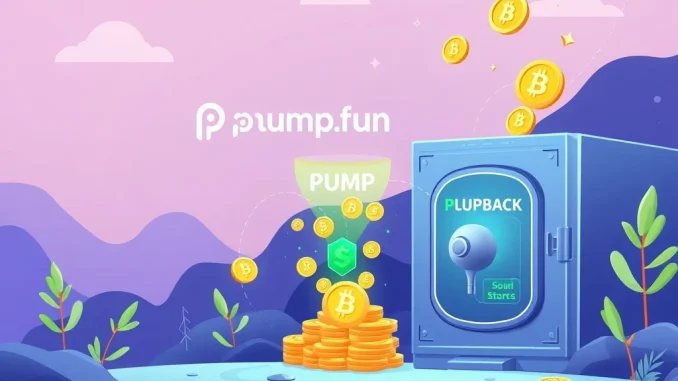
In the fast-paced world of decentralized finance, where innovation and volatility often go hand-in-hand, a recent announcement from Pump.fun has sent ripples across the crypto community. The popular meme coin launchpad has executed a monumental PUMP token buyback, utilizing a substantial portion of its accumulated SOL fee revenue. This isn’t just a routine transaction; it’s a strategic maneuver that highlights the platform’s commitment to its token and the broader ecosystem. For anyone tracking the pulse of the crypto market, understanding the mechanics and implications of such a move by a prominent crypto platform like Pump.fun is absolutely crucial.
Pump.fun’s Strategic Move: What’s Behind the Massive PUMP Token Buyback?
The crypto world is abuzz with the news: Pump.fun, a rapidly growing platform for launching meme coins, has completed a significant buyback of its native PUMP token. According to on-chain analyst @EmberCN on X, a wallet believed to be associated with Pump.fun initiated this substantial repurchase after transferring a hefty 187,770 SOL (equivalent to approximately $30.53 million at the time) in fee revenue to a specific address. This move underscores a deliberate strategy to reinforce the value proposition of the PUMP token.
Here’s a breakdown of the key figures involved in this impressive PUMP token buyback:
- Total PUMP Repurchased: 3.04 billion PUMP tokens
- SOL Utilized for Buyback: 111,953 SOL
- Fiat Value of SOL Used: Approximately $18.34 million
- Average Purchase Price: Around $0.006 per PUMP token
Why would a platform engage in such a massive buyback? In essence, a token buyback is akin to a stock repurchase in traditional markets. It typically aims to reduce the circulating supply of a token, which, assuming constant or increasing demand, can lead to an appreciation in its price. This signals confidence from the platform in its own token’s future and can be seen as a mechanism to return value to token holders. For Pump.fun, a platform that thrives on community engagement and token creation, this buyback serves as a strong statement of intent and a direct investment back into its ecosystem.
Understanding the Power of SOL Fee Revenue: How Does Pump.fun Generate Funds?
At the heart of Pump.fun’s ability to execute such a large-scale buyback lies its robust revenue model, primarily driven by SOL fee revenue. Pump.fun operates as a unique launchpad for meme coins, simplifying the process for anyone to create and launch a token on the Solana blockchain without requiring initial liquidity or coding knowledge. This accessibility has made it incredibly popular, attracting a high volume of new token creations and trading activities.
The platform generates revenue through various fees associated with these activities, including:
- Token Creation Fees: A small fee is typically charged when a new token is created on the platform.
- Trading Fees: A percentage of transactions occurring on the platform, particularly when tokens transition from the bonding curve to a decentralized exchange (DEX) like Raydium.
The sheer volume of meme coins launched and traded on Pump.fun translates into substantial fee accumulation. The fact that Pump.fun has amassed 187,770 SOL in fee revenue, leading to a significant portion being used for this buyback, speaks volumes about its operational success and the sheer scale of activity on the platform. This consistent inflow of SOL fee revenue provides Pump.fun with the financial muscle to undertake initiatives like token buybacks, which are crucial for maintaining a healthy token economy and rewarding its community.
Decoding Pump.fun’s Tokenomics: What Does This Buyback Mean for PUMP?
The recent PUMP token buyback is a critical event when analyzing Pump.fun’s tokenomics – the economic model governing its native token. Tokenomics define how a cryptocurrency functions within its ecosystem, including its supply, demand, distribution, and utility. For PUMP, the buyback directly impacts its supply side.
Here’s how this buyback influences PUMP’s tokenomics:
- Supply Reduction: By repurchasing 3.04 billion PUMP tokens, Pump.fun effectively removes them from the circulating supply (assuming they are burned or moved to a treasury and not re-released). This creates a deflationary pressure, meaning fewer tokens are available in the open market.
- Potential Price Support: A reduced supply, coupled with consistent demand, often leads to an increase in the token’s price. The buyback itself also creates buying pressure, directly impacting the market price. The average buyback price of $0.006 indicates a significant investment at current market levels.
- Increased Scarcity and Value Accrual: As PUMP tokens become scarcer, their perceived value can increase, potentially benefiting existing holders. This mechanism aligns the interests of the platform with those of its token holders.
- Confidence Signal: The act of using substantial SOL fee revenue to buy back PUMP tokens signals the platform’s long-term commitment and belief in the token’s intrinsic value, which can boost investor confidence.
Understanding these tokenomic implications is vital for investors and users alike, as it sheds light on how the platform intends to manage its token’s economy and drive its value forward.
Pump.fun as a Crypto Platform: Implications for the Decentralized Finance Landscape
Pump.fun has rapidly carved out a unique niche within the broader decentralized finance (DeFi) landscape. As a crypto platform focused on democratizing meme coin launches, it has lowered the barrier to entry for countless individuals looking to create their own digital assets. This accessibility, while lauded by many for fostering innovation and community engagement, also presents unique considerations for the DeFi space.
The implications of Pump.fun’s model and recent actions extend beyond its immediate ecosystem:
- Democratization of Token Creation: Pump.fun exemplifies how blockchain technology can empower individuals to participate in token creation, bypassing traditional gatekeepers. This fosters a more inclusive and experimental DeFi environment.
- Meme Coin Phenomenon: The platform is a significant driver of the meme coin trend, showcasing the power of community-driven narratives and speculative interest in crypto. This phenomenon, while sometimes criticized for its volatility, undeniably brings new users and capital into the crypto space.
- Revenue Generation Model: Pump.fun’s success in generating substantial SOL fee revenue offers a compelling case study for other DeFi protocols on sustainable business models. Leveraging high-volume, low-cost transactions can lead to significant cumulative earnings.
- Risk and Reward: While accessible, the meme coin space is inherently risky. Pump.fun’s efforts to stabilize its own token through buybacks can be seen as a step towards building a more robust and trustworthy ecosystem, though the broader meme coin market remains highly speculative.
Ultimately, Pump.fun’s trajectory, marked by strategic financial moves like this PUMP token buyback, will continue to shape discussions around innovation, sustainability, and risk within the ever-evolving decentralized finance landscape.
Conclusion: A Bold Move for Pump.fun’s Future
Pump.fun’s monumental PUMP token buyback, fueled by impressive SOL fee revenue, marks a significant moment for the crypto platform and its native token. By repurchasing 3.04 billion PUMP tokens with $18.34 million in SOL, Pump.fun has not only demonstrated its financial strength but also its strategic commitment to enhancing the value and stability of its ecosystem. This move, deeply rooted in sound tokenomics principles, aims to reduce circulating supply, potentially increase token value, and signal strong confidence to its community and the broader market. As Pump.fun continues to innovate in the meme coin space, such decisive actions will be key to solidifying its position and fostering long-term growth in the dynamic world of decentralized finance.
Frequently Asked Questions (FAQs)
What is Pump.fun?
Pump.fun is a decentralized platform that allows users to easily create and launch meme coins on the Solana blockchain without needing initial liquidity or extensive coding knowledge. It simplifies the token creation process, making it accessible to a wider audience.
Why did Pump.fun conduct a PUMP token buyback?
Pump.fun conducted the PUMP token buyback to reduce the circulating supply of its native token. This strategic move aims to create deflationary pressure, potentially increase the token’s value, and signal the platform’s confidence and commitment to its token’s long-term health and its community.
How does Pump.fun generate SOL fee revenue?
Pump.fun generates substantial SOL fee revenue from the various activities on its platform, primarily from fees associated with creating new tokens and from trading activities as tokens progress from bonding curves to decentralized exchanges (DEXs) like Raydium.
What is the significance of token buybacks in crypto?
In cryptocurrency, a token buyback is a mechanism where a project repurchases its own tokens from the open market. This reduces the total circulating supply, which can lead to increased scarcity and potentially higher prices, benefiting existing token holders. It also often signals financial health and confidence from the project team.
How does this buyback impact the PUMP token price?
While not a guarantee, a large PUMP token buyback typically creates buying pressure and reduces the available supply, which can lead to an increase in the token’s price. It also enhances investor confidence, potentially attracting more buyers and contributing to price appreciation over time.
Is Pump.fun a secure platform for launching tokens?
Pump.fun has gained popularity due to its ease of use. While it provides a streamlined process, the security of any token launched on it also depends on the token’s individual smart contract and the inherent risks of the broader cryptocurrency market. Users should always exercise due diligence and understand the risks associated with meme coins and decentralized platforms.