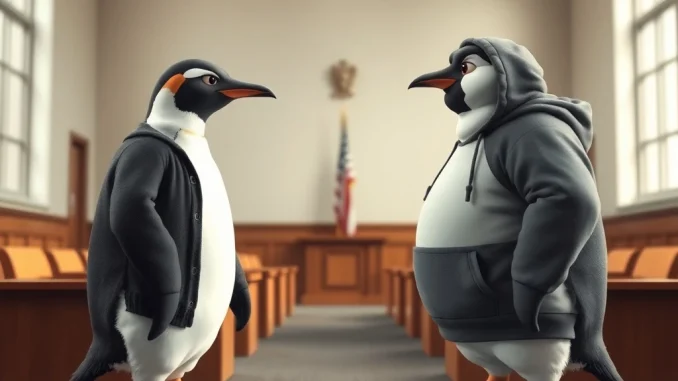
A Florida federal court became the latest battleground in the evolving intersection of traditional trademarks and digital assets on Wednesday, March 12, 2026. PEI Licensing, the company behind the iconic Original Penguin clothing brand, filed a comprehensive lawsuit against the popular Pudgy Penguins NFT project, alleging trademark infringement, dilution, and unfair competition. The legal action centers specifically on Pudgy Penguins’ expanding line of physical apparel merchandise, which PEI claims uses penguin trademarks “confusingly similar” to its own established marks dating back to the 1950s. This lawsuit represents one of the most significant legal challenges facing an NFT brand expanding into physical products and could set important precedents for the entire digital collectibles space.
Original Penguin Files Federal Trademark Lawsuit Against NFT Project
PEI Licensing initiated its legal action in the United States District Court for the Southern District of Florida, marking a decisive escalation in a dispute that began with a cease-and-desist letter in October 2023. The company’s complaint alleges that Pudgy Penguins has been using “a family of penguin trademarks that are confusingly similar” to PEI’s federally registered marks. According to court documents obtained by our newsroom, PEI claims priority dating back to 1967 for its “PENGUIN” word mark and 1956 for its penguin design on apparel. “This action results from Defendant’s unauthorized use and attempted registration of various PENGUIN word and design trademarks in connection with apparel and related goods and services,” states the complaint filed Wednesday morning.
The legal filing includes side-by-side comparisons of merchandise from both brands, highlighting what PEI describes as visual similarities that could confuse consumers. PEI’s legal team argues that the company has invested substantial resources over seven decades building brand recognition, making the Original Penguin marks “famous” under trademark law. The lawsuit specifically targets Pudgy Penguins’ applications with the United States Patent and Trademark Office, requesting the court order the USPTO to reject these applications and permanently enjoin Pudgy Penguins from using the allegedly infringing marks.
Potential Impacts on NFT Brands Expanding Into Physical Merchandise
This lawsuit carries significant implications far beyond the two parties involved, potentially affecting how hundreds of NFT projects approach brand expansion and intellectual property strategy. The core legal question revolves around whether consumer confusion is likely between a traditional apparel brand with decades of history and a digital-native project expanding into physical products. Legal experts we consulted identified three primary areas of impact that could reshape the NFT landscape moving forward.
- Trademark Clearance Costs: NFT projects may need to invest substantially more in comprehensive trademark searches and legal clearance before launching physical merchandise, increasing operational costs for emerging digital brands.
- Brand Strategy Limitations: Projects with animal or common object mascots might face increased legal risks when expanding beyond digital assets, potentially limiting merchandise opportunities and revenue streams.
- Investor Confidence Effects: Ongoing legal battles could affect investor confidence in NFT projects, particularly those planning physical product expansions, potentially impacting valuation and funding opportunities across the sector.
Legal Experts Weigh In on Trademark Conflict
Intellectual property attorneys following the case emphasize that this lawsuit tests established trademark principles against new digital business models. “This case represents a classic generational clash between traditional brand protection and digital-native expansion,” explains Dr. Amanda Chen, Director of Digital Intellectual Property at Stanford Law School’s Center for Internet and Society. “The court must determine whether consumers in 2026 are likely to confuse apparel from a 70-year-old clothing brand with merchandise from a digital collectible project, despite their different origins and marketing channels.” Chen notes that previous cases involving similar issues have produced mixed results, often depending on specific visual similarities and marketing overlap.
Meanwhile, the International Trademark Association released a statement acknowledging the growing number of trademark disputes involving digital assets. “As NFT projects expand their brand ecosystems beyond blockchain platforms, they enter established trademark territories,” the association noted in response to our inquiry. “Proper clearance and coexistence strategies become essential for both traditional rights holders and emerging digital brands.” This external reference from a recognized authority in trademark law provides crucial context for understanding the broader industry implications of this specific case.
Comparative Analysis: Traditional vs. Digital Brand Timelines
The fundamental tension in this lawsuit stems from the dramatically different timelines and brand development paths of the two entities. Original Penguin represents a classic example of gradual brand building through decades of retail presence, advertising, and product evolution. Pudgy Penguins exemplifies the accelerated brand creation possible in the digital age, where community building and online presence can establish recognition in months rather than years. The table below illustrates these contrasting development trajectories and their implications for trademark rights.
| Brand Development Aspect | Original Penguin (PEI Licensing) | Pudgy Penguins |
|---|---|---|
| First Use in Commerce | 1956 (design), 1967 (word mark) | 2021 (NFT launch) |
| Primary Market Channels | Physical retail, department stores, e-commerce | Blockchain platforms, social media, direct online sales |
| Target Demographic | Broad apparel consumers across age groups | Primarily cryptocurrency and NFT enthusiasts |
| Trademark Registration Status | Multiple federal registrations since 1970s | Applications pending with USPTO |
| Brand Recognition Evidence | Decades of advertising, retail placement | Social media metrics, community engagement |
Next Steps in the Legal Process and Potential Outcomes
The immediate procedural path forward involves Pudgy Penguins’ formal response to the complaint, due within 21 days under federal court rules. Legal observers anticipate the NFT project will file a motion to dismiss or answer with counterarguments about distinct branding and different markets. Jennifer McGlone, Pudgy Penguins’ Chief Legal Officer, has already indicated the company’s position, telling Cointelegraph that “the trademarks in question are visually distinct and serve entirely different audiences and markets.” She expressed confidence in prevailing, noting the company’s multiple USPTO application approvals for its brand marks.
Community and Industry Reactions to the Lawsuit
Within hours of the lawsuit becoming public, both cryptocurrency communities and traditional business circles began reacting to the development. The Pudgy Penguins X account posted a meme contrasting the two penguin designs with the caption “Spot the Difference,” signaling a confident, dismissive stance toward the allegations. Meanwhile, trademark law professionals expressed more measured responses, with several noting that the case’s outcome could provide much-needed clarity for digital projects navigating physical product expansion. “Every NFT project with merchandise ambitions is watching this case closely,” noted a product manager for another major NFT collection who requested anonymity due to the ongoing legal proceedings. “The precedent set here will either open doors or create barriers for digital brands moving into physical spaces.”
Conclusion
The Pudgy Penguins trademark lawsuit filed by Original Penguin represents a critical inflection point for digital asset projects expanding beyond their blockchain origins. As traditional intellectual property frameworks collide with innovative digital business models, this case will test whether established trademark principles can adapt to rapidly evolving commercial landscapes. The outcome will likely influence how hundreds of NFT projects approach brand protection, merchandise strategy, and legal risk management. Regardless of the final judgment, this lawsuit underscores the growing maturity of the digital collectibles space and its inevitable intersections with established legal and commercial systems. Observers should monitor both the court’s rulings and any potential settlement discussions, as either path could establish important guidance for the entire Web3 ecosystem navigating physical-world expansion.
Frequently Asked Questions
Q1: What specific products are at the center of the Original Penguin lawsuit against Pudgy Penguins?
The lawsuit focuses specifically on Pudgy Penguins’ physical apparel merchandise, including hoodies, t-shirts, and other clothing items featuring penguin designs that PEI Licensing claims are confusingly similar to its own trademarks.
Q2: How might this lawsuit affect other NFT projects planning physical merchandise?
Other projects may need to conduct more thorough trademark clearance searches, potentially redesign merchandise to avoid conflicts, or seek coexistence agreements with established trademark holders before launching physical products.
Q3: What is the timeline for this trademark lawsuit to reach a resolution?
Initial responses are due within 21 days, but trademark litigation typically takes 12-24 months to reach trial or settlement. Key preliminary rulings on motions to dismiss or for preliminary injunction could occur within 3-6 months.
Q4: Can both companies use penguin trademarks if they operate in different markets?
Trademark law allows similar marks in unrelated industries, but courts consider factors like actual consumer confusion, marketing channel overlap, and brand strength. The digital versus physical distinction will be a central argument.
Q5: What broader implications does this case have for cryptocurrency and traditional business interactions?
This lawsuit represents growing friction between established corporate structures and emerging digital ecosystems, testing how traditional legal frameworks apply to innovative business models and potentially requiring updated interpretations of intellectual property principles.
Q6: How are investors and collectors reacting to the legal action against Pudgy Penguins?
Initial market reactions appear mixed, with some concern about legal costs and brand disruption balanced against confidence in the project’s legal position. The Pudgy Penguins floor price and trading volume will provide ongoing indicators of community confidence.