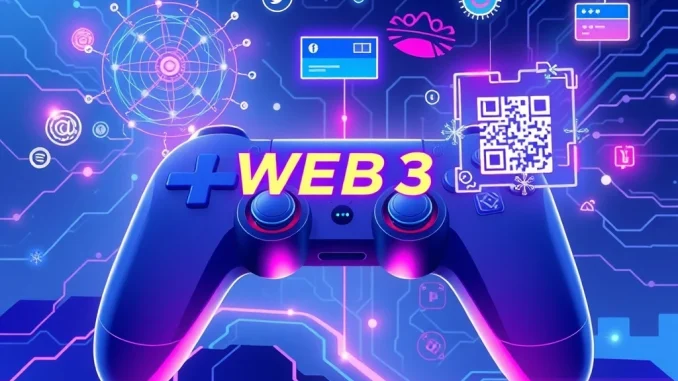
Global, May 2025: The persistent challenge for Web3 has been moving beyond speculative assets to deliver tangible, everyday utility. Two platforms, PlaysOut and HPX, are now addressing this gap directly. By strategically blending immersive gaming, adaptive artificial intelligence, and seamless real-world payment rails, their collaboration aims to redefine user engagement with blockchain technology. This initiative focuses on creating accessible, rewarding, and practical experiences that demonstrate the functional value of decentralized systems beyond financial markets.
PlaysOut and HPX Bridge Gaming, AI, and Real-World Payments
The partnership between PlaysOut, a platform known for integrating interactive entertainment with blockchain mechanics, and HPX, a system specializing in off-ramp and payment infrastructure, represents a multi-layered approach to Web3 adoption. Their core thesis is that sustainable engagement requires more than token ownership; it requires a compelling activity (gaming), intelligent personalization (AI), and a clear path to tangible value (real-world payments). This triad forms a closed-loop ecosystem designed to onboard users unfamiliar with cryptocurrency wallets and private keys. The integration allows in-game achievements and digital asset accumulation to translate directly into spendable currency or goods, effectively bridging the digital and physical economies. Industry analysts view this as a significant step toward mitigating the volatility and abstraction that have historically deterred mainstream participation.
The Technical Architecture of a Practical Web3 Ecosystem
Creating a seamless user experience requires a sophisticated backend architecture. The system operates on several interconnected layers. First, the gaming layer on PlaysOut generates provable, on-chain achievements and rewards. Second, an AI layer analyzes user behavior to tailor challenges, rewards, and marketplace suggestions, optimizing for both engagement and educational onboarding. Third, and most critically, the HPX payment bridge executes the off-ramp. This involves converting in-platform digital assets into stable-value tokens or directly into fiat currency, which can then be spent via integrated payment methods like digital wallets or pre-paid cards.
- User Onboarding: A player creates an account using familiar credentials, with blockchain interactions abstracted away initially.
- Asset Generation: Completing game objectives mints non-fungible tokens (NFTs) or awards fungible tokens representing progress.
- AI Curation: The system suggests new goals or marketplace opportunities based on the player’s style.
- Value Realization: The player selects a reward option, triggering HPX’s compliant exchange and transfer to a chosen payment method.
This architecture prioritizes user experience while maintaining the transparency and security benefits of underlying blockchain verification.
Historical Context and the Evolution of Play-to-Earn
This development is a direct evolution of the “play-to-earn” (P2E) model that gained prominence around 2021-2022. Early P2E games, such as Axie Infinity, demonstrated demand for monetizable gameplay but faced criticism for unsustainable economic models, complex onboarding, and a primary focus on speculative investment rather than fun. The PlaysOut and HPX model appears to learn from these lessons. It shifts the emphasis toward “play-and-engage,” where earning is a integrated feature of a compelling core loop, not the sole objective. Furthermore, by solving the cash-out problem with compliant, real-world payments, it addresses a major pain point that stalled previous P2E ecosystems, where converting earnings to usable currency was often cumbersome and expensive.
Implications for Mainstream Blockchain Accessibility
The primary implication of this blended approach is a significant reduction in the technical barrier to entry for Web3. By abstracting wallet management and gas fees into the platform’s backend, and by providing a clear, immediate utility for digital assets, the experience mimics familiar web2 applications. This could accelerate adoption in demographics previously hesitant to engage with cryptocurrency exchanges. For the broader industry, it provides a template for how blockchain technology can serve as an enabling layer for user-centric applications rather than the central product itself. The success of such models could drive more investment into utility-focused Web3 development rather than purely financial projects.
Expert Insight on Market Readiness and Regulatory Navigation
“The convergence of gaming, AI, and fintech in Web3 isn’t just innovative; it’s a necessary maturation,” notes Dr. Alisha Chen, a technology economist focusing on digital assets. “For years, we’ve discussed ‘real-world use cases.’ This integration tackles it head-on by solving the last-mile problem: liquidity and spendability. The critical challenge for PlaysOut, HPX, and similar platforms will be navigating the global patchwork of financial regulations. Their payment bridge must comply with anti-money laundering (AML) and know-your-customer (KYC) laws in every jurisdiction they operate, which adds complexity but also legitimacy.” This expert view underscores that technical innovation must be paired with rigorous compliance to achieve true mainstream scale.
Conclusion
The collaboration between PlaysOut and HPX represents a concrete blueprint for enhancing Web3 engagement through practical utility. By seamlessly bridging the domains of gaming, artificial intelligence, and real-world payments, they are constructing an ecosystem where blockchain’s value is experienced, not just traded. This focus on accessibility, rewards, and tangible outcomes addresses long-standing criticisms of the sector and points toward a future where decentralized technologies are woven into the fabric of everyday digital interaction. Their progress will be a key indicator of Web3’s potential to move beyond niche markets and into broader consumer adoption.
FAQs
Q1: What is the main goal of the PlaysOut and HPX partnership?
The primary goal is to create a more accessible and practical Web3 experience by combining engaging gaming, AI-driven personalization, and a direct bridge to spendable real-world currency, moving beyond speculative asset trading.
Q2: How does the AI component enhance the Web3 experience?
The AI analyzes user behavior within the platform to personalize game challenges, optimize reward structures, and suggest relevant marketplace actions. This creates a more engaging and efficient user journey, helping newcomers understand Web3 mechanics.
Q3: Do users need prior cryptocurrency knowledge to use this platform?
No, a core design principle is to abstract away complex blockchain interactions. Users can start with familiar login methods, and the complexities of wallets, gas fees, and exchanges are managed in the background by the platform.
Q4: What types of real-world payments are supported?
While specific integrations may vary by region, platforms like HPX typically support off-ramps to digital payment apps, bank transfers, and pre-paid debit cards, allowing users to convert digital assets into spendable fiat currency.
Q5: How does this differ from earlier “play-to-earn” games?
It builds on the P2E concept but places greater emphasis on a fun, engaging core gameplay loop first. It also directly integrates a compliant payment solution, solving the cash-out problem that plagued earlier models, and uses AI to improve user experience rather than just optimize earnings.
This article was produced with AI assistance and reviewed by our editorial team for accuracy and quality.