Global, May 2025: The cryptocurrency PIPPIN is demonstrating notable price resilience in the current market cycle, with on-chain analytics from Nansen revealing a sustained pattern of accumulation by large-scale investors, commonly referred to as ‘whales.’ This activity, involving millions of tokens, is creating a foundation of support that analysts observe as a potentially bullish signal for the asset’s near-term trajectory. The movement of smart capital into the token provides a data-driven counterpoint to broader market volatility, offering a case study in how institutional and sophisticated retail behavior can influence digital asset markets.
PIPPIN Price Action and Whale Accumulation Trends
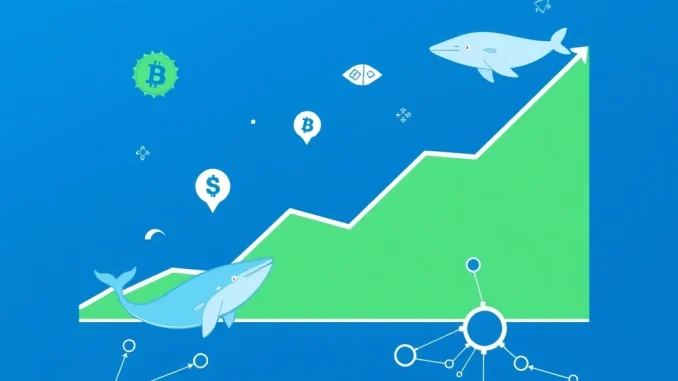
Recent trading data for the PIPPIN token shows a pattern of consolidation at higher support levels than seen in previous months. This price action occurs alongside a significant increase in holdings within wallets identified as belonging to whales—entities holding a substantial percentage of the total token supply. According to aggregated data from blockchain intelligence firm Nansen, these wallets have been net buyers over a consecutive 30-day period, absorbing selling pressure from smaller holders. This divergence between price stability and aggressive accumulation is a classic on-chain signal that often precedes upward price movements, as it indicates strong conviction among the most informed market participants. The data does not guarantee future performance but provides a transparent ledger of capital flows that all market observers can verify.
Analyzing the Nansen Data on Smart Money Flows
Nansen’s platform tags wallets based on their historical behavior, allowing analysts to distinguish between exchanges, retail investors, venture capital funds, and decentralized finance (DeFi) protocols. The current trend for PIPPIN shows a marked increase in net inflows to wallets tagged as ‘Smart Money’ and ‘Whales.’ This activity is characterized by several key metrics:
- Supply Concentration: The percentage of PIPPIN’s circulating supply held by the top 100 non-exchange wallets has increased by approximately 8% over the last quarter.
- Exchange Netflow: Data indicates more tokens are being withdrawn from centralized exchanges to private custody than are being deposited, a sign of a holding mentality rather than preparation for immediate selling.
- Transaction Size: The average size of PIPPIN transactions has grown significantly, suggesting larger players are active in the market.
This quantitative backdrop provides context for the price resilience. When large holders accumulate during periods of sideways or slightly negative price action, it often establishes a stronger floor from which rallies can emerge.
Historical Context of Whale Influence in Crypto Markets
The influence of whale wallets is not unique to PIPPIN but is a well-documented phenomenon across cryptocurrency history. For instance, similar accumulation patterns were observed in Bitcoin during the bear market of 2018-2019 and in several major decentralized exchange tokens prior to their breakouts in 2021. These entities often possess deeper resources for fundamental research, earlier access to project developments, and a higher risk tolerance. Their collective actions can significantly impact liquidity and market sentiment. However, analysts consistently warn that whale activity is one indicator among many and should be considered alongside project fundamentals, overall market conditions, and regulatory developments. A concentration of tokens also introduces risks related to market manipulation and potential large-scale sell-offs, which is why transparent on-chain data is critical for balanced analysis.
The Mechanics of Token Accumulation and Market Impact
Whale accumulation in a token like PIPPIN is not a single event but a process with observable market mechanics. It typically involves purchasing large volumes over-the-counter (OTC) or through algorithmic trading to minimize slippage and market impact. This stealth accumulation can occur even when the public price chart shows minimal movement. The eventual impact on price is often realized when retail and institutional FOMO (Fear Of Missing Out) enters the market, catalyzed by a positive catalyst such as a protocol upgrade, major partnership, or favorable market news. The whales’ earlier accumulation provides them with a lower average cost basis, while their continued holding reduces the liquid supply available for trading, creating upward pressure on price. This cycle underscores the importance of supply and demand dynamics in tokenomics.
Distinguishing Between Speculative and Strategic Accumulation
Not all whale buying is equal. On-chain analysts differentiate between speculative accumulation—short-term positioning based on momentum—and strategic accumulation based on long-term conviction. Key differentiators include the destination of the tokens (cold storage vs. DeFi lending pools), the duration of holding, and correlation with project development milestones. For PIPPIN, early data suggests a mix, with some whales moving tokens into staking or governance contracts, indicating an interest in the network’s utility beyond mere price speculation. This alignment of investor interest with network participation is generally viewed as a healthier long-term signal than pure exchange-based holding.
Broader Market Conditions and PIPPIN’s Position
The current cryptocurrency market in 2025 presents a complex landscape. While macroeconomic factors like interest rates and inflation continue to influence asset prices, the maturation of blockchain infrastructure has led to more nuanced sector rotations. PIPPIN’s performance must be contextualized within its specific niche—whether it be DeFi, gaming, layer-2 solutions, or another vertical. The token’s resilience may be partly attributable to strengths or anticipated developments within its underlying ecosystem that are known to larger, better-connected investors. Furthermore, the regulatory environment for digital assets has become more defined, potentially allowing institutional capital to move with greater confidence into select projects that demonstrate compliance and real-world utility.
Conclusion
The PIPPIN price action observed in recent weeks, coupled with transparent on-chain data from Nansen showing persistent whale accumulation, presents a compelling narrative of underlying strength. This activity suggests that sophisticated market participants see value at current levels, providing a layer of support against broader market downturns. While on-chain metrics are powerful tools for understanding market structure, they are part of a broader analytical framework that includes fundamental project analysis, technical indicators, and macro conditions. For observers and participants in the digital asset space, the case of PIPPIN serves as a real-time example of how blockchain transparency can reveal capital flows that traditional markets often obscure, highlighting the evolving sophistication of cryptocurrency market analysis.
FAQs
Q1: What does ‘whale accumulation’ mean in cryptocurrency?
A1: In cryptocurrency markets, ‘whale accumulation’ refers to the process where entities or individuals holding very large amounts of capital (whales) purchase significant quantities of a particular token. This activity is tracked via their public blockchain addresses and often signals strong belief in the asset’s future value, potentially impacting its price stability and supply dynamics.
Q2: How does Nansen track this kind of activity?
A2: Nansen is a blockchain analytics platform that labels millions of wallet addresses based on their behavior (e.g., exchange, smart contract, fund, whale). By analyzing transaction flows, token balances, and interactions with DeFi protocols, it can identify trends like net accumulation or distribution by different investor classes for tokens like PIPPIN.
Q3: Does whale buying guarantee a price increase for PIPPIN?
A3: No, it does not guarantee a price increase. While whale accumulation can create a supportive floor of demand and reduce circulating supply, price is influenced by many factors including overall market sentiment, project developments, macroeconomic conditions, and eventual profit-taking by those same whales. It is considered a bullish signal but not a certainty.
Q4: What are the risks associated with high whale concentration in a token?
A4: High concentration risks include potential market manipulation (like ‘pump and dump’ schemes), extreme volatility if a whale decides to sell a large portion of their holdings, and centralization of governance power in proof-of-stake networks. Transparent on-chain data helps the market monitor these risks.
Q5: How can retail investors interpret this data responsibly?
A5: Retail investors should use on-chain data like whale accumulation as one piece of a broader investment thesis. It is crucial to also research the PIPPIN project’s fundamentals, technology, team, roadmap, and tokenomics. Relying solely on whale movements can be risky, as these players may have different strategies, time horizons, and information.