
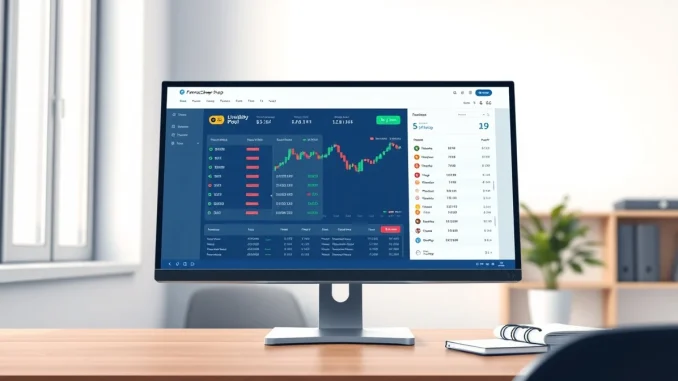
The decentralized finance sector continues to evolve rapidly, with PancakeSwap maintaining its position as a leading DEX on the Binance Smart Chain. As of April 2026, CAKE trades at approximately $3.42, reflecting the broader market’s recovery from the 2022-2023 downturn. This analysis examines the factors that could shape PancakeSwap’s trajectory through the end of the decade.
PancakeSwap’s Current Market Position and Fundamentals
PancakeSwap processed over $1.8 billion in trading volume during March 2026, according to data from DappRadar. This represents a significant recovery from the lows of 2023 but remains below the platform’s peak activity during the 2021 bull market. The protocol’s total value locked (TVL) stands at approximately $2.1 billion as of early April 2026, distributed across hundreds of liquidity pools.
Also read: TRUMP Coin Price Prediction 2026: The Volatile Reality Behind the Political Memecoin
Several fundamental developments have strengthened PancakeSwap’s position. The platform completed its migration to version 3 in 2023, introducing concentrated liquidity features that improved capital efficiency for liquidity providers. Additionally, the team implemented a tokenomics overhaul in late 2024, reducing CAKE’s inflation rate and introducing more aggressive burning mechanisms.
“PancakeSwap has successfully navigated the transition from a high-inflation yield farm to a more sustainable DeFi primitive,” noted DeFi analyst Marcus Chen in a recent research report. “Their focus on cross-chain expansion and improved token utility addresses earlier criticisms about the protocol’s long-term viability.”
Also read: Decentraland (MANA) Price Prediction: Can the Metaverse Token Realistically Reach $1 by 2030?
Key Metrics Driving CAKE’s Valuation
Several quantitative factors influence CAKE’s price action. The token’s circulating supply has stabilized around 280 million following the 2024 tokenomics changes. This represents a reduction from the previously unlimited emission schedule. Revenue generation remains strong, with the protocol capturing approximately 0.25% of swap fees, a portion of which is used to buy back and burn CAKE tokens.
User adoption metrics show mixed signals. While daily active addresses have declined from their 2021 peaks, they’ve stabilized at around 450,000-500,000 unique addresses monthly. This suggests a core user base remains engaged with the platform despite broader market volatility.
Market Analysis: Competitive Pressures and DeFi Trends
The decentralized exchange field has become increasingly competitive. Uniswap continues to dominate Ethereum-based trading, while emerging Layer 2 solutions like Arbitrum and Optimism have spawned their own DEX ecosystems. PancakeSwap’s primary advantage remains its position on BNB Chain, which offers significantly lower transaction costs than Ethereum mainnet.
However, this advantage may diminish over time. Ethereum’s implementation of EIP-4844 in early 2024 reduced Layer 2 transaction costs dramatically. Data from L2Beat shows average transaction fees on major rollups falling below $0.10 by late 2025. This erosion of BNB Chain’s cost advantage could pressure PancakeSwap’s market share.
Regulatory developments present another challenge. The SEC’s classification of certain tokens as securities in 2025 created uncertainty for many DeFi projects. While PancakeSwap operates in a decentralized manner, increased regulatory scrutiny of centralized aspects like front-end interfaces and development teams could impact operations.
Technical Analysis and Historical Price Patterns
CAKE’s price history reveals several important patterns. The token reached its all-time high of $43.96 in April 2021 during the peak of the DeFi summer, then declined sharply during the subsequent bear market. It found support around $1.50 in 2023 before beginning its current recovery phase.
Technical indicators as of April 2026 show CAKE trading above its 200-day moving average for the first time since early 2022. The relative strength index (RSI) sits at 58, indicating neither overbought nor oversold conditions. Trading volume has increased approximately 40% quarter-over-quarter, suggesting renewed investor interest.
On-chain data reveals interesting accumulation patterns. According to analytics firm Glassnode, the number of addresses holding more than 10,000 CAKE has increased by 15% since January 2026. Meanwhile, exchange balances have decreased by approximately 8% during the same period, indicating net withdrawal from trading platforms to private wallets.
Long-Term Forecast Methodology and Scenarios
Projecting cryptocurrency prices years into the future involves significant uncertainty. This forecast considers multiple scenarios based on different adoption rates, regulatory outcomes, and technological developments. All projections are based on current information available as of April 2026.
Base Case Scenario (Moderate Adoption Growth)
- 2026-2027: CAKE stabilizes between $3.00-$5.00 as PancakeSwap maintains its BNB Chain dominance while facing increased competition on other chains.
- 2028-2029: Gradual appreciation to $6.00-$8.00 range driven by continued DeFi adoption and successful implementation of PancakeSwap’s roadmap initiatives.
- 2030: Potential range of $8.00-$12.00 if broader cryptocurrency market capitalization grows and PancakeSwap captures meaningful cross-chain volume.
Bull Case Scenario (Accelerated DeFi Adoption)
- 2026-2027: CAKE reaches $7.00-$10.00 if BNB Chain experiences renewed developer activity and PancakeSwap’s cross-chain expansion proves successful.
- 2028-2029: Potential move to $15.00-$20.00 range in a broader cryptocurrency bull market with significant institutional DeFi adoption.
- 2030: Could test previous highs near $25.00-$30.00 if PancakeSwap becomes a dominant multi-chain DEX and token utility expands significantly.
Bear Case Scenario (Increased Competition and Regulation)
- 2026-2027: CAKE declines to $1.50-$2.50 if regulatory pressure intensifies or BNB Chain loses developer mindshare to competing Layer 1 and Layer 2 solutions.
- 2028-2029: Could stagnate below $3.00 if PancakeSwap fails to innovate beyond its current feature set while competitors advance more rapidly.
- 2030: Might struggle to maintain $2.00-$4.00 range in a scenario where decentralized exchange aggregation reduces individual DEX importance.
Critical Factors That Could Alter These Projections
Several developments could significantly impact CAKE’s trajectory. Technological innovations like account abstraction and intent-based trading could reshape how users interact with DEXs. PancakeSwap’s ability to integrate these features ahead of competitors would be positive for adoption.
Regulatory clarity represents another variable. Favorable regulations that recognize decentralized protocols as distinct from centralized exchanges would benefit PancakeSwap. Conversely, restrictive policies that limit access or increase compliance burdens could hinder growth.
Finally, broader cryptocurrency market cycles remain the dominant influence. Historical data shows CAKE exhibiting beta of approximately 1.8 relative to Bitcoin, meaning it tends to amplify broader market movements. A sustained cryptocurrency bull market would likely lift CAKE disproportionately, while a bear market would pressure prices significantly.
Risk Assessment for Long-Term Investors
Investors considering CAKE for long-term portfolios should weigh several risks. Smart contract risk persists despite multiple audits, as evidenced by the $200 million Nomad Bridge hack in 2022 and the $190 million Wormhole exploit the same year. While PancakeSwap hasn’t experienced a major breach, the possibility remains.
Concentration risk presents another concern. PancakeSwap’s success remains heavily tied to BNB Chain’s ecosystem. If developers migrate to alternative chains or if Binance faces regulatory challenges, CAKE could suffer collateral damage. The platform’s cross-chain expansion efforts aim to mitigate this risk but remain in early stages.
Market structure risks include the potential for decentralized exchange aggregation to reduce individual DEX importance. As platforms like 1inch and Matcha improve their routing algorithms, they may direct liquidity away from native DEX interfaces like PancakeSwap’s.
Conclusion
PancakeSwap faces both opportunities and challenges as it approaches the latter half of the decade. The protocol has demonstrated resilience through multiple market cycles and has addressed earlier concerns about unsustainable tokenomics. However, increasing competition from Layer 2 solutions and regulatory uncertainty create headwinds.
The most likely path for CAKE involves gradual appreciation tied to broader DeFi adoption, with prices potentially reaching the $8.00-$12.00 range by 2030 in a moderate growth scenario. Significant deviations from this projection would likely stem from unexpected regulatory developments, technological breakthroughs, or shifts in blockchain developer preferences.
Investors should monitor several key metrics: PancakeSwap’s cross-chain volume growth, changes in CAKE’s token burn rate, BNB Chain’s developer activity relative to competing ecosystems, and regulatory developments affecting decentralized exchanges. These factors will provide early signals about whether CAKE is tracking toward the base, bull, or bear case scenarios outlined in this PancakeSwap price prediction analysis.
FAQs
Q1: What is the most important factor driving CAKE’s price?
The most significant factor is PancakeSwap’s ability to maintain and grow its trading volume amid increasing competition from other decentralized exchanges, particularly those on Ethereum Layer 2 networks with lower fees.
Q2: How does CAKE’s tokenomics change affect its long-term value?
The shift from unlimited emissions to a controlled supply with aggressive burning mechanisms reduces selling pressure from inflation. This creates a more sustainable model if trading volume remains strong, as fees fund token buybacks.
Q3: What are the main risks to PancakeSwap’s dominance on BNB Chain?
The primary risks include regulatory action affecting Binance or BNB Chain, technological stagnation relative to competing chains, and migration of developers and users to alternative ecosystems with better incentives or features.
Q4: How does PancakeSwap generate revenue?
The protocol earns 0.25% on swaps, with a portion allocated to the treasury and another portion used to buy back and burn CAKE tokens. Additional revenue comes from initial farm offerings (IFOs) and lottery features.
Q5: Could CAKE reach its previous all-time high again?
While possible in an extreme bull case scenario, reaching the $43.96 all-time high would require approximately 12x growth from current levels. This would likely necessitate both a massive cryptocurrency bull market and PancakeSwap capturing significantly more market share than it currently holds.
Q6: How does PancakeSwap compare to Uniswap?
PancakeSwap offers lower transaction costs on BNB Chain compared to Uniswap on Ethereum mainnet, but Uniswap dominates in total volume and has broader ecosystem integration. PancakeSwap has more features like farming and lottery, while Uniswap focuses primarily on the exchange function.

This article was produced with AI assistance and reviewed by our editorial team for accuracy and quality.



Be the first to comment