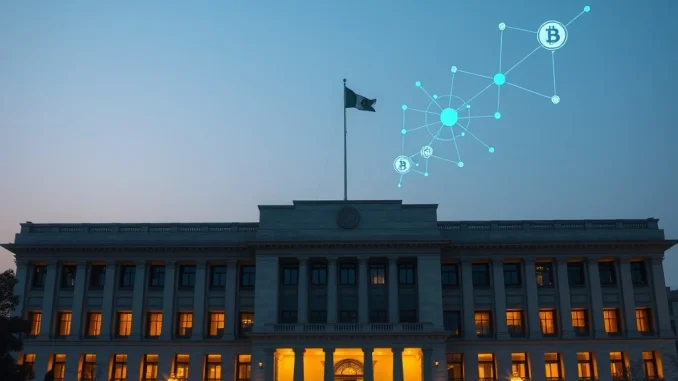
On Wednesday, March 18, 2026, Pakistan’s parliament in Islamabad passed the landmark Virtual Assets Act of 2026, formally bringing the nation’s cryptocurrency and digital asset industry under comprehensive government oversight. The legislation legally establishes the Pakistan Virtual Assets Regulatory Authority (PVARA) as the country’s sole digital asset regulator, granting it sweeping powers to enforce licensing, anti-money laundering (AML) rules, and international sanctions compliance. This decisive move represents a complete reversal from the government’s previous stance and positions Pakistan as a potential leader in regulated digital finance within the global south.
The Virtual Assets Act 2026: Cementing PVARA’s Authority
The newly passed bill provides the statutory foundation for PVARA, an agency initially established by executive order in July 2025. According to the official announcement from the regulator, the framework explicitly authorizes PVARA to oversee all digital asset service providers operating within Pakistan. Consequently, these providers must now obtain licenses and submit to ongoing regulatory scrutiny. Furthermore, the Act mandates PVARA to set and enforce stringent AML and counter-terrorism financing (CFT) provisions, aligning the country’s practices with standards set by the Financial Action Task Force (FATF).
This legislative action culminates a rapid policy shift that began in November 2024, when the government first moved to recognize cryptocurrencies as legal tender. Previously, Pakistani regulators had consistently pushed back against digital assets, asserting they would never be integrated into the formal financial system. The bill successfully passed both the Senate and the National Assembly and now awaits the signature of President Asif Ali Zardari to become enforceable law.
Strategic Impacts on Pakistan’s Financial and Tech Landscape
The passage of the Virtual Assets Act triggers immediate and long-term consequences for Pakistan’s economy and its position in the global digital asset ecosystem. Primarily, it creates legal certainty for businesses and investors, a critical factor for attracting foreign capital and fostering domestic innovation. The Act also formally integrates cryptocurrency transactions into the national financial monitoring system, aiming to curb illicit finance while promoting legitimate use cases like remittances.
- Formalized Banking Integration: PVARA Chairman Bilal Bin Saqib confirmed that the authority is developing banking rails in coordination with the State Bank of Pakistan, moving from initial No Objection Certificates (NOCs) toward a full licensing regime. This bridges the gap between traditional finance and crypto enterprises.
- Boost for Mining and Infrastructure: The regulatory clarity complements Pakistan’s earlier commitment to dedicate 2,000 megawatts of electricity for cryptocurrency mining and AI data centers, a move designed to capitalize on the country’s energy potential and create a new industrial sector.
- Remittance Revolution: A key driver behind the policy is modernizing cross-border payments. The Act facilitates projects like the exploration of the USD1 stablecoin for digital payments, a collaboration with SC Financial Technologies, which could dramatically reduce the cost and time for millions of overseas Pakistanis sending money home.
Expert and Institutional Reactions to the New Law
Industry leaders and analysts have largely welcomed the legislation as a necessary step for maturation. Bilal Bin Saqib, Chairman of PVARA, stated, “With no objection certificates (NOCs) already issued and banking rails being developed in coordination with the State Bank of Pakistan, we are now moving toward a comprehensive licensing framework aligned with global AML and financial integrity standards.” He has previously called digital assets the foundation of a “new financial rail for the global south.”
Internationally, figures like Changpeng Zhao, co-founder of Binance, have expressed optimism. Zhao has suggested that with continued development at this pace, Pakistan could emerge as a global hub for digital assets by 2030. This perspective is supported by data from Chainalysis, whose 2025 Global Crypto Adoption Index ranked Pakistan near the very top, indicating robust grassroots adoption that now has a regulatory structure to support it.
Pakistan’s Regulatory Path in a Global Context
Pakistan’s approach places it within a spectrum of global regulatory models, distinct from outright bans seen in some countries and the more laissez-faire attitudes of others. The creation of a dedicated, powerful regulator (PVARA) mirrors structures in jurisdictions like Gibraltar or Malta, but with a specific focus on national strategic goals like energy utilization and remittance efficiency.
| Country/Region | Regulatory Model | Key Authority | Primary Focus |
|---|---|---|---|
| Pakistan | Comprehensive Licensing Framework | Pakistan Virtual Assets Regulatory Authority (PVARA) | AML/CFT, Financial Inclusion, Energy-Based Mining |
| European Union | Unified Rulebook (MiCA) | Multiple National Competent Authorities | Consumer Protection, Market Integrity |
| United States | Multi-Agency, Security/Commodity-Based | SEC, CFTC, FinCEN | Investor Protection, Securities Law Compliance |
| Singapore | Licensed Payment Service Framework | Monetary Authority of Singapore (MAS) | Payment System Stability, Anti-Money Laundering |
What Happens Next: Implementation and Market Evolution
The immediate next step is the presidential assent to enact the law. Following this, PVARA will transition from its interim operational phase to fully implementing the licensing framework. Market participants can expect detailed application guidelines, capital requirements, and compliance protocols to be published in the coming months. Additionally, the collaboration on the USD1 stablecoin and the development of the dedicated mining corridors will move from memorandum to pilot phases, testing the real-world utility of the new regulatory environment.
Industry and Public Response to the New Era
Initial reactions from Pakistan’s local crypto community have been cautiously optimistic. Entrepreneurs highlight the clarity needed to secure investments and build sustainable businesses. However, some express concerns about over-regulation potentially stifling innovation or creating high compliance costs for startups. Meanwhile, the general public, particularly the tech-savvy youth and the diaspora engaged in remittances, largely views the move as a progressive step into the modern digital economy. The government’s parallel announcement of a Bitcoin strategic reserve has also sparked discussions about national treasury management in the digital age.
Conclusion
The passage of the Virtual Assets Act of 2026 marks a definitive turning point for Pakistan, transforming its digital asset sector from a grey market into a formally recognized and regulated component of the national economy. By establishing PVARA with clear authority, Pakistan is not merely reacting to technological change but strategically positioning itself to harness blockchain for financial inclusion, energy monetization, and efficient remittances. The world will now watch closely as Pakistan implements this ambitious framework, a test case for whether comprehensive regulation can catalyze, rather than constrain, the promise of digital assets in an emerging economy. The success of this model could inspire similar approaches across the global south.
Frequently Asked Questions
Q1: What is the Pakistan Virtual Assets Act of 2026?
The Virtual Assets Act of 2026 is a law passed by Pakistan’s parliament that provides a formal legal framework for regulating cryptocurrencies and other digital assets. It establishes the Pakistan Virtual Assets Regulatory Authority (PVARA) as the national regulator.
Q2: How does this new law affect cryptocurrency users in Pakistan?
For users, it brings legal clarity and aims to protect consumers by requiring service providers like exchanges to be licensed and comply with anti-money laundering rules. It also paves the way for safer integration of crypto with traditional banking services.
Q3: What are the immediate next steps now that the bill has passed parliament?
The bill must be signed by President Asif Ali Zardari to become law. After enactment, PVARA will finalize and publish detailed regulations for its licensing framework, and existing service providers will begin the formal application process.
Q4: Why did Pakistan decide to regulate cryptocurrencies now?
Pakistan is responding to high local adoption, the strategic need to modernize its remittance system, and the opportunity to use surplus energy for cryptocurrency mining. Regulation aims to manage risks while capturing these economic benefits.
Q5: How does Pakistan’s approach compare to other countries?
Pakistan has chosen a comprehensive licensing model with a single dedicated regulator (PVARA), similar to some smaller nations. This differs from the multi-agency approach in the US or the broad, unified rules of the European Union’s MiCA regulation.
Q6: What does this mean for Pakistan’s Bitcoin mining plans?
The regulatory framework provides the stability needed for large-scale investments. The government’s prior allocation of 2,000 MW for mining and AI data centers can now proceed with clear legal guidelines, attracting both domestic and international mining operators.