Global, February 2026: Cryptocurrency markets continue to demonstrate cyclical behavior, with recent corrections creating potential opportunities for strategic positioning. The current landscape shows several digital assets trading at significant discounts from recent highs, while institutional participation in decentralized finance expands substantially. This analysis examines market conditions, technical indicators, and fundamental developments shaping potential recovery scenarios.
Current Market Conditions and Oversold Indicators
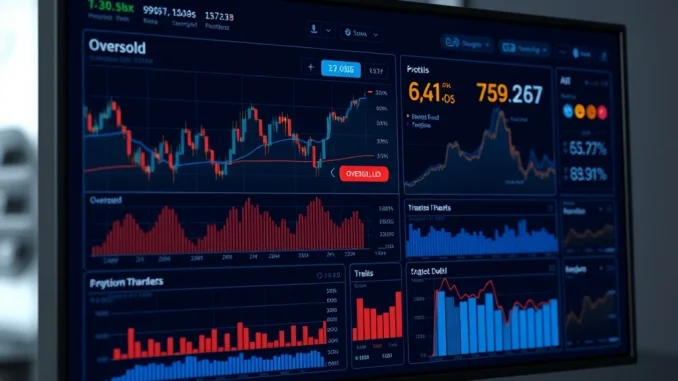
Cryptocurrency markets experienced notable volatility throughout late 2025 and early 2026, with many assets declining from previous peaks. Technical analysts point to several metrics suggesting potential oversold conditions across multiple timeframes. The Relative Strength Index (RSI), a momentum oscillator measuring the speed and change of price movements, has fallen below 30 for numerous major cryptocurrencies, historically indicating potential buying opportunities during previous market cycles.
Market capitalization across the cryptocurrency sector declined approximately 28% from November 2025 highs through early February 2026. This correction follows a period of sustained growth throughout much of 2025, when institutional adoption accelerated and regulatory frameworks clarified in several major jurisdictions. The current pullback aligns with historical patterns where cryptocurrency markets typically experience corrections of 30-50% during bull market phases before resuming upward trajectories.
Institutional Expansion into Decentralized Finance
Despite recent price volatility, institutional participation in decentralized finance continues to expand significantly. Major financial institutions have increased their DeFi allocations throughout 2025, with total value locked in institutional DeFi protocols growing approximately 140% year-over-year. This expansion reflects growing confidence in blockchain infrastructure, improved security protocols, and clearer regulatory guidance in key markets including the European Union, United Kingdom, and Singapore.
Institutional DeFi participation now spans multiple use cases including:
- Cross-border settlement and payment systems
- Tokenized real-world asset platforms
- Institutional lending and borrowing protocols
- Decentralized derivatives and structured products
- Asset management and automated portfolio strategies
This institutional expansion provides fundamental support for the broader DeFi ecosystem, potentially creating more stable demand dynamics compared to previous market cycles dominated primarily by retail participation.
DeepSnitch AI: A Case Study in Emerging Token Performance
DeepSnitch AI, an artificial intelligence-powered security protocol for decentralized applications, represents one notable example of recent market activity. The project successfully raised over $1.6 million in its recent funding round, attracting investment from both venture capital firms and strategic blockchain partners. Following its token generation event in December 2025, the project’s native token appreciated approximately 170% through late January before experiencing a correction alongside broader market conditions.
The protocol addresses a critical need in the expanding DeFi ecosystem: automated security monitoring and vulnerability detection. As decentralized applications grow more complex and handle increasing value, security concerns remain paramount. DeepSnitch AI utilizes machine learning algorithms to continuously monitor smart contracts for potential vulnerabilities, anomalous behavior, and emerging threat patterns.
Project developers recently announced the locking of 36 million tokens, representing approximately 18% of the total supply, through a multi-signature smart contract with graduated release schedules. This token lockup mechanism aims to align long-term incentives between developers, investors, and protocol users while reducing circulating supply during the project’s initial growth phase.
Analytical Framework for Identifying Potential Opportunities
Evaluating cryptocurrency opportunities during market corrections requires examining multiple dimensions beyond simple price action. Fundamental analysis should consider protocol development activity, community growth metrics, partnership announcements, and technological milestones. Technical analysis can identify potential support levels, volume patterns, and momentum indicators suggesting possible reversal points.
Several analytical approaches prove valuable during current market conditions:
| Analytical Dimension | Key Metrics | Current Market Observations |
|---|---|---|
| Fundamental Strength | Development activity, GitHub commits, protocol upgrades | Continued development despite price volatility across major projects |
| Network Health | Active addresses, transaction volume, fee revenue | Moderate declines in activity, but core usage remains robust |
| Valuation Metrics | Network value to transaction ratios, market cap comparisons | Improved valuations relative to network utility metrics |
| Sentiment Indicators | Social volume, weighted sentiment, exchange flows | Negative sentiment approaching historical reversal zones |
Historical analysis of previous cryptocurrency cycles reveals that assets with strong fundamentals and active development during market corrections often demonstrate stronger recovery trajectories when sentiment improves. The current environment separates projects with sustainable development roadmaps and real-world utility from those primarily driven by speculative narratives.
Market Structure and Potential Recovery Scenarios
Current market structure shows several characteristics common to previous cycle bottoms, though historical patterns never guarantee future performance. Exchange reserves for major cryptocurrencies have declined throughout the correction period, suggesting reduced selling pressure as assets move to long-term storage solutions. Derivatives market data indicates reduced leverage across the system, with funding rates normalizing after periods of excessive optimism.
Potential recovery scenarios depend on multiple macroeconomic and sector-specific factors. Traditional financial market conditions, particularly interest rate trajectories and inflation data, continue influencing cryptocurrency valuations as institutional participation increases. Within the blockchain sector, successful protocol upgrades, regulatory developments, and technological breakthroughs could catalyze renewed interest and capital inflows.
Conclusion
Current cryptocurrency market conditions present a complex landscape of technical oversold indicators, expanding institutional participation, and ongoing fundamental development. While price corrections create potential opportunities, thorough analysis remains essential for identifying projects with sustainable value propositions. The expansion of institutional DeFi participation provides structural support for the ecosystem, while projects addressing critical needs like security, scalability, and usability continue development regardless of short-term price action. As always, cryptocurrency investments carry substantial risk, and any allocation should align with individual risk tolerance and investment objectives.
FAQs
Q1: What does “oversold” mean in cryptocurrency markets?
Oversold refers to a technical condition where an asset’s price has declined significantly and potentially excessively relative to its underlying value or historical trading patterns. Technical analysts often identify oversold conditions using indicators like the Relative Strength Index (RSI) falling below 30, suggesting potential buying opportunities though not guarantees of immediate recovery.
Q2: How significant is institutional expansion into DeFi?
Institutional participation in decentralized finance has grown substantially throughout 2025, with institutional DeFi allocations increasing approximately 140% year-over-year. This expansion reflects improved infrastructure, clearer regulations, and growing recognition of blockchain efficiency advantages for specific financial applications including settlements, asset tokenization, and automated compliance.
Q3: What factors should investors consider beyond price when evaluating cryptocurrencies?
Beyond price action, investors should examine protocol development activity, GitHub commit frequency, community growth metrics, partnership announcements, technological milestones, network usage statistics, tokenomics including release schedules, and the competitive landscape. Fundamental analysis provides context for whether price movements reflect changing value propositions or temporary sentiment shifts.
Q4: How do token lockups like DeepSnitch AI’s 36 million token lock affect markets?
Token lockups temporarily reduce circulating supply, potentially decreasing selling pressure during a project’s early stages. When executed through secure, transparent smart contracts with graduated release schedules, lockups can align incentives between developers, investors, and users while demonstrating long-term commitment to protocol development and value creation.
Q5: What risks should investors consider during market corrections?
Market corrections carry multiple risks including potential for further declines, liquidity challenges, protocol failures during stress periods, regulatory uncertainty, and macroeconomic factors affecting all risk assets. Diversification, position sizing aligned with risk tolerance, and focus on projects with sustainable fundamentals rather than speculative narratives can help manage these inherent cryptocurrency market risks.