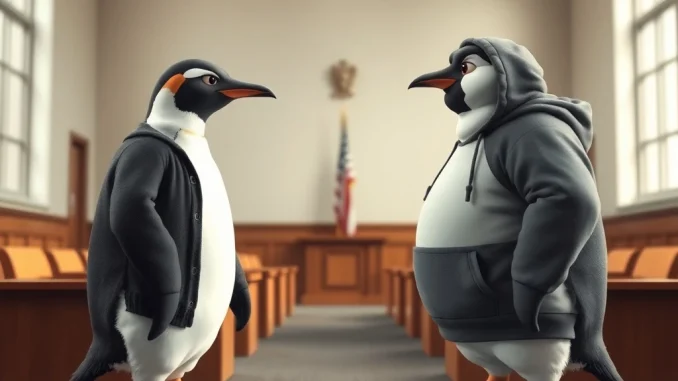
In a significant legal development at the intersection of traditional retail and digital assets, PEI Licensing has filed a federal lawsuit against the Pudgy Penguins NFT project. The lawsuit, filed on Wednesday, May 22, 2026, in the U.S. District Court for the Southern District of Florida, alleges trademark infringement, dilution, and unfair competition. PEI Licensing, the firm behind the iconic Original Penguin clothing brand founded in 1955, claims Pudgy Penguins’ expansion into physical apparel uses trademarks “confusingly similar” to its own federally registered penguin marks. This legal action highlights the growing friction between established intellectual property holders and the burgeoning web3 ecosystem, where brand identity is paramount.
Core Allegations in the Original Penguin vs. Pudgy Penguins Lawsuit
The 28-page complaint, obtained by our newsroom from the court docket, centers on Pudgy Penguins’ merchandise line. PEI Licensing asserts it has used the “PENGUIN” word mark since 1967 and a penguin design on apparel since 1956, establishing what it calls “famous” trademarks. Consequently, the company argues that Pudgy Penguins’ use of penguin imagery on clothing—including hoodies, t-shirts, and headwear—creates a likelihood of consumer confusion. “Defendant’s unauthorized use and attempted registration of various PENGUIN word and design trademarks… are confusingly similar to PEI’s federally registered and famous marks,” the complaint states. PEI’s legal team provided side-by-side visual comparisons in the filing, arguing the stylistic differences are insufficient to distinguish the brands in the crowded apparel market.
Furthermore, the lawsuit reveals that PEI sent a cease-and-desist letter to Pudgy Penguins in October 2023. That letter demanded the NFT project abandon its pending applications with the U.S. Patent and Trademark Office (USPTO) to register its own penguin-related marks for apparel. According to the complaint, Pudgy Penguins’ continued commercial activity after receiving this notice constitutes willful infringement. PEI is now seeking a court order to block those USPTO applications permanently and to halt all allegedly infringing sales. The plaintiff also requests that Pudgy Penguins be compelled to destroy existing inventory and surrender all profits from the contested merchandise.
Potential Impact on the NFT and Crypto Brand Landscape
This lawsuit represents more than a simple trademark dispute; it is a potential landmark case for how intellectual property law applies to characters and brands born in the digital realm. A ruling in favor of Original Penguin could set a precedent that limits the ability of NFT projects to monetize their IP through traditional retail channels without rigorous legal vetting. Conversely, a victory for Pudgy Penguins would reinforce the autonomy of web3 communities over their collective intellectual property. The immediate impacts are already becoming clear across several fronts.
- Brand Expansion Risk: NFT projects planning physical product lines may face increased legal scrutiny and higher costs for comprehensive trademark searches and legal opinions.
- Investor Uncertainty: Legal battles can create volatility for associated digital assets. While Pudgy Penguin NFT prices showed initial resilience, prolonged litigation may affect investor confidence in the project’s roadmap.
- Precedent for Legacy Brands: Other established companies with animal or character mascots may be emboldened to challenge similar web3 projects, potentially leading to a wave of similar lawsuits.
Legal Experts Weigh In on the Trademark Claims
Intellectual property attorneys following the case point to the central challenge: proving a “likelihood of confusion” among consumers. “The key test here won’t be whether the penguins look identical, but whether an ordinary consumer shopping for apparel might mistakenly believe Pudgy Penguins merchandise is affiliated with or endorsed by the older Original Penguin brand,” explained Maya Rodriguez, a partner at the law firm TechLex LLP who specializes in digital asset IP. She noted that courts consider factors like the similarity of the marks, the relatedness of the goods, and the strength of the senior mark’s fame.
Jennifer McGlone, Chief Legal Officer for Pudgy Penguins, provided an official statement in response to the filing. “We were surprised by this action, particularly as both parties had been engaged in productive discussions to resolve this matter privately,” McGlone said. She emphasized the company’s confidence, stating, “The trademarks in question are visually distinct and serve entirely different audiences and markets.” McGlone also highlighted that Pudgy Penguins has already secured multiple trademark application approvals from the USPTO for its brand, a point likely to form a core part of its defense strategy. This reference to ongoing USPTO approvals serves as a critical external authority link, underscoring the project’s previous steps toward legitimizing its brand.
Broader Context: NFTs, IP, and the Clash with Traditional Commerce
The Pudgy Penguins case is not an isolated incident but part of a broader pattern of friction. As NFT projects evolve from profile picture collections into full-fledged entertainment and consumer brands, they increasingly collide with the established IP landscape. Similar disputes have emerged around terms like “Metaverse” and character styles. However, this case is unique for its direct focus on physical apparel—a market where Original Penguin has operated for nearly seven decades. The table below compares key aspects of the two brands, illustrating the heart of the legal argument.
| Brand Aspect | Original Penguin (PEI Licensing) | Pudgy Penguins |
|---|---|---|
| Primary Market | Traditional retail apparel & accessories | Digital collectibles (NFTs) & derivative physical goods |
| Core Audience | General apparel consumers | Web3 enthusiasts, crypto collectors |
| Brand Origin | 1955 (Physical goods) | 2021 (Digital blockchain) |
| Trademark Status | Multiple longstanding federal registrations | Pending applications & some approved registrations |
| Visual Style | Sleek, mid-century modern penguin logo | Chubby, cartoonish penguin character art |
What Happens Next in the Legal Proceedings
The immediate next step is for Pudgy Penguins to file a formal response to the complaint, which is due within 21 days of being served. Legal analysts expect the company to file a motion to dismiss, arguing that the claims lack merit based on the visual and commercial distinctions between the brands. Should the case proceed past initial motions, it will enter the discovery phase, where both sides will exchange documents, depose witnesses, and potentially analyze market survey data on consumer confusion. This process could take months or even years, during which the court may also consider PEI’s request for a preliminary injunction to halt sales immediately. A ruling on that injunction could come within the next 60-90 days and would provide an early signal of the judge’s perspective on the strength of the claims.
Community and Industry Reactions to the Lawsuit
Reaction within the crypto community has been swift. The official Pudgy Penguins X account posted a meme contrasting its cartoon penguin with Original Penguin’s more formal logo, captioning it with a shrug emoji—a clear statement of its stance. Many holders expressed support, viewing the lawsuit as an attempt by a legacy brand to stifle innovation. Conversely, some intellectual property scholars have expressed sympathy for PEI’s position, arguing that trademark law exists precisely to prevent this kind of marketplace confusion, regardless of the medium in which a brand originates. The outcome will be closely watched by other major NFT projects like Bored Ape Yacht Club and Cool Cats, which have also launched extensive merchandise and licensing programs.
Conclusion
The Original Penguin trademark lawsuit against Pudgy Penguins marks a critical inflection point for digital asset brands expanding into the physical world. At its core, the case will test how decades-old trademark doctrines apply to community-owned IP born on the blockchain. For PEI Licensing, it’s a defense of a 70-year legacy brand. For Pudgy Penguins, it’s a fight for autonomy and the right to commercialize the identity its community built. The proceedings will hinge on nuanced arguments about consumer perception, brand dilution, and the evolution of commerce itself. Regardless of the verdict, this lawsuit will undoubtedly shape legal strategies for both web3 projects and traditional companies for years to come, making it a essential story to follow for anyone invested in the future of branding and intellectual property.
Frequently Asked Questions
Q1: What exactly is Original Penguin accusing Pudgy Penguins of doing?
PEI Licensing, owner of the Original Penguin brand, alleges that Pudgy Penguins’ line of clothing and apparel features penguin trademarks that are “confusingly similar” to its own, constituting trademark infringement, dilution, and unfair competition under U.S. law.
Q2: How could this lawsuit affect the value of Pudgy Penguins NFTs?
While NFT prices are influenced by many factors, prolonged and costly legal battles can create uncertainty, potentially affecting investor confidence and the project’s ability to execute its roadmap, which could impact perceived value.
Q3: What is the likely timeline for this lawsuit to be resolved?
Trademark cases can be lengthy. Initial motions will play out over several months. If the case proceeds to full discovery and trial, a final resolution could take two years or more, though a settlement at any stage remains possible.
Q4: Has anything like this happened to other NFT projects before?
Yes, there have been prior disputes, such as over the term “Metaverse,” but this case is particularly significant due to its focus on a direct physical product clash with a well-established, decades-old apparel brand.
Q5: What does Pudgy Penguins need to prove to win this case?
Its defense will likely argue that there is no likelihood of consumer confusion because the brands (visual style, target audience, market channels) are distinctly different, and that its own USPTO approvals support its right to use its marks.
Q6: How does this affect other crypto projects selling merchandise?
It serves as a stark reminder of the importance of thorough trademark clearance searches before launching physical products. Projects may need to invest more in legal counsel to navigate potential conflicts with existing IP holders.