In a landmark move for decentralized governance, the Optimism Collective has initiated a pivotal vote that could fundamentally reshape the economic model of one of Ethereum’s leading Layer 2 networks. The proposal, which centers on allocating half of all Superchain sequencer revenue to systematic OP token buybacks, represents one of the most significant treasury management decisions in the ecosystem’s history. This governance action, reported by CoinDesk and concluding on January 28, 2025, underscores a maturing phase for Layer 2 networks where sustainable value capture and tokenholder alignment take center stage.
Optimism Proposal Details: A Deep Dive into the Buyback Mechanism
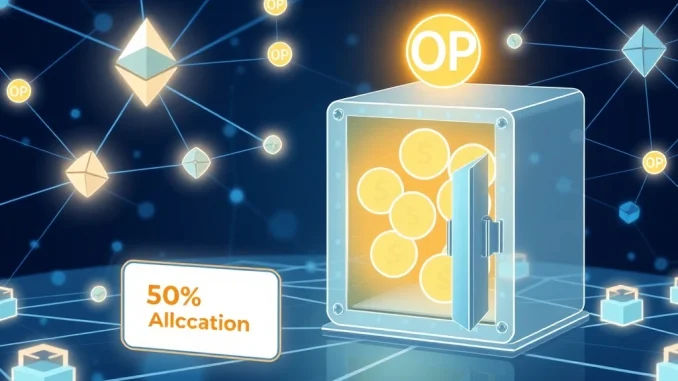
The governance proposal presents a clear and structured plan. Specifically, it mandates that 50% of all Ethereum (ETH) revenue generated by the Superchain’s shared sequencer will fund a continuous OP token repurchase program over the next 12 months. Consequently, this mechanism directly ties the financial success of the growing Superchain ecosystem—a network of interoperable Layer 2 chains using the OP Stack—to direct value accrual for the OP token.
The repurchased tokens will initially be held in the Optimism Collective’s treasury. Importantly, the proposal outlines several potential future uses for these assets, creating a flexible strategic reserve. The community may later decide to burn the tokens, permanently reducing supply. Alternatively, they could allocate them for ecosystem grants and funding or distribute them to participants who secure the network. This multi-path approach allows future governance to respond to evolving market and ecosystem conditions.
The Strategic Rationale Behind Superchain Revenue Allocation
This vote is not an isolated event but a strategic response to the evolving economics of Layer 2 blockchains. Sequencer revenue, derived from transaction ordering and fee extraction, has become a critical income stream. As the Superchain attracts more users and developers—including chains like Base, Zora, and Mode—its revenue potential scales significantly. Allocating a substantial portion to buybacks creates a reflexive value loop: increased network usage boosts revenue, which fuels buybacks, potentially increasing token value and incentivizing further ecosystem participation.
Furthermore, this proposal aligns with broader trends in decentralized autonomous organization (DAO) treasury management. Prominent DAOs increasingly explore buybacks and burns as tools for tokenomics sustainability. For instance, other ecosystems have implemented similar mechanisms with varying structures. The Optimism approach is distinct because it directly links the action to a transparent, verifiable, and growing revenue stream from a core piece of infrastructure.
Expert Analysis: Implications for Tokenomics and Governance Precedent
Blockchain economists view this vote as a critical test case for value capture in modular blockchain architectures. “The Superchain model represents a shift from isolated Layer 2s to a shared, interoperable ecosystem,” explains a researcher specializing in cryptoeconomic design. “This proposal attempts to solve a fundamental question: how does value generated across an entire network of chains flow back to its core governance and security asset? The answer could set a precedent for every other modular stack in development.”
The voting process itself, running until January 28, utilizes Optimism’s sophisticated governance framework. Tokenholders delegate voting power to representatives or vote directly. A high voter turnout would signal strong community engagement in complex financial governance. The outcome will also provide a clear signal about the community’s priorities: immediate value accrual via buybacks versus longer-term reinvestment of all revenue into growth-oriented grants and incentives.
Comparative Landscape: How Other Layer 2 Networks Manage Revenue
To understand the significance of Optimism’s proposal, it is useful to examine the strategies of other major Layer 2 solutions. The table below provides a high-level comparison of revenue allocation approaches.
| Network | Primary Revenue Source | Key Allocation Strategy |
|---|---|---|
| Optimism (Proposed) | Superchain Sequencer Fees | 50% to OP buybacks, 50% to treasury for grants/security |
| Arbitrum | Sequencer Fees & Priority Tx | Majority to DAO treasury for grants, ecosystem development |
| Starknet | Transaction Fees | Allocated to ecosystem fund and core developer funding |
| zkSync Era | Transaction Fees | Reinvested into protocol development and growth initiatives |
This comparative view highlights that Optimism’s plan is among the most direct in linking revenue to token buybacks. If successful, it could pressure other ecosystems to formalize clearer value-accrual pathways for their native tokens. The decision also reflects a maturation in community thinking, moving beyond pure growth-at-all-costs to include sustainable financial engineering.
Potential Impacts and Risks for the OP Ecosystem
The proposed buyback program carries several potential implications for the Optimism network:
- Token Supply Dynamics: If tokens are burned, the program could introduce a deflationary pressure on OP’s circulating supply, contrasting with the inflationary emissions used to fund grants.
- Treasury Management: Holding bought-back tokens creates a powerful strategic asset. The treasury could use them to fund major initiatives without selling on the open market.
- Market Perception: A sustained buyback is often interpreted as a sign of fundamental strength and a commitment by developers to tokenholder value.
- Execution Risk: The mechanics of conducting decentralized, transparent buybacks on a regular basis present technical and operational challenges that must be flawlessly executed.
Conversely, critics of the proposal might argue that allocating half of all sequencer revenue could starve the ecosystem fund of resources needed for long-term growth incentives. The debate hinges on the optimal balance between rewarding existing participants and funding future adoption.
Conclusion
The Optimism governance vote on allocating Superchain revenue for OP token buybacks marks a decisive moment for the ecosystem. This proposal transcends a simple treasury decision; it represents a strategic blueprint for how a leading Layer 2 network intends to capture and distribute value in a competitive and modular blockchain landscape. The outcome on January 28 will not only determine the immediate financial mechanics of the Optimism Collective but also send a powerful signal about the maturity of decentralized governance. As Layer 2 solutions increasingly become the primary user interface for Ethereum, the strategies they employ for sustainable value creation will define their long-term viability. The Optimism community’s choice will undoubtedly be studied as a key case study in cryptoeconomic design and on-chain governance for years to come.
FAQs
Q1: What is the Superchain sequencer revenue?
The revenue is the Ethereum (ETH) collected by the shared sequencer for ordering transactions across all Layer 2 chains built using the OP Stack within the Optimism Superchain ecosystem. It is a primary income stream for the network.
Q2: How would the OP token buybacks be executed?
The proposal states that buybacks would be conducted systematically over the 12-month period using the allocated ETH revenue. The specific mechanics (e.g., on-chain market buys, periodic auctions) would be determined and implemented by the community-approved treasury management team to ensure transparency and efficiency.
Q3: What happens to the OP tokens after they are bought back?
Initially, all repurchased OP tokens will be held in the Optimism Collective’s treasury. A future, separate governance vote will decide their ultimate use: permanent burning, allocation to ecosystem funding, or distribution to network security participants.
Q4: Why is this vote significant for Layer 2 governance?
This vote is significant because it represents one of the first large-scale attempts by a major Layer 2 DAO to directly link a core, scalable revenue stream to a token buyback program. It sets a precedent for how value generated by network activity can be used to benefit tokenholders and strengthen the underlying cryptoeconomic model.
Q5: When does the voting period end, and who can vote?
The governance vote is scheduled to conclude on January 28, 2025. Voting power is granted to holders of the OP token who have either delegated their tokens to a governance representative or who are voting directly through the Optimism governance portal.
Updated insights and analysis added for better clarity.
This article was produced with AI assistance and reviewed by our editorial team for accuracy and quality.