In a significant development for the artificial intelligence industry, OpenAI has temporarily suspended access to its Sora video generation tool while Meta Platforms faces mounting legal setbacks, highlighting the complex regulatory and social challenges confronting AI expansion in early 2026.
OpenAI’s Sora Suspension Follows Technical and Legal Review
OpenAI confirmed the temporary suspension of Sora, its advanced text-to-video generation model, on March 24, 2026. The company stated this decision followed internal reviews of the system’s capabilities and potential misuse concerns. Consequently, this pause affects all user access to the tool through OpenAI’s API and consumer platforms.
Industry analysts note the suspension coincides with increased regulatory attention on generative AI video tools. Specifically, the Federal Trade Commission has been examining potential deceptive advertising applications of such technology since late 2025. Meanwhile, the European Union’s AI Act implementation, which began in August 2025, establishes stricter requirements for high-risk AI systems.
OpenAI’s spokesperson explained the company is conducting additional safety testing and implementing enhanced content verification systems. “We’re taking a measured approach to ensure responsible deployment,” the representative stated. The suspension follows similar actions by other AI companies facing regulatory pressure.
Technical Challenges Behind the Decision
Technical experts point to several factors potentially influencing OpenAI’s decision. First, deepfake detection researchers have identified subtle artifacts in Sora-generated content that could facilitate misinformation. Second, computational requirements for video generation remain substantial, raising questions about infrastructure sustainability. Finally, copyright considerations for training data continue evolving in multiple jurisdictions.
Meta’s Legal Setbacks Signal Broader Industry Challenges
Parallel to OpenAI’s operational adjustments, Meta Platforms encountered significant legal defeats in March 2026. A federal appeals court upheld lower court rulings limiting Meta’s data collection practices across its platforms. Additionally, the company faces renewed antitrust scrutiny regarding its virtual reality ecosystem.
These legal developments reflect broader regulatory trends affecting technology companies. For instance, the Department of Justice’s antitrust division has increased its focus on digital markets throughout 2025 and early 2026. Similarly, data protection authorities in multiple countries have coordinated enforcement actions against large tech firms.
Legal experts observe that Meta’s courtroom challenges demonstrate how regulatory frameworks are catching up with technological innovation. “We’re seeing established legal principles applied to novel business models,” noted Professor Elena Rodriguez, a technology law specialist at Stanford University. “This creates predictable boundaries for industry development.”
Community Resistance to AI Infrastructure Expansion
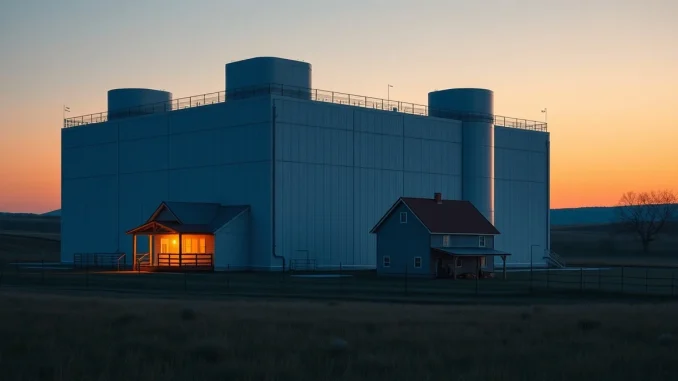
The tension between AI development and community interests extends beyond corporate boardrooms and courtrooms. In rural Kentucky, an 82-year-old landowner recently declined a $26 million offer from an AI infrastructure company seeking to build a data center on her property. This decision occurred despite the company’s alternative plans to rezone approximately 2,000 acres nearby for development.
This case exemplifies growing community pushback against technology infrastructure projects. Local opposition typically centers on several concerns:
- Environmental impact: Data centers require substantial water resources for cooling systems
- Energy consumption: AI computing infrastructure demands exceptional electricity capacity
- Community character: Rural residents often express concerns about industrialization of agricultural areas
- Economic displacement: Large-scale developments can increase local property values and living costs
Similar resistance has emerged in other regions, including the Pacific Northwest and Southwest United States. Community organizers have formed coalitions to negotiate better terms with technology companies or block projects entirely.
The Economics of AI Infrastructure
AI companies require expanding physical infrastructure to support computational demands. Training advanced models like Sora necessitates thousands of specialized processors operating continuously. Consequently, companies seek locations with specific advantages:
| Location Factor | Importance for AI Infrastructure |
|---|---|
| Reliable Power Supply | Critical for uninterrupted computation |
| Cooling Capacity | Essential for processor temperature management |
| Land Availability | Required for large-scale facility construction |
| Regulatory Environment | Impacts permitting timelines and operational flexibility |
These requirements often lead companies to rural areas with available land and resources. However, this expansion creates inevitable friction with existing communities and land use patterns.
Regulatory Evolution in the AI Sector
The simultaneous developments at OpenAI and Meta occur within a rapidly evolving regulatory landscape. Multiple governments have introduced AI-specific legislation since 2023, with implementation accelerating in 2025 and 2026. Key regulatory approaches include:
- Risk-based classification: Systems are categorized by potential harm levels
- Transparency requirements: Companies must disclose AI system capabilities and limitations
- Human oversight mandates: Critical applications require human review mechanisms
- Testing and certification: Independent verification of system safety and accuracy
These frameworks create compliance challenges for AI developers. Companies must navigate varying requirements across different jurisdictions while maintaining innovation momentum. Industry associations have advocated for regulatory harmonization to reduce this complexity.
Expert Perspectives on Industry Adaptation
Technology policy experts emphasize that the current period represents an adjustment phase for the AI industry. “We’re moving from unfettered experimentation to responsible implementation,” observed Dr. Michael Chen, director of the Center for Technology and Society. “This transition involves technical, legal, and social dimensions that companies must address simultaneously.”
Business analysts note that leading AI companies are adapting their strategies accordingly. Many have expanded their legal and compliance teams significantly since 2024. Additionally, community engagement has become a higher priority for infrastructure planning. Some companies now conduct extensive local consultations before announcing major projects.
Conclusion
The OpenAI Sora suspension and Meta’s legal challenges represent interconnected developments in the maturing AI industry. These events demonstrate how technological advancement increasingly intersects with regulatory compliance and social acceptance. Furthermore, the Kentucky landowner’s decision illustrates growing public awareness of AI’s physical infrastructure requirements.
Moving forward, successful AI development will require balancing innovation with responsibility. Companies must address technical capabilities alongside ethical considerations and community impacts. Similarly, regulators face the challenge of establishing frameworks that protect public interests without stifling beneficial innovation. The events of early 2026 suggest this balancing process is accelerating across multiple fronts simultaneously.
FAQs
Q1: Why did OpenAI suspend access to Sora?
OpenAI temporarily suspended Sora for additional safety testing and to implement enhanced content verification systems, responding to both technical considerations and evolving regulatory requirements.
Q2: What legal challenges is Meta currently facing?
Meta faces upheld rulings limiting data collection practices and renewed antitrust scrutiny regarding its virtual reality ecosystem, reflecting broader regulatory attention on technology companies.
Q3: How are communities responding to AI infrastructure projects?
Some communities are resisting large-scale AI infrastructure development due to concerns about environmental impact, energy consumption, community character preservation, and economic displacement.
Q4: What factors make locations attractive for AI data centers?
AI companies seek locations with reliable power supplies, adequate cooling capacity, available land, and favorable regulatory environments for permitting and operations.
Q5: How is AI regulation evolving in 2026?
Regulatory frameworks increasingly employ risk-based classification, transparency requirements, human oversight mandates, and testing/certification procedures, creating complex compliance landscapes across jurisdictions.
This article was produced with AI assistance and reviewed by our editorial team for accuracy and quality.