As venture capital firms pour unprecedented billions into artificial intelligence’s next frontier, a surprising move from a sector leader highlights growing tensions between technological ambition and practical reality. OpenAI, the company behind ChatGPT, is discontinuing its Sora application, a decision that arrives amidst a massive wave of AI investment. This development forces a critical examination of the AI hype cycle’s collision with operational, ethical, and infrastructural limits.
OpenAI Sora Shutdown Amidst an AI Funding Boom
The technology investment landscape currently exhibits a stark contradiction. Major venture capital firms like Kleiner Perkins have recently announced new funds totaling billions of dollars specifically targeting artificial intelligence. Concurrently, OpenAI has decided to sunset Sora. This application, a text-to-video generation tool, represented a significant technical achievement. Industry analysts suggest the shutdown may relate to strategic resource reallocation, high operational costs, or evolving product focus rather than a failure of the underlying technology. The move underscores a maturation phase where leading AI companies must prioritize sustainable, scalable products over experimental showcases.
This strategic pruning occurs while investment floods into adjacent and foundational AI areas. Funding is aggressively targeting AI infrastructure, including specialized semiconductors, cloud computing capacity, and robotics. For instance, drone startups such as Zipline and Brinc are securing significant capital by demonstrating tangible, real-world applications in logistics and public safety, areas where return on investment is more immediately measurable. The contrast between focused, application-driven investment and the sunsetting of a flashy generative AI tool like Sora is telling.
The Real-World Pushback Against AI Infrastructure
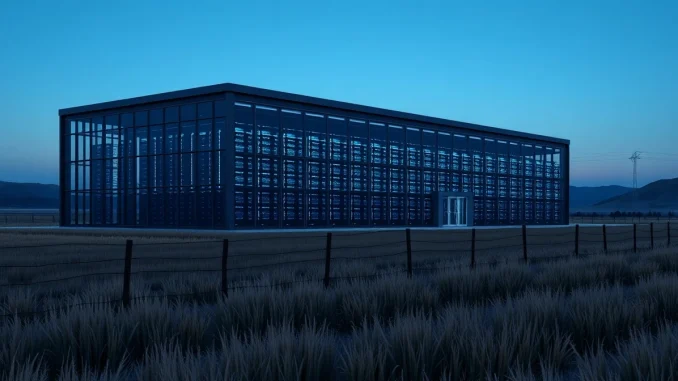
The AI boom is not just a digital phenomenon; it requires a massive physical footprint. This reality is sparking notable friction. A prominent example emerged recently when an 82-year-old landowner in Kentucky declined a multimillion-dollar offer from an AI company seeking to build a data center on her property. This incident symbolizes a broader trend: as AI infrastructure expands geographically, communities are increasingly assessing the social, environmental, and economic trade-offs.
Data centers demand immense amounts of energy, water for cooling, and land. Local pushback often centers on these strains on regional resources and grid stability. Consequently, AI companies and their investors now must navigate not only technological challenges but also complex zoning laws, community relations, and sustainability concerns. This tangible friction forms a critical part of the context in which AI products are built and deployed, influencing which projects receive continued funding and development.
Regulatory and Legal Headwinds Intensify
Parallel to infrastructure challenges, the regulatory environment for technology firms is tightening significantly. In a single week, Meta faced two separate adverse court verdicts. Legal experts have compared this moment to the “tobacco litigation” era for social media, suggesting a pivotal shift in platform accountability. For AI companies, this signals an impending wave of scrutiny around content liability, data privacy, and algorithmic transparency.
Generative AI tools, particularly those creating video or audio content, sit at the epicenter of debates about misinformation, intellectual property, and ethical use. The decision to discontinue a product like Sora may involve preemptive risk management. Companies are likely evaluating which AI applications can be developed within an increasingly defined—and restrictive—legal framework. Investors are now factoring regulatory compliance and potential litigation into their due diligence, favoring startups with robust governance from the outset.
Where Venture Capital is Placing Its Bets
Despite these headwinds, venture capital investment in AI has not slowed; it has evolved. The closure of one application does not reflect a sector-wide retreat. Analysis of recent fundraises and deals reveals a strategic pivot:
- Infrastructure and Hardware: Billions are flowing into companies developing the next generation of AI chips, efficient data centers, and specialized hardware, recognizing these as the foundational layer for all AI progress.
- Enterprise Applications: VCs heavily favor AI solutions that solve specific, costly business problems in sectors like healthcare, finance, and manufacturing, where the path to revenue is clear.
- Robotics and Automation: As seen with drone companies, investments target AI that interacts with the physical world, automating logistics, inspection, and fieldwork.
- Predictive Systems: Tools for forecasting and decision-making, such as prediction markets, are attracting co-investment from industry CEOs, highlighting a belief in AI’s utility for complex modeling.
This targeted investment strategy suggests a move away from pure, consumer-facing generative AI novelties and toward tools with demonstrable efficiency gains or revenue generation. The market is rewarding traction over hype.
Conclusion: A Necessary Correction for Sustainable Growth
The discontinuation of OpenAI’s Sora is not an indicator of an AI winter but rather a sign of the industry’s maturation. It reflects a necessary correction where resources are concentrated on sustainable, scalable, and defensible AI ventures. The simultaneous surge in VC funding confirms strong belief in AI’s long-term future, but that future is being built on a more pragmatic foundation. The era of unlimited experimentation is giving way to a phase defined by real-world utility, infrastructural realities, and regulatory boundaries. For startups and investors, success will depend on navigating this complex triad of technological potential, physical constraints, and societal accountability.
FAQs
Q1: What was OpenAI’s Sora?
Sora was an AI model developed by OpenAI designed to generate realistic video clips from text descriptions. It was a research preview demonstrating advanced generative capabilities.
Q2: Why would OpenAI shut down a advanced AI tool?
Companies may discontinue products due to high operational costs, strategic shifts in research priorities, a focus on commercializing other technologies, or preemptive concerns about the ethical and legal deployment of certain AI capabilities.
Q3: Is VC investment in AI decreasing?
No, venture capital investment in artificial intelligence remains at record highs. However, the focus of investment is shifting from broad generative AI applications to specific infrastructure, enterprise solutions, and automation technologies.
Q4: What is the “real-world pushback” against AI?
This refers to physical and community-level challenges AI expansion faces, including local opposition to data center construction over resource use, regulatory scrutiny of AI applications, and legal actions holding tech companies accountable for their products’ impacts.
Q5: How does this affect the future of AI development?
The trend points toward more measured, application-specific AI development. Future progress will likely be gated by practical considerations like energy efficiency, computational cost, regulatory compliance, and clear economic value, steering the industry toward more sustainable growth.
This article was produced with AI assistance and reviewed by our editorial team for accuracy and quality.