LONDON, March 26, 2026 — In a move that fundamentally reshapes the intersection of digital assets and global commerce, the cryptocurrency payment platform Oobit has completed a technical integration with the Polygon blockchain. Consequently, this integration enables users to spend stablecoins at any of the over 150 million physical and online merchants worldwide that accept Visa. The announcement, confirmed by Oobit’s Chief Technology Officer in an exclusive briefing, effectively turns a vast segment of the existing global payment infrastructure into a gateway for blockchain-based currency. This development follows months of testing and represents the most significant merchant-facing deployment of stablecoin technology to date.
Oobit and Polygon Forge a New Payment Pathway
The core of this announcement is a direct technical bridge built by Oobit’s engineering team. This bridge connects the Polygon blockchain’s ecosystem of dollar-pegged digital currencies to Visa’s vast merchant settlement network. When an Oobit user initiates a payment, the platform instantly converts the user’s Polygon-based stablecoin—such as USDC or a similar asset—into the local fiat currency required by the merchant’s bank. Significantly, this process occurs in the background, making the transaction appear as a standard Visa card purchase to the retailer. “Our goal was invisibility for the merchant and simplicity for the user,” explained Oobit CTO, David Lee, during the briefing. “The merchant receives euros, dollars, or yen as they always have. The user spends crypto. The complexity sits entirely with our infrastructure and Polygon’s scalable network.”
This integration did not happen overnight. It follows a strategic partnership announced in late 2024, where Oobit selected Polygon as its primary scaling solution. The choice was driven by Polygon’s proof-of-stake consensus mechanism, which offers lower transaction fees and faster finality than earlier blockchain generations—both critical for point-of-sale payments. Furthermore, the launch coincides with a broader push by Visa to expand its crypto-linked card programs, a strategy detailed in its 2025 Digital Currency Outlook report. The timeline shows a clear, accelerating convergence between traditional finance rails and decentralized finance protocols.
Immediate Impact on Retail Crypto Adoption
The immediate effect of this integration is the dramatic expansion of usable locations for cryptocurrency holders. Previously, spending crypto directly required merchant adoption of specific crypto payment processors or reliance on a limited number of crypto debit cards with narrower acceptance. Now, effectively, every store with a Visa terminal becomes a crypto-friendly outlet. Industry analysts at Juniper Research project that such integrations could drive a 300% increase in consumer crypto spending volume by 2027. The impact manifests in three key areas.
- Consumer Utility: Stablecoin holders can now use their assets for daily purchases like groceries, fuel, and dining, moving beyond speculative trading and into practical utility.
- Merchant Acquisition: Merchants gain access to a new customer base and payment method without changing their existing point-of-sale hardware or processing agreements.
- Network Effect: The Polygon ecosystem benefits from increased transaction volume and developer interest, reinforcing its position as a leading layer-2 scaling solution for Ethereum.
Expert Analysis on the Financial Infrastructure Shift
Financial technology experts highlight the structural significance of this move. Dr. Anya Petrova, a lead researcher at the Cambridge Centre for Alternative Finance, contextualized the development. “This isn’t just another crypto card,” Petrova stated. “It’s a clever leveraging of existing compliance and settlement frameworks. Oobit and Polygon are not asking the world to rebuild its payment systems; they are inserting a new asset class into the current system’s plumbing.” This approach contrasts with more disruptive models that seek to bypass traditional networks entirely. Importantly, by utilizing stablecoins, the model avoids the price volatility that has hindered direct Bitcoin or Ether payments for goods and services, addressing a major historical barrier to adoption.
Comparing Major Crypto Payment Integrations
To understand Oobit’s move, it helps to compare it with other major efforts to bridge crypto and traditional commerce. The landscape has evolved from closed-loop gift cards to full network integrations. The table below contrasts key approaches based on merchant reach, asset type, and underlying technology.
| Provider / Solution | Merchant Reach | Primary Asset | Blockchain Used |
|---|---|---|---|
| Oobit (via Polygon/Visa) | 150M+ Visa merchants | Stablecoins (USDC, etc.) | Polygon PoS |
| Traditional Crypto Debit Cards (e.g., prior models) | Varies by card issuer network | Mixed (BTC, ETH, stablecoins) | Multiple, with off-chain conversion |
| Direct Merchant Crypto Processors | Thousands of online stores | Multiple cryptocurrencies | Often native blockchains (Bitcoin, Ethereum) |
| Central Bank Digital Currency (CBDC) Pilots | Limited pilot participants | Digital Fiat (e.g., digital Euro) | Permissioned Ledger |
The Road Ahead: Regulation and Expansion
The integration’s future trajectory hinges on two factors: regulatory clarity and technological expansion. Oobit’s leadership confirmed that their model operates under existing electronic money and money transmitter licenses, applying know-your-customer (KYC) and anti-money laundering (AML) checks at the onboarding stage. However, regulators in the European Union and United States are still finalizing comprehensive frameworks for stablecoin issuers and intermediaries. The Markets in Crypto-Assets (MiCA) regulation, fully applicable in the EU as of December 2025, provides a compliance roadmap that Oobit states it already meets. Looking forward, the company’s published roadmap indicates plans to integrate additional blockchain networks beyond Polygon by Q4 2026, potentially bringing assets from chains like Solana or Avalanche into the same payment flow.
Industry and Community Reaction
Reaction from the cryptocurrency community has been largely positive, focusing on the utility breakthrough. Conversely, some decentralized finance purists express concern over the increased reliance on centralized stablecoin issuers and traditional finance gatekeepers like Visa. Within the broader payments industry, competitors are likely to accelerate their own crypto integration projects. A spokesperson for a major rival payment network, speaking on background, acknowledged the move as “a significant market signal” that would be “evaluated closely.” This competitive dynamic suggests a rapid period of innovation and partnership announcements across the sector in the coming months.
Conclusion
The integration of Oobit with the Polygon blockchain to enable stablecoin payments across Visa’s global network marks a pivotal moment. It moves cryptocurrency from the investment portfolio directly into the wallet for everyday use, without requiring merchants to alter their operations. This practical, infrastructure-first approach may prove more transformative than more radical proposals. The success of this model will depend on user adoption, sustained regulatory cooperation, and the continued technical performance of the Polygon network. For consumers and businesses alike, the line between digital assets and real-world commerce has just become dramatically thinner.
Frequently Asked Questions
Q1: How does the Oobit and Polygon integration actually work for a customer at a store?
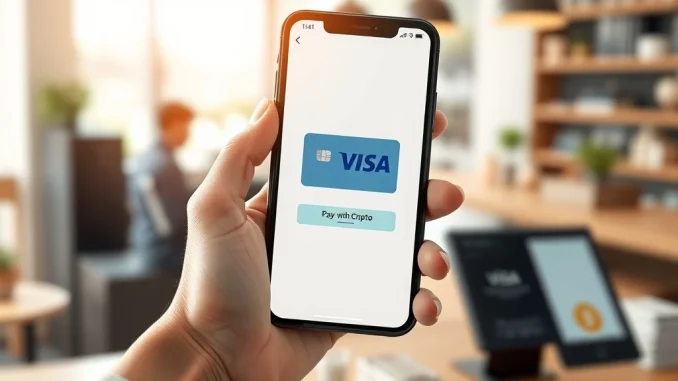
The customer loads their Oobit app with Polygon-based stablecoins like USDC. At checkout, they tap their phone (using the Oobit digital card in Apple Pay/Google Wallet) or a physical Oobit card. Oobit instantly converts the stablecoin to fiat and routes the transaction through the Visa network. The merchant receives traditional currency.
Q2: What are the main benefits for merchants accepting payments this way?
Merchants benefit with zero operational changes—they use existing Visa terminals. They receive settlement in their local currency, avoiding crypto volatility. They potentially attract new customers who prefer to spend from their crypto holdings.
Q3: When will this stablecoin payment capability be available to all users?
Oobit has stated the functionality is live immediately for its user base as of March 26, 2026. A phased global rollout is complete, following regional compliance checks over the past quarter.
Q4: Are there any fees associated with spending stablecoins this way?
Yes, Oobit applies a conversion fee, which it states is competitive with traditional foreign transaction fees. The fee covers the stablecoin-to-fiat conversion and network costs. Specific rates are listed in the app.
Q5: How does this affect the broader cryptocurrency and blockchain industry?
It provides a major use case for stablecoins beyond trading, increasing their utility and demand. It also validates layer-2 scaling solutions like Polygon for high-volume, low-value real-world transactions, driving further development.
Q6: What should existing cryptocurrency investors watch for following this news?
Investors should monitor adoption metrics from Oobit, regulatory statements from key jurisdictions regarding stablecoin payments, and any announcements from competing payment networks about similar integrations, as these will affect the entire sector’s growth trajectory.
Updated insights and analysis added for better clarity.
This article was produced with AI assistance and reviewed by our editorial team for accuracy and quality.