March 26, 2026 – A significant capital rotation is reshaping digital asset markets as onchain perpetual futures tied to real-world commodities surge, while the broader altcoin market continues its prolonged decline. This strategic shift, detailed in a new industry report, highlights how crypto-native traders are increasingly seeking exposure to traditional assets like oil and precious metals through decentralized finance (DeFi) protocols.
Onchain Real-World Perpetuals Capture Market Dominance
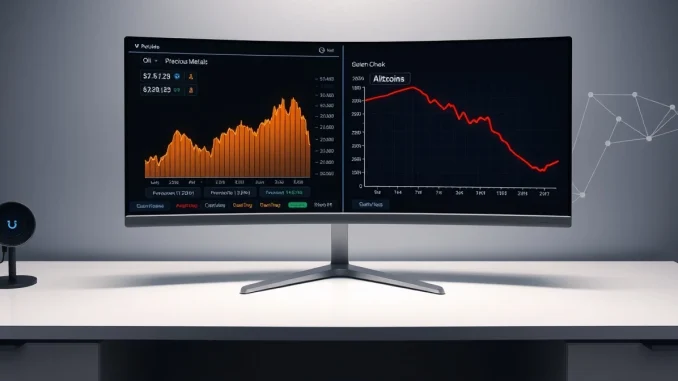
Trading volume for perpetual futures contracts linked to physical commodities has skyrocketed on decentralized exchanges. According to a report from digital asset bank Sygnum, these instruments now command a dominant share of specific decentralized trading activity. For instance, oil and precious metals perpetual futures markets on the Hyperliquid decentralized exchange accounted for over 67% of HIP-3 contract volume in the first quarter of 2026.
This marks a dramatic reversal from previous market structures. Previously, synthetic indexes represented about 90% of this trading activity. However, that figure has now collapsed to approximately 17%. This data signals a clear pivot in trader preference toward assets with tangible, real-world value underpinnings.
The Deepening Altcoin Rout and Investor Psychology
Concurrently, the altcoin market remains under severe pressure. Many alternative cryptocurrencies have fallen 80-90% below their all-time highs, extending a bear market that has persisted for months. This underperformance is creating a powerful incentive for capital reallocation.
Lucas Schweiger, Sygnum’s digital asset ecosystem research lead, provided context for this shift. He noted that the move toward onchain digital assets is supported by a 250% year-over-year surge in the market capitalization of tokenized real-world assets (RWAs). Approximately $23 billion in tokenized RWAs now trade on permissionless blockchain networks.
Schweiger explained the trader mindset, stating that many now view altcoins as “leveraged Bitcoin proxies.” Consequently, this creates an environment where crypto-native capital naturally gravitates toward traditional asset perps. Traders can execute these new positions through the same wallet interface and using the same margin, merely changing the underlying asset.
Geopolitical Tensions and Macroeconomic Drivers
Broader macroeconomic and geopolitical factors are accelerating this trend. The ongoing conflict in the Middle East has disrupted critical energy infrastructure, causing significant volatility in global oil prices. Brent crude oil, the global benchmark, has whipsawed, reaching highs near $120 per barrel before settling around $107.
Market analysts warn that sustained high oil prices could have inflationary consequences. Nic Puckrin, a market analyst, cautioned that if oil remains above $100 per barrel, it could spike inflation. This scenario might derail expectations for further interest rate cuts, impacting all risk assets.
Furthermore, prediction markets reflect growing economic concerns. Since late February 2026, the probability of a U.S. recession has surged to 36% on the Polymarket platform. Major ratings agencies have also echoed this cautious outlook, suggesting a near 50% chance of a recession occurring.
The Infrastructure of Onchain Commodity Trading
The rise of these markets is fundamentally tied to advancements in decentralized exchange infrastructure. Platforms like Hyperliquid enable the creation and trading of “Builder-Deployed Perpetuals” (HIP-3 contracts). These contracts allow for the synthetic tracking of real-world asset prices with the efficiency and composability of blockchain settlement.
- Accessibility: Traders gain exposure to commodities without physical delivery or traditional brokerage accounts.
- Composability: These positions integrate seamlessly with other DeFi protocols for lending, borrowing, or yield strategies.
- 24/7 Markets: Weekend trading activity for these contracts has surged about ninefold since January 2026, highlighting demand for continuous access.
Data and Evidence of the Shift
The evidence for this capital rotation is both quantitative and behavioral. The sheer volume shift on DEXs provides hard data. Meanwhile, the surge in weekend trading specifically points to crypto-native traders, who are accustomed to non-stop markets, driving the activity. This shift is not merely speculative; it is corroborated by the explosive growth of the broader tokenized RWA sector, which establishes a foundational trend for asset digitization.
Market Implications and Future Trajectory
This trend has several critical implications for the digital asset landscape. First, it represents a maturation phase where blockchain technology is used to access established, global markets rather than solely speculative crypto assets. Second, it could provide a stabilizing influence on the DeFi ecosystem by anchoring it to more mature asset classes.
However, risks remain. These onchain derivatives are still subject to the volatility of their underlying commodities, which are currently influenced by intense geopolitical uncertainty. Additionally, the smart contract and counterparty risks inherent in DeFi protocols persist.
Conclusion
The surge in onchain real-world perpetual futures amidst a persistent altcoin rout illustrates a pivotal evolution in digital asset markets. Investors are strategically rotating capital toward commodity-linked digital assets, driven by altcoin underperformance, geopolitical energy shocks, and the growing infrastructure for tokenized real-world assets. This movement signals a blending of traditional finance and decentralized technology, potentially marking a new chapter for blockchain-based trading focused on tangible economic value.
FAQs
Q1: What are onchain real-world perpetual futures?
Onchain real-world perpetual futures are derivative contracts traded on blockchain-based exchanges that track the price of physical commodities like oil or gold. They have no expiration date and allow for synthetic exposure to these assets.
Q2: Why are traders moving from altcoins to these instruments?
Traders are rotating capital due to the prolonged underperformance of many altcoins and seeking assets with real-world value underpinnings, especially amid geopolitical events affecting commodity prices like oil.
Q3: What is driving the volatility in oil prices mentioned in the report?
The primary driver is the ongoing conflict in the Middle East, which has disrupted energy infrastructure and supply chains, leading to sharp price fluctuations in global crude oil markets.
Q4: How does the growth of tokenized real-world assets (RWAs) relate to this trend?
The significant growth in the RWA market cap, up 250% year-over-year, establishes a foundational trend for digitizing traditional assets. It provides the necessary liquidity and infrastructure that supports trading for related derivatives like perpetual futures.
Q5: What are the risks associated with trading these onchain perpetual contracts?
Risks include the inherent volatility of the underlying commodities, smart contract security vulnerabilities on decentralized platforms, and the broader macroeconomic risk of sustained high inflation impacting all financial markets.
This article was produced with AI assistance and reviewed by our editorial team for accuracy and quality.