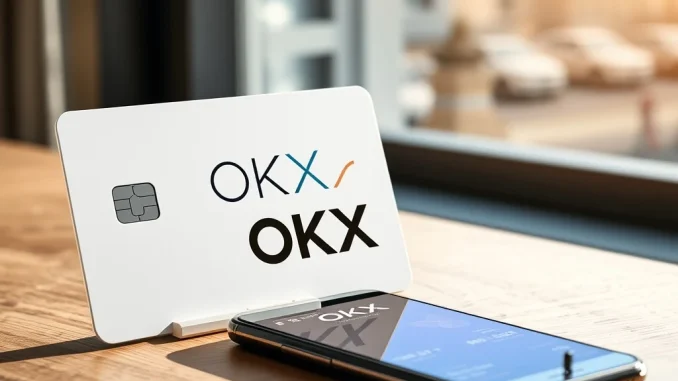
Europe, April 2025: In a significant move bridging digital assets with everyday commerce, cryptocurrency exchange OKX has officially launched its stablecoin payment card for users across Europe. This new financial tool, operating on the global Mastercard network, allows verified customers to directly spend their holdings of USDC and USDG stablecoins at tens of millions of merchants worldwide. The launch marks a pivotal moment in the maturation of cryptocurrency from an investment vehicle into a practical medium of exchange, offering European users a seamless method to utilize their digital currency for daily purchases.
OKX Stablecoin Payment Card: Technical Specifications and Availability
The OKX Card is a physical and virtual payment card designed specifically for converting cryptocurrency into fiat currency at the point of sale. The card leverages the existing Mastercard infrastructure, meaning it is accepted anywhere Mastercard is, which includes most online and brick-and-mortar retailers globally. This integration is crucial, as it removes the need for merchants to adopt new systems to accept crypto payments. When a user makes a purchase, the supported stablecoins in their linked OKX wallet are automatically converted to the local fiat currency, such as Euros or British Pounds, in real-time. The transaction settles in fiat for the merchant, while the user sees a deduction in their crypto balance. Currently, the card supports payments with two major stablecoins: USDC (USD Coin), a fully-regulated digital dollar issued by Circle, and USDG, a stablecoin issued by OKX itself. The card is available exclusively to OKX users residing in the European Economic Area (EEA) who have successfully completed the platform’s mandatory Know Your Customer (KYC) identity verification process.
The Evolving Landscape of Crypto Payment Cards in Europe
OKX’s entry into the European crypto card market places it among a growing cohort of service providers. The landscape has evolved rapidly since the first crypto debit cards emerged nearly a decade ago. Today, several companies offer similar products, but with varying models, fees, and supported assets. The OKX Card distinguishes itself by focusing initially on stablecoins, which are cryptocurrencies pegged to the value of a fiat currency like the US dollar. This focus on stability is a strategic choice, mitigating the price volatility associated with assets like Bitcoin or Ethereum for everyday spending. Users can effectively hold a digital dollar balance and spend it as euros without worrying about market swings between the time of purchase and settlement. The table below outlines a simplified comparison of the current crypto card offerings in Europe.
| Provider | Card Network | Key Supported Assets | Primary Region |
|---|---|---|---|
| OKX | Mastercard | USDC, USDG | Europe (EEA) |
| Binance Card | Visa | BTC, BNB, multiple stablecoins | European Economic Area |
| Crypto.com Visa Card | Visa | Wide range of cryptocurrencies | Globally (region-dependent) |
| Bybit Card | Mastercard | USDT, USDC | Europe, UK |
This competitive environment drives innovation and user choice, pushing providers to improve fee structures, reward programs, and asset support. The partnership with Mastercard, a legacy financial giant, also signals a continued trend of traditional finance (TradFi) infrastructure embracing the digital asset ecosystem, providing a layer of trust and reliability for end-users.
Understanding the Role of Stablecoins and KYC Verification
The choice to launch with stablecoin support is not arbitrary. For a payment card to be practical for daily use, predictability of value is paramount. Spending Bitcoin on a coffee that could double in value the next day creates a psychological barrier and accounting complexity for most consumers. Stablecoins like USDC solve this by maintaining a 1:1 peg with the US dollar, combining the borderless, digital nature of crypto with the price stability of fiat. USDG operates on a similar principle, providing OKX users with a native stablecoin option. Furthermore, the mandatory KYC verification is a critical component of regulatory compliance. European regulations, particularly the Markets in Crypto-Assets (MiCA) framework which is now fully in effect, require financial service providers to implement robust anti-money laundering (AML) and counter-terrorist financing (CTF) measures. By requiring identity verification, OKX ensures its card product adheres to these strict European standards, fostering a safer and more legitimate ecosystem for all participants.
Implications for Users and the Broader Financial Ecosystem
The practical implications for European cryptocurrency holders are substantial. The OKX Card effectively transforms digital assets from a speculative or savings instrument into a liquid spending tool. Users can now:
- Spend crypto earnings directly: Freelancers or employees paid in cryptocurrency can now access those funds for daily expenses without a lengthy withdrawal process to a traditional bank.
- Streamline international spending: For travelers, using a stablecoin card can offer more favorable exchange rates and lower fees compared to traditional bank cards or currency exchange services.
- Maintain exposure to the crypto ecosystem: Users can keep funds within the crypto economy, only converting to fiat at the precise moment of purchase, preserving optionality.
For the broader financial ecosystem, this launch represents another step toward the normalization and integration of blockchain-based assets. Each transaction processed through the OKX Card provides data points on real-world crypto spending habits, informing future financial products and regulatory approaches. It also introduces millions of Mastercard merchants to the crypto economy indirectly, as they receive fiat payments that originated as digital assets. This gradual, behind-the-scenes integration may pave the way for more direct merchant acceptance in the future.
Conclusion
The launch of the OKX stablecoin payment card in Europe is a concrete development in the ongoing convergence of digital and traditional finance. By leveraging the Mastercard network and focusing on stablecoins, OKX has created a pragmatic and compliant tool that addresses the volatility and usability challenges that have long hindered cryptocurrency’s adoption as a day-to-day currency. For verified European users, it offers unprecedented convenience and utility for their digital holdings. As the regulatory landscape under MiCA provides clearer guidelines, and as consumer comfort with digital assets grows, products like the OKX Card are likely to become a standard offering, fundamentally changing how people interact with and utilize their financial resources in a digital age.
FAQs
Q1: Where can I use the OKX Card?
The OKX Card can be used anywhere Mastercard is accepted, both online and in physical stores, worldwide.
Q2: What are the fees associated with the OKX Card?
While specific fee structures (like issuance, transaction, or currency conversion fees) are set by OKX and can vary, the launch announcement emphasizes leveraging the Mastercard network for widespread acceptance. Users should consult the official OKX website and cardholder terms for the most current and detailed fee schedule.
Q3: How does the conversion from stablecoin to fiat work at the point of sale?
The conversion happens automatically and instantly. When you make a purchase, the OKX system sells the equivalent amount of your USDC or USDG for the local fiat currency required by the merchant. You see the deduction in crypto, and the merchant receives traditional currency.
Q4: Is the OKX Card available in all European countries?
The card is available to residents of the European Economic Area (EEA). This includes all European Union member states plus Iceland, Liechtenstein, and Norway. Availability is subject to local regulations and OKX’s operational rollout.
Q5: Why does OKX require KYC verification for the card?
KYC (Know Your Customer) verification is a legal requirement under European anti-money laundering (AML) and counter-terrorist financing (CTF) regulations, including the MiCA framework. It helps prevent financial crime and ensures the security and legitimacy of the financial service for all users.