Cryptocurrency traders are facing significant news from a major global exchange. OKX has announced a **crucial OKX delisting** of several **spot trading pairs**. This decision impacts ten specific pairs, including the widely discussed SLERF/USDT. This development necessitates immediate attention from all affected users. Traders must understand the implications of this announcement for their portfolios and trading strategies.
Understanding the OKX Delisting Decision
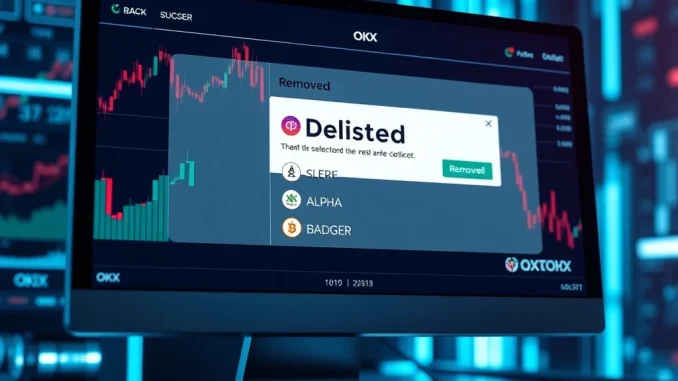
OKX, a leading cryptocurrency exchange, officially declared its intention to delist ten specific spot trading pairs. This announcement was made via its official website. The delisting process will occur between 8:00 a.m. and 10:00 a.m. UTC on October 23. This timeline provides a clear window for users to take necessary actions. The affected pairs are critical for many traders. Specifically, these include **SLERF/USDT**, ALPHA/USDT, ALPHA/USD, BADGER/USDT, BADGER/USD, OAS/USDT, OAS/USD, MLN/USDT, MLN/USD, and AIDOGE/USDT. This move highlights OKX’s continuous efforts to maintain a healthy and efficient trading environment. Such decisions are often part of routine exchange operations. Therefore, users should always stay informed about official communications from their chosen platforms.
The decision to remove these specific **OKX spot pairs** is not unprecedented in the volatile crypto market. Exchanges regularly review their listed assets. They assess various factors to ensure market quality. This process protects both the platform and its users. Consequently, traders holding these assets need to act promptly. They should manage their positions before the stated deadline. Failure to do so could result in assets becoming inaccessible for trading on the OKX platform.
Why Exchanges Announce Crypto Delisting News
Exchanges like OKX undertake **crypto delisting news** for various strategic reasons. One primary factor is low liquidity. When a trading pair consistently exhibits low trading volume, it can lead to poor price discovery and increased volatility. This creates an unfavorable trading environment. Low liquidity also makes it harder for users to execute trades at desired prices. Therefore, exchanges remove such pairs to optimize their offerings. They aim to provide a more robust and liquid market for active assets. Another significant reason involves regulatory compliance. The global regulatory landscape for cryptocurrencies is constantly evolving. Exchanges must adhere to new guidelines and laws. Sometimes, an asset might fall out of compliance with these changing regulations. This forces the exchange to delist it. This ensures the platform operates legally within various jurisdictions.
Furthermore, project viability and performance play a crucial role. If a project behind a cryptocurrency token shows signs of inactivity, security vulnerabilities, or fails to meet its roadmap, exchanges may delist it. This protects users from potentially defunct or risky investments. Security concerns, such as vulnerability to exploits or manipulation, also trigger delistings. Exchanges prioritize the security of their ecosystem. They remove assets that pose a significant risk. Finally, market manipulation or suspicious trading activity associated with a pair can lead to its removal. Exchanges strive to maintain fair and transparent markets. They take swift action against any perceived threats to market integrity. These reasons collectively contribute to the dynamic nature of cryptocurrency listings.
Impact on SLERF Trading and Other Affected Assets
The **OKX delisting** will significantly impact **SLERF trading** and the other nine affected pairs. For holders of SLERF, ALPHA, BADGER, OAS, MLN, and AIDOGE, the immediate concern is managing their assets. Once delisted, these pairs will no longer be available for spot trading on OKX. This means users cannot buy or sell these assets against USDT or USD on the platform. The delisting can lead to a sudden drop in price for these assets. This happens due to reduced liquidity and accessibility. Many traders might rush to sell their holdings before the deadline. This selling pressure often exacerbates price declines. Therefore, prompt action is essential for minimizing potential losses.
Traders must consider several options. They can sell their holdings on OKX before the October 23 deadline. Alternatively, they can withdraw their assets to a personal wallet or transfer them to another exchange that still supports the trading pairs. It is crucial to verify the withdrawal process and any associated fees. Furthermore, users should research other reputable exchanges that list these specific tokens. This ensures continued access to trading opportunities if desired. Ignoring the delisting notice can result in frozen assets or limited options for future transactions. Therefore, a proactive approach is highly recommended for all affected users. Understanding these impacts is key to informed decision-making.
Navigating Changes to OKX Spot Pairs
Navigating changes to **OKX spot pairs** requires careful planning and execution. Users must first identify if they hold any of the delisted assets. A comprehensive review of their OKX portfolio is the initial step. Once identified, users have a limited window to decide on their next move. The primary options include:
- **Selling Assets**: Users can sell their affected tokens for USDT or USD on OKX before the delisting deadline. This allows them to convert their holdings into a more stable asset or another cryptocurrency.
- **Withdrawing Assets**: Users can withdraw their tokens to an external wallet. This provides direct custody of the digital assets. They can then hold them or transfer them to another exchange.
- **Transferring to Another Exchange**: If another exchange supports the specific trading pair, users can transfer their assets there. This maintains their ability to trade the tokens.
It is vital to note the exact delisting times and dates. Missing these deadlines can complicate asset management. OKX typically provides clear instructions for withdrawal. Users should follow these guidelines precisely. They should also be aware of any minimum withdrawal amounts or network fees. Planning ahead helps avoid last-minute complications. This proactive approach ensures a smooth transition for your digital assets.
The Broader Context of Digital Asset Delisting
The **digital asset delisting** by OKX fits into a broader industry trend. As the cryptocurrency market matures, exchanges are becoming more selective. They prioritize quality, liquidity, and regulatory compliance. This trend is visible across major platforms globally. The goal is to create a more stable and trustworthy trading environment. Delistings are not merely punitive actions. Instead, they represent an ongoing effort to refine market offerings. Exchanges seek to protect their users from poorly performing or non-compliant projects. This also helps in maintaining their own operational integrity. The increasing scrutiny from regulators worldwide further drives these decisions. Exchanges must adapt to new legal frameworks. They ensure their listings align with global financial standards. This process often involves difficult choices regarding certain assets.
For investors, this trend emphasizes the importance of due diligence. Researching a project’s fundamentals, team, and community is crucial. Understanding the liquidity of a token on various exchanges also becomes paramount. This helps in anticipating potential delistings. It also allows for more informed investment decisions. While delistings can cause short-term disruption, they contribute to the long-term health of the crypto ecosystem. They signal a move towards greater professionalism and stability. Therefore, market participants should view such announcements as part of the industry’s evolution. Staying updated on exchange policies and market news remains essential for navigating this dynamic landscape effectively.
Conclusion
The **OKX delisting** of 10 **spot trading pairs**, including **SLERF/USDT**, represents a significant development for traders. This decision underscores the dynamic nature of the cryptocurrency market. It also highlights the continuous efforts of exchanges to optimize their platforms. Users affected by this announcement must take immediate action. They need to manage their assets before the October 23 deadline. This proactive approach helps mitigate potential risks. It also ensures continued control over their digital investments. Staying informed about official exchange announcements is always paramount. These updates directly impact trading strategies and portfolio management. The broader trend of **digital asset delisting** emphasizes market maturity and regulatory adherence. This contributes to a more secure and robust crypto ecosystem for all participants.
Frequently Asked Questions (FAQs)
Q1: Which specific trading pairs are being delisted by OKX?
A1: OKX is delisting 10 spot trading pairs. These include SLERF/USDT, ALPHA/USDT, ALPHA/USD, BADGER/USDT, BADGER/USD, OAS/USDT, OAS/USD, MLN/USDT, MLN/USD, and AIDOGE/USDT. This comprehensive list covers both USDT and USD pairings for several tokens.
Q2: When will the OKX delisting take effect?
A2: The delisting of these trading pairs will occur between 8:00 a.m. and 10:00 a.m. UTC on October 23. Users must complete any necessary actions regarding these assets before this specific timeframe to avoid complications.
Q3: What should I do if I hold one of the delisted assets like SLERF?
A3: If you hold any of the delisted assets, you have several options. You can sell your holdings on OKX before the deadline, withdraw them to an external wallet, or transfer them to another cryptocurrency exchange that supports these trading pairs. Prompt action is crucial.
Q4: Why does OKX delist certain spot trading pairs?
A4: Exchanges like OKX delist pairs for various reasons. These often include low liquidity, failure to meet regulatory requirements, security concerns, project inactivity, or insufficient trading volume. These measures aim to maintain a healthy and compliant trading environment.
Q5: Will I lose my assets if I don’t take action before the delisting deadline?
A5: You will not necessarily lose your assets. However, you will lose the ability to trade them on the OKX platform after the deadline. Your assets might become inaccessible for trading or withdrawals if you fail to act within the specified period. It is always best to manage your assets proactively.
Q6: Where can I find official information about this OKX delisting?
A6: All official information regarding the delisting is available on the OKX official website. Users should always refer to the exchange’s announcements page for the most accurate and up-to-date details. This ensures you receive information directly from the source.
This article was produced with AI assistance and reviewed by our editorial team for accuracy and quality.