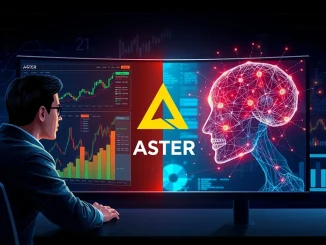
March 15, 2026 — As AI agents prepare to make autonomous decisions for users, a new startup argues these systems lack a fundamental understanding of the people they serve. Nyne, founded by a father-son team, has secured $5.3 million in seed funding to build what it calls the missing intelligence layer for AI agents.
The Context Problem for Autonomous Agents
AI agents are increasingly tasked with scheduling, purchasing, and other actions on behalf of humans. Michael Fanous, Nyne’s CEO and a former machine learning engineer at CareRev, identifies a core flaw. Current systems cannot reliably connect disparate pieces of a person’s digital identity.
“Machines struggle to discern whether a LinkedIn profile, Instagram activity, and public records belong to the same person,” Fanous said. This gap prevents agents from operating with the necessary context. He co-founded Nyne with his father, veteran CTO Emad Fanous, to solve this problem.
The seed round was led by Wischoff Ventures and South Park Commons. It included participation from angel investors like Gil Elbaz, co-founder of Applied Semantics and a pioneer of Google AdSense.
Beyond Google’s Walled Garden
While Google’s ad targeting demonstrates sophisticated user identification, Fanous contends its model is not transferable. The tech giant’s advantage stems from exclusive access to user search histories and cross-platform activity within its ecosystem.
“This data advantage will never be shared with external agents,” Fanous explained. “For everyone else, this is an oddly hard problem to solve.” Nichole Wischoff, founder of Wischoff Ventures, echoed this assessment in backing the deal.
Nyne’s approach does not rely on private user data from single platforms. Instead, it analyzes publicly available digital footprints across the internet.
Triangulating the Digital Self
The company deploys software agents to scan and analyze public information. Machine learning techniques then synthesize this data to create coherent individual profiles. Nyne’s system looks across major social networks like Instagram, Facebook, and X, but also incorporates data from niche platforms such as SoundCloud and Strava.
“Once you make all these connections, you can understand a person fairly deeply, their interests, their hobbies, and how they think about very specific things,” Fanous said. This synthesized intelligence layer can then be accessed by other companies deploying consumer-facing AI agents.
The goal is to give those agents a deeper, real-world understanding of both existing and potential customers. “I can give them any piece of information about a person that could be useful to make the right next action,” Fanous added.
A Massive Market for Agent Intelligence
Investors see a significant opportunity as AI agents proliferate. The data Nyne generates could be valuable for any company using agents to interact with customers. Wischoff framed the commercial potential in stark terms.
“How do I know you’re pregnant and sell you A, B, or C as early as possible?” she said. While previous adtech companies gathered similar data, Nyne aims to provide far greater precision tailored for the world of autonomous AI agents.
For more information on the evolving landscape of AI agents, see the Forbes Technology Council analysis.
A Unique Founding Partnership
The company’s leadership dynamic is unconventional. The father-son co-founder team claims it creates a resilient partnership. Michael Fanous highlighted the inherent commitment.
“I think with co-founders, it becomes easy to walk away when things don’t work,” he said. “If I have to ping him at three in the morning to finish a launch, I know he’s going to still love me the next day.”
Nyne is now focused on scaling its data aggregation and machine learning systems. The company aims to position itself as essential infrastructure before AI agents become ubiquitous consumer tools. The technical challenge of mapping digital identity is detailed in research from institutions like ACM’s Digital Library.
What comes next for Nyne involves refining its algorithms and expanding its partnerships. The startup’s success hinges on proving its context layer is indispensable for the next generation of autonomous AI.
This article was produced with AI assistance and reviewed by our editorial team for accuracy and quality.