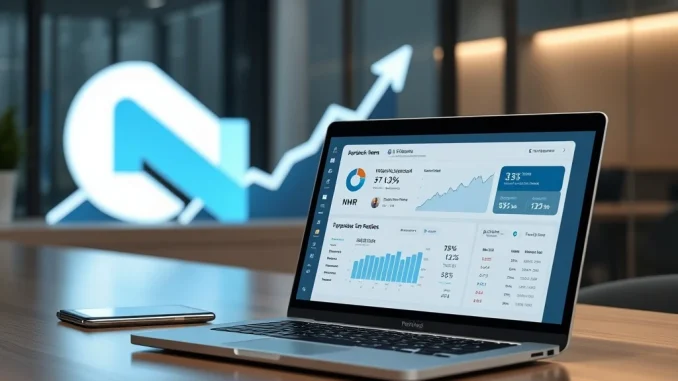
San Francisco, March 2026: In a significant development for the AI and crypto finance sector, Numerai’s Numeraire (NMR) project has announced a major token buyback initiative. Noah Harasz, Head of Tournaments at Numeraire, revealed during the NumerCon2026 event that the project will execute a buyback of one million NMR tokens within the next two weeks. Based on the current trading price of approximately $9.76, this strategic move is valued at around $9.75 million. This announcement marks a pivotal moment for the project’s tokenomics and has immediately drawn analysis from market observers.
Analyzing the Numeraire NMR Buyback Announcement
The announcement by Noah Harasz provides clear parameters for the market to assess. The buyback of one million tokens represents a direct reduction in the circulating supply of NMR. Consequently, this action signals a strong commitment from the project’s treasury to support the token’s value. The two-week timeframe adds a layer of urgency and transparency, allowing the market to observe the execution in real-time. Historically, such buybacks in the cryptocurrency space serve multiple purposes, from demonstrating financial health to aligning long-term incentives. For Numeraire, a project built on a unique model of crowdsourced AI predictions for hedge fund trading, this move is particularly noteworthy. It reflects a maturation of its economic model beyond pure utility within its data science tournament ecosystem.
The Mechanics and Market Context of Token Buybacks
Token buybacks, while similar in concept to stock buybacks in traditional finance, operate within the distinct framework of blockchain tokenomics. Unlike a corporation using profits, a crypto project typically uses treasury funds. The Numeraire buyback will likely involve the project purchasing NMR tokens from the open market. Following this, the standard procedure is to send these tokens to a verifiable burn address or place them into a locked vesting contract for future ecosystem rewards. This action reduces sell pressure and can increase the scarcity of the remaining tokens in circulation. To understand the scale, we can examine the current NMR metrics. The buyback of 1 million tokens at $9.76 each translates to a substantial market intervention. The following table contextualizes this buyback against recent NMR trading activity.
| Metric | Value | Context |
|---|---|---|
| Buyback Volume | 1,000,000 NMR | Tokens to be repurchased |
| Buyback Value | $9,760,000 | Based on ~$9.76 price |
| NMR 24h Trading Volume* | ~$25 Million | Represents ~39% of daily volume |
| NMR Circulating Supply* | ~6.5 Million | Buyback removes ~15.4% of supply |
*Note: Example volume and supply figures are illustrative based on typical recent data to provide context. Actual figures may vary at execution.
Historical Precedents and Numerai’s Unique Position
Numeraire is not the first crypto project to initiate a buyback. Several prominent decentralized finance (DeFi) and infrastructure projects have used similar mechanisms during market downturns or after achieving protocol profitability. However, Numerai’s model sets it apart. The NMR token is fundamentally staked by data scientists in weekly tournaments to make predictions on global equity markets. Successful predictions earn NMR rewards, while unsuccessful ones see the staked tokens burned. This creates a native deflationary mechanism. The announced treasury buyback is a separate, complementary action that reinforces the token’s economic design. It demonstrates the project’s ability to deploy capital strategically from its treasury, which is likely funded from the success of its core hedge fund operations. This creates a direct feedback loop: a successful AI-driven fund generates capital, which can be used to support the token ecosystem that helps fuel its AI research.
Potential Implications for the NMR Ecosystem and Holders
The immediate market reaction to such news often involves speculative trading. However, the longer-term implications are more structural. For existing NMR holders, a reduction in circulating supply, all else being equal, can be a positive fundamental factor. More importantly, it signals confidence from the core development and treasury team in the project’s future value. For data scientists participating in Numerai’s tournaments, a stronger, more stable token economy can enhance the appeal of their participation. The buyback also places a spotlight on the project’s treasury management, a critical aspect of decentralized project governance that investors increasingly scrutinize. It raises several questions for the community:
- What is the source of the treasury funds for the buyback?
- What is the exact destination of the repurchased tokens (burn, lock-up, etc.)?
- How does this fit into a longer-term tokenomics roadmap?
- Could this precede other capital allocation strategies?
Transparent communication on these points following the initial announcement will be key to maintaining trust and authority within the ecosystem.
Conclusion
The announcement of a $9.8 million NMR token buyback by Numeraire is a definitive strategic action with clear financial weight. Moving beyond the headline figure, it represents a significant moment in the project’s evolution, highlighting a shift towards sophisticated treasury management and a reinforced commitment to its token economy. While market prices will fluctuate, the structural reduction in supply and the demonstration of substantial treasury resources provide a new fundamental layer for the NMR token. As the two-week buyback window progresses, the focus will turn to its execution and the subsequent communication from the Numeraire team regarding the long-term vision this move supports. This event underscores how advanced crypto-economies are developing mechanisms, like strategic NMR buybacks, that mirror and innovate upon traditional financial strategies.
FAQs
Q1: What is a token buyback in cryptocurrency?
A token buyback occurs when a blockchain project uses its treasury funds to repurchase its own tokens from the open market. The tokens are typically burned (permanently destroyed) or locked away, reducing the circulating supply.
Q2: Why would Numeraire buy back NMR tokens?
Projects execute buybacks to support the token’s market price, demonstrate financial health from treasury reserves, reduce circulating supply to increase scarcity, and align long-term incentives by showing commitment to the token’s ecosystem.
Q3: How does the NMR buyback affect the circulating supply?
Based on illustrative figures, buying back 1 million NMR could remove approximately 15% of the circulating supply from the market, assuming the tokens are burned or permanently locked.
Q4: Where does Numeraire get the money for a $9.8 million buyback?
Funds likely come from the project’s treasury, which is primarily funded by the profits generated by Numerai’s core business: its AI-driven hedge fund that uses crowdsourced data science models.
Q5: Is a token buyback always good for the price?
While often viewed positively as a sign of strength, the long-term price impact depends on broader market conditions, the project’s fundamentals, and whether the buyback is part of a sustainable value-creation strategy rather than a short-term tactic.
Q6: What is the difference between NMR’s regular burn and this buyback?
NMR’s regular burn occurs when data scientists stake and lose tokens in weekly prediction tournaments. This new buyback is a separate, discretionary treasury action using accumulated capital, not tournament mechanics.