New York, October 11: The cryptocurrency market experienced a severe and rapid contraction on October 10, with a staggering $19 billion in trading positions liquidated within hours. Prominent investor and Galaxy Digital CEO Mike Novogratz has pinpointed excessive leverage, particularly on the Binance exchange, as the central catalyst for what he describes as a cascading forced liquidation event, rather than any external macroeconomic news.
Anatomy of a $19 Billion Liquidation Cascade
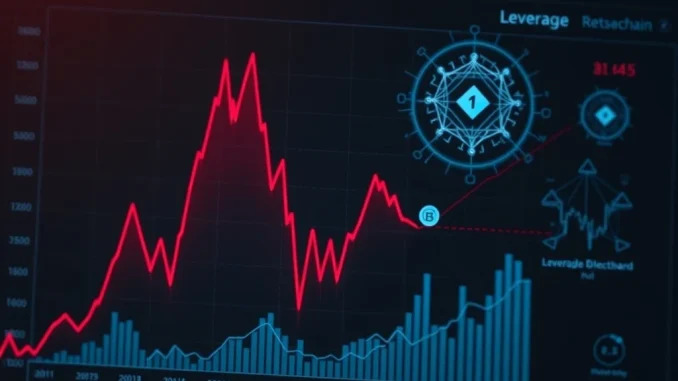
The selloff commenced in the early hours of October 10, UTC. Data from multiple cryptocurrency analytics platforms reveals a violent, self-reinforcing cycle of margin calls and liquidations. Approximately 70% of the total liquidated value—over $13 billion—was erased in a concentrated 40-minute window. This compression suggests a highly leveraged market where a modest initial price decline triggered automatic sell orders, which drove prices lower, triggering further liquidations in a destructive feedback loop. The event primarily affected derivatives markets, including perpetual swaps and futures contracts, where traders use borrowed funds to amplify their bets.
The Role of Exchange Leverage in Market Stability
Mike Novogratz’s analysis shifts focus from traditional financial triggers to the internal mechanics of crypto trading platforms. His assertion underscores a critical debate within the industry regarding risk management. Centralized exchanges like Binance offer traders the ability to employ high leverage, sometimes exceeding 100x the initial capital. While this can magnify profits, it exponentially increases risk. When many traders are positioned on the same side of a trade with high leverage, the market becomes structurally fragile. A minor correction can quickly escalate into a full-blown liquidation storm, as automated systems close positions to prevent losses for the lenders (often the exchange itself or its liquidity providers).
- Leverage Multiplier: Using 10x leverage means a 10% price move against the position results in a 100% loss of the trader’s collateral, triggering automatic closure.
- Liquidation Engine: Exchanges run complex algorithms to liquidate underwater positions in milliseconds, often via market sell orders that exacerbate downward pressure.
- Funding Rates: In derivatives like perpetual swaps, funding rates turned deeply negative during the event, penalizing long-position holders and accelerating the unwind.
Historical Context: Echoes of Past Crypto Leverage Events
This is not the first time leverage has precipitated a sharp downturn. The May 2021 selloff, which saw Bitcoin lose over 50% of its value, featured similar dynamics of cascading liquidations. Furthermore, the collapse of the Terra-Luna ecosystem in May 2022 was intensified by highly leveraged positions across decentralized finance (DeFi) protocols. The October 10 event differs in its apparent lack of a singular external catalyst, such as a major regulatory announcement or corporate bankruptcy, making the internal leverage structure the primary narrative. This pattern highlights a recurring vulnerability in crypto markets that mature traditional finance systems have mitigated through stricter leverage caps and circuit breakers.
Market Impact and Broader Consequences
The immediate consequence was a sharp drop in the total market capitalization of all cryptocurrencies. Major assets like Bitcoin (BTC) and Ethereum (ETH) saw declines of 8-12% during the peak of the selloff. However, the more significant impact was on trader psychology and market structure. The event served as a stark reminder of the latent risks in derivatives trading. It has reignited discussions among regulators about imposing standardized leverage limits across global exchanges to protect retail investors and ensure systemic stability. For institutional participants, it underscores the importance of robust risk management frameworks that account for extreme volatility and liquidity shocks inherent in the current market design.
Conclusion: A Call for Maturation in Crypto Markets
The October 10 selloff, as analyzed by Mike Novogratz, was fundamentally a stress test of the cryptocurrency market’s leverage infrastructure. The event demonstrated how excess Binance leverage and similar practices on other platforms can act as a primary spark for widespread financial contagion within the ecosystem. Moving forward, the industry’s path to maturation and broader adoption likely hinges on addressing these structural fragilities. This involves not only potential regulatory oversight but also self-policing by exchanges to promote sustainable trading practices, ensuring that growth is not repeatedly undermined by internally generated volatility.
FAQs
Q1: What does “leverage” mean in cryptocurrency trading?
Leverage allows traders to control a position larger than their actual capital by borrowing funds. For example, with 10x leverage, a $1,000 investment controls a $10,000 position, amplifying both gains and losses.
Q2: Why did Mike Novogratz blame Binance specifically?
Novogratz identified Binance due to its position as the world’s largest cryptocurrency exchange by volume, where a significant portion of global derivatives trading—and thus, leveraged positions—is concentrated.
Q3: What is a “liquidation cascade”?
A liquidation cascade is a chain reaction where forced selling from liquidated positions drives prices down, triggering more liquidations in a rapid, self-feeding cycle that can crash prices swiftly.
Q4: Was this selloff caused by bad economic news?
According to Novogratz and market data analysis, no major external macroeconomic news directly precipitated the crash. The trigger was internal to the market’s structure via excessive leverage.
Q5: How can traders protect themselves from such events?
Traders can use lower leverage ratios, employ stop-loss orders carefully (understanding they can execute at worse prices during volatility), diversify holdings, and avoid over-concentration in highly leveraged derivatives products.