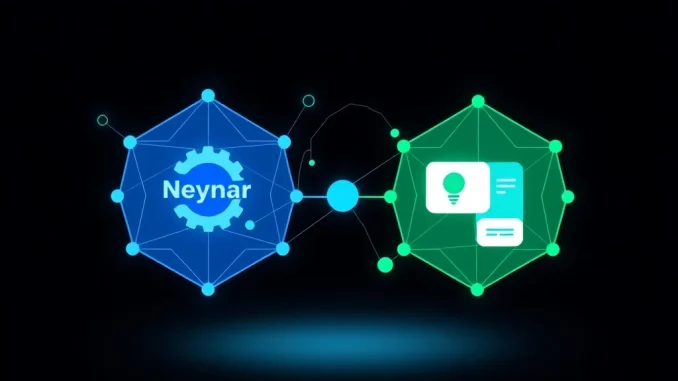
In a landmark consolidation that signals a new phase for decentralized social networking, infrastructure provider Neynar has completed its acquisition of the Farcaster protocol. This pivotal move, announced on March 21, 2025, grants Neynar administrative control over Farcaster’s applications and represents a significant shift in power within the Web3 ecosystem. Consequently, the deal underscores a growing trend where foundational tooling companies are vertically integrating to capture more value from the platforms they help build.
Neynar Acquires Farcaster in a Major Web3 Power Shift
The acquisition marks a decisive moment for both companies. Neynar, a leading builder of developer tools for on-chain social applications, will now directly oversee Farcaster’s operational framework. Although the financial terms remain confidential, industry analysts note Farcaster’s last valuation approximated $1 billion. This transaction fundamentally alters the decentralized social media landscape. Moreover, it highlights the maturation of a sector once dominated by pure protocol development. Neynar’s suite of APIs and services already powers numerous Farcaster clients. Therefore, this consolidation aims to streamline development and accelerate platform growth. The deal’s structure suggests a focus on long-term strategic alignment rather than short-term financial gain.
Understanding the Key Players: Neynar and Farcaster
To grasp the acquisition’s full impact, one must understand the distinct roles of each entity. Farcaster is a sufficiently decentralized social network protocol. It allows users to own their identity and social graph. Popular clients like Warpcast and Supercast operate on its open framework. Conversely, Neynar operates as a critical infrastructure layer. It provides the essential tools—such as user data APIs, frame builders, and notification systems—that developers use to create those clients. This relationship mirrors the dynamic between a city’s government (the protocol) and its major construction and utility companies (the infrastructure provider).
The Infrastructure Provider’s Ascent
This acquisition exemplifies a broader pattern in technology: the ascendancy of the toolmaker. Historically, companies that provide the essential picks and shovels often achieve more stable, wide-reaching influence than the prospectors themselves. In the Web3 context, Neynar’s move suggests that controlling the foundational tools may ultimately yield more influence than solely maintaining the protocol specifications. Experts point to similar dynamics in cloud computing, where platform providers like AWS exert enormous influence over the applications hosted on their infrastructure. This deal could set a precedent for other infrastructure-focused firms in the blockchain space.
Immediate Impacts on the Farcaster Ecosystem
The immediate consequences for developers and users are multifaceted. Neynar has pledged to maintain Farcaster’s commitment to decentralization and open development. However, administrative control introduces a single point of coordination for protocol upgrades and application governance. Key impacts include:
- Development Velocity: Tighter integration between Neynar’s tools and the Farcaster protocol could reduce friction for builders, potentially leading to faster innovation.
- Governance Clarity: Decision-making processes may become more streamlined, though the community will watch closely to ensure they remain transparent.
- Economic Alignment: Neynar’s business model, which relies on a thriving ecosystem, is now directly tied to Farcaster’s success, creating strong incentives for sustainable growth.
Furthermore, competing client developers may experience both benefits and concerns. They will likely gain access to more robust and tightly integrated tools. Simultaneously, they might worry about potential favoritism or conflicts of interest.
The Broader Context of Web3 Social Consolidation
This acquisition does not occur in a vacuum. It reflects a sector-wide movement towards consolidation and maturity. The table below contrasts the pre- and post-acquisition landscape for key stakeholders:
| Stakeholder | Pre-Acquisition Dynamic | Post-Acquisition Dynamic |
|---|---|---|
| Farcaster Protocol | Independent, community-guided entity. | Under Neynar’s administrative stewardship. |
| Client Developers (e.g., Warpcast) | Relied on Neynar as a third-party service provider. | Engage with Neynar as the protocol’s administrative partner. |
| End Users | Interacted with decentralized apps built on Farcaster. | Experience may remain unchanged, but underlying governance has shifted. |
| Web3 Social Competitors | Competed with Farcaster. | Now face a competitor with vertically integrated tooling and protocol control. |
This trend mirrors the early internet’s evolution, where fragmented protocols eventually consolidated under organizations that could provide sustained development and clear governance. The key question for 2025 is whether this consolidation enhances efficiency without compromising the core Web3 tenets of user ownership and censorship resistance.
Expert Analysis on Market Implications and Future Trajectory
Industry observers emphasize the deal’s strategic nature. “This isn’t a traditional takeover,” notes a blockchain analyst from a major research firm. “It’s a symbiotic consolidation. Neynar’s entire business was already geared towards Farcaster’s success. Now, their incentives are perfectly aligned.” The primary risk identified is centralization of influence, not necessarily of the protocol’s decentralized architecture. If Neynar leverages its position to prioritize its own tools or clients, it could stifle the permissionless innovation that made Farcaster attractive. However, most experts predict a period of accelerated development. They expect enhanced developer experiences, more sophisticated social features like on-chain video or advanced discovery algorithms, and potentially a stronger economic model for creators. The acquisition may also pressure other Web3 social stacks, like Lens Protocol, to deepen their own infrastructure partnerships or explore similar vertical integration.
Conclusion
The acquisition of Farcaster by Web3 social network tool maker Neynar represents a calculated and significant evolution for decentralized social media. It moves the industry from a phase of pure protocol experimentation into an era of integrated, tooling-driven growth. While the undisclosed financial terms and $1 billion valuation capture headlines, the true story is about structural change. Neynar’s acquisition positions it not just as a service provider, but as a central architect for one of Web3’s most promising social graphs. The success of this model will depend on balancing efficient governance with the decentralized, user-centric principles that define the space. Ultimately, this deal will be a critical case study in how Web3 infrastructure matures and consolidates.
FAQs
Q1: What does Neynar do, and why did it acquire Farcaster?
Neynar builds developer tools and APIs for creating Web3 social applications. It acquired Farcaster to gain administrative control over the protocol, aligning its infrastructure business directly with the platform’s growth and governance.
Q2: Will Farcaster become less decentralized because of this acquisition?
The protocol’s underlying decentralized architecture remains unchanged. However, administrative control over its development and applications now rests with a single entity, Neynar, which could centralize influence over future direction.
Q3: How will this affect current Farcaster users on apps like Warpcast?
For most end-users, the experience should remain seamless in the short term. The potential changes are more back-end, relating to how developers build and update the apps users enjoy.
Q4: What was Farcaster’s valuation, and why weren’t the deal terms disclosed?
Farcaster was valued at approximately $1 billion in its last funding round. The financial terms of the acquisition were not disclosed, which is common in private strategic deals, especially those involving equity and long-term alignment rather than pure cash transactions.
Q5: Does this make Neynar a competitor to other social networks like Lens Protocol?
Yes, indirectly. By controlling both key infrastructure and a major protocol, Neynar now oversees a more vertically integrated Web3 social stack. This creates a stronger, unified competitor against other decentralized social networks.
Updated insights and analysis added for better clarity.
This article was produced with AI assistance and reviewed by our editorial team for accuracy and quality.