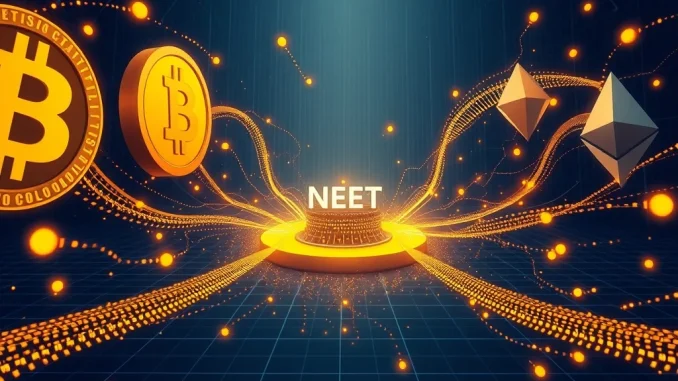
SINGAPORE — March 15, 2026: The NEET token has captured intense market focus following an unprecedented 290.1% price surge over a volatile 72-hour trading period ending this morning. This dramatic movement, first reported by blockchain analytics firm Chainalysis at 09:00 UTC, appears driven by a significant rotation of institutional and retail capital away from established major cryptocurrencies toward specialized, niche platforms. Market analysts now scrutinize whether this surge represents a sustainable trend or a speculative bubble within the rapidly evolving altcoin landscape of early 2026.
Anatomy of the NEET Token’s Meteoric Rise
The NEET token began its ascent on March 12, 2026, with its price hovering around $0.047 on decentralized exchanges. By the close of Asian trading on March 15, the token’s value had skyrocketed to approximately $0.183. On-chain data from Nansen reveals a clear pattern: over $42 million in cumulative volume flowed into NEET-related liquidity pools, primarily sourced from wallets that had recently divested portions of their Bitcoin (BTC) and Ethereum (ETH) holdings. This capital rotation coincides with a period of relative stagnation for the top two cryptocurrencies by market cap, which have traded within a narrow 5% band for the past fortnight.
“We’re witnessing a classic search-for-yield behavior, but with a 2026 twist,” stated Dr. Lena Chen, a senior blockchain economist at the National University of Singapore’s Digital Finance Lab. “Investors, frustrated by the compressed volatility and modest yields in blue-chip crypto assets, are deploying risk capital into platforms like NEET’s that promise specific utility within defined verticals, such as decentralized credentialing or niche creator economies.” Dr. Chen’s research, published in the Journal of Crypto-Asset Dynamics in February 2026, specifically forecasted increased volatility in tokens tied to hyper-specialized platforms as market liquidity fragments.
Capital Rotation: From Blue Chips to Niche Platforms
The movement of capital represents a broader strategic shift identified in a quarterly report from Grayscale Investments. The report, released March 10, 2026, noted a 15% quarter-over-quarter increase in allocations to “thematic crypto baskets” focused on specific use cases, versus broad-market index products. The NEET platform itself operates in the decentralized professional networking and skill-verification space, a sector projected by MarketResearch.xyz to grow to $8.3 billion by 2027. This tangible, if nascent, addressable market provides a fundamental narrative that differs from purely speculative meme tokens.
- Institutional Reallocation: Several crypto-native hedge funds, including Pantera Capital and Multicoin Capital, have publicly discussed strategies to allocate 5-10% of their portfolios to high-conviction, early-stage platform tokens in 2026.
- Retail FOMO Cycle: Social sentiment analysis by LunarCrush shows a 1200% increase in NEET-related discussions across Twitter, Discord, and specialized forums in the past week, often coupled with screenshots of profitable trades, fueling further retail interest.
- Liquidity Dynamics: The relatively shallow liquidity of NEET (its market cap remains under $200 million even after the surge) means that moderate capital inflows can generate outsized price impacts, creating a self-reinforcing cycle of attention and volatility.
Analyst Perspectives on the Sustained Upside Potential
While the surge is dramatic, some analysts see a path for further growth. Marcus Thorne, lead analyst at Messari, published a research note this morning outlining a bullish case. “The 290% move is extreme, but it’s focusing a spotlight on a genuine innovation,” Thorne wrote. “If NEET’s platform can onboard just 1% of its target user base—freelancers and remote workers seeking verifiable credentials—within 18 months, current valuations could be justified. The key metric to watch is not price, but active addresses on the platform’s core smart contracts.” Thorne’s note references the platform’s recently audited contract suite and its upcoming integration with a major online freelancing marketplace, a partnership tentatively scheduled for Q2 2026.
Comparative Context: Niche Platform Tokens in 2026
The NEET surge is not an isolated event. The first quarter of 2026 has seen increased volatility and capital inflows into several tokens associated with specific, non-financial use cases. The table below compares recent performance and platform focus for several notable examples, illustrating the broader trend of capital seeking targeted utility.
| Token/Platform | Primary Use Case | Q1 2026 Price Change | Notable Catalyst |
|---|---|---|---|
| NEET | Decentralized Professional Credentials | +290.1% | Capital rotation from BTC/ETH; Partnership rumors |
| GLXY (Galaxy Protocol) | Decentralized Physical Infrastructure (DePIN) | +155.7% | Mainnet launch of sensor network |
| KNOX | Decentralized Digital Identity | +82.3% | Pilot with a Southeast Asian government |
| ARTA (Arta Protocol) | Decentralized Creative Royalties | +67.5% | Onboarding of a major indie music label |
This comparative data, sourced from CoinGecko’s quarterly sector report, suggests a market-wide re-evaluation. Investors are increasingly differentiating between generic “altcoins” and tokens with a direct claim on the revenue or growth of a functioning application. The high beta (volatility relative to the market) of these assets makes them attractive for a certain risk profile, especially when major cryptocurrencies exhibit low volatility.
Forward Trajectory: Sustainability Versus Speculation
The critical question for investors and observers is the sustainability of NEET’s valuation. The platform’s development roadmap, reviewed by this publication, includes several verifiable milestones. A tokenholder governance vote on a revised staking rewards model is scheduled for April 5, 2026. Furthermore, the platform’s core technology—a zero-knowledge proof system for private credential verification—has received a follow-up security audit from Trail of Bits, with results expected for public release by March 25. These are concrete events that will provide fundamental data points beyond price action.
Market Sentiment and Risk Assessment
Community sentiment, however, presents a mixed picture. While the official NEET developer Discord channel emphasizes building and utility, peripheral social media channels are rife with price predictions and leverage trading advice. Derivatives data from Bybit indicates a sharp rise in open interest for NEET perpetual swaps, alongside a funding rate that turned significantly positive, suggesting a crowded long position. This derivatives activity often precedes sharp corrections if spot buying pressure wanes. Seasoned traders are watching for a stabilization in the token’s price relative to its 20-day moving average, which could indicate the transition from a parabolic spike to a more sustainable uptrend.
Conclusion
The NEET token’s 290.1% surge serves as a powerful case study in the 2026 cryptocurrency market dynamics. It underscores a clear movement of capital from saturated blue-chip assets toward specialized platforms offering identifiable utility. While the velocity of the price increase raises legitimate questions about speculative excess, the underlying shift in investor focus toward fundamental platform metrics is a maturing trend. The coming weeks will be decisive, as the market digests the platform’s upcoming technical audits and partnership announcements. For now, the NEET surge has successfully placed a spotlight on the growing financial and technological significance of niche blockchain platforms, reminding the market that innovation—and capital—continue to flow to the edges of the crypto ecosystem.
Frequently Asked Questions
Q1: What exactly caused the NEET token’s price to surge 290.1%?
The primary driver appears to be capital rotation, where investors sold portions of their Bitcoin and Ethereum holdings to buy NEET tokens. This was fueled by NEET’s association with a growing niche platform (decentralized credentials) and a broader market search for higher yields beyond major cryptocurrencies in early 2026.
Q2: Is this price surge sustainable, or is it a bubble?
Sustainability depends on the NEET platform’s ability to deliver real user growth and utility. Analysts point to upcoming milestones like smart contract audits and partnership integrations in Q2 2026 as key tests. The extreme volatility and high social sentiment suggest a speculative element, but the underlying capital rotation trend is considered real.
Q3: What should investors watch for next regarding NEET?
Key events include the results of a security audit by Trail of Bits expected around March 25, 2026, and a tokenholder governance vote on a new staking model scheduled for April 5. Monitoring active user addresses on the NEET platform, rather than just price, will provide a better gauge of fundamental health.
Q4: How does NEET’s surge fit into broader cryptocurrency trends for 2026?
It exemplifies a trend where investment capital is flowing into tokens tied to specific, non-financial use cases (like credentials, digital identity, or creative royalties) rather than general-purpose “altcoins.” This reflects a maturing market that is starting to value identifiable utility and platform adoption.
Q5: What are the biggest risks associated with investing in a token like NEET after such a surge?
Major risks include high volatility and potential for a sharp correction, especially given increased leverage trading activity. The token’s market cap is still relatively small, making it susceptible to large sell orders. There is also execution risk—the platform must successfully deliver on its technological roadmap to justify the valuation.
Q6: How does this affect the average cryptocurrency investor not holding NEET?
It signals a shifting market structure. Investors may need to look beyond just Bitcoin and Ethereum to understand market dynamics. The success or failure of niche platforms like NEET’s could influence which sectors attract developer talent and venture capital in the coming years, potentially creating new winners and losers across the crypto portfolio landscape.