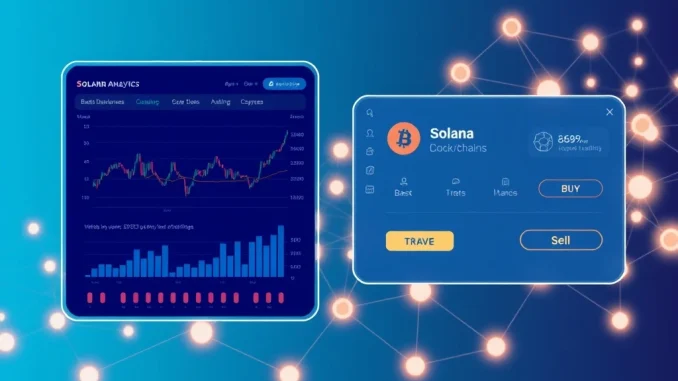
In a significant move that bridges data intelligence with direct market action, cryptocurrency analytics leader Nansen has officially launched its groundbreaking AI-powered on-chain trading solution. This new platform, integrated directly into Nansen’s existing web and mobile applications, promises to fundamentally reshape how traders interact with blockchain data on the Solana and Base networks. The launch, first reported by The Block, represents a strategic evolution from a purely analytical tool to a comprehensive execution environment.
Nansen AI Trading Solution Integrates Analysis and Execution
The core innovation of Nansen’s new offering is the seamless fusion of advanced analytics with direct trading capabilities. Previously, traders using Nansen’s renowned data dashboards would need to export insights and then execute trades on a separate exchange or decentralized application. Consequently, this fragmented process introduced latency and potential for error. Now, however, the platform consolidates the entire workflow. Users can identify opportunities through Nansen’s proprietary metrics—such as Smart Money movements or token holder concentration—and act on them immediately within the same interface.
This integrated approach directly addresses a major pain point in the crypto trading ecosystem. Furthermore, by reducing the steps between insight and action, Nansen aims to enhance efficiency and capitalize on the fast-moving nature of on-chain markets. The initial rollout focuses on two high-growth blockchain ecosystems: Solana, known for its high throughput and low costs, and Base, Coinbase’s Ethereum Layer 2 network celebrated for its developer activity and user adoption.
The Strategic Shift to On-Chain Trading Tools
The launch is not an isolated event but rather a calculated response to broader industry trends. The demand for sophisticated on-chain trading tools has surged alongside the growth of decentralized finance (DeFi). Traditional off-chain order books, while still relevant, no longer provide a complete market picture. On-chain activity, including decentralized exchange (DEX) swaps, liquidity pool deposits, and cross-chain transfers, now represents a critical layer of market intelligence. Nansen’s solution is positioned to harness this intelligence directly.
Industry analysts view this as a natural progression for data providers. “The logical endpoint for a top-tier analytics firm is to close the loop between data and execution,” noted a fintech analyst from a major research firm. “Nansen is effectively productizing its data moat. By controlling both the insight generation and the execution venue, they create a more sticky and valuable user experience.” This move also places Nansen in a more competitive stance against other crypto-native platforms that are increasingly adding analytical features to their trading interfaces.
Technical Architecture and User Experience
From a technical perspective, the solution leverages Nansen’s existing infrastructure for labeling wallets and tracking transactions. The AI component likely functions as a recommendation and risk-assessment engine, parsing vast amounts of on-chain data to surface actionable signals. For instance, the system might alert a user when a wallet with a historically profitable track record initiates a large swap on a Solana DEX like Raydium or Orca. The user can then review the context and, if they choose, execute a similar trade with a few clicks.
The user experience is designed for clarity and speed. Key features accessible within the trading module include:
- One-Click Trade Execution: Execute swaps directly from a token analytics page.
- Portfolio-Linked Insights: Receive AI-driven alerts relevant to a user’s existing holdings.
- Risk Parameters: Set slippage tolerances and approve token spending limits directly.
- Unified Balance View: See portfolio balances across connected wallets on supported chains.
Security, of course, remains paramount. The system utilizes non-custodial principles, meaning users retain control of their private keys. Trades are executed via smart contract interactions that the user must sign, maintaining the self-custody ethos central to Web3.
Market Impact and Future Roadmap
The immediate impact is concentrated on the Solana and Base ecosystems. By providing a premium trading tool tailored for these chains, Nansen could attract more professional traders and capital, thereby increasing liquidity and market maturity. For retail users, it democratizes access to institutional-grade trading workflows that were previously cumbersome to assemble.
A comparison of the initial chain support highlights strategic choices:
| Blockchain | Key Strengths | Nansen’s Rationale for Inclusion |
|---|---|---|
| Solana | High speed, low fees, vibrant NFT & DeFi scene | Captures a high-activity retail and institutional trader base. |
| Base | Strong Ethereum security, Coinbase integration, growing DeFi TVL | Leverages ecosystem growth and potential institutional onboarding. |
Looking ahead, the roadmap will almost certainly involve expansion to other major networks like Ethereum, Arbitrum, and Avalanche. Additionally, the feature set is expected to grow to include more advanced order types, cross-chain swap aggregation, and deeper integration with decentralized lending protocols. The long-term vision appears to be a unified, chain-agnostic command center for on-chain portfolio management.
Context Within the Competitive Landscape
Nansen enters a competitive field with this launch. Other entities, from decentralized exchanges like Uniswap with its new interface features to centralized exchanges like Binance with its research tabs, are also seeking to integrate data and trading. However, Nansen’s distinct advantage is its multi-year head start in on-chain data labeling and its established reputation among crypto-native funds and analysts. Its AI trading solution is not a standalone product but an enhancement of its core, trusted analytics platform. This existing user base provides a significant launchpad for adoption.
The development also reflects the increasing maturation of the cryptocurrency sector. The era of relying on disjointed tools is giving way to a demand for integrated, professional-grade platforms. As regulatory clarity improves in 2025, such robust and transparent tools will likely become the standard for serious market participants.
Conclusion
The launch of Nansen’s AI on-chain trading solution marks a pivotal moment for crypto market infrastructure. By seamlessly integrating its powerful analytical engine with direct trading execution on Solana and Base, Nansen is eliminating friction and empowering users to act on data with unprecedented speed. This move underscores the industry’s shift towards sophisticated, all-in-one platforms that cater to the nuanced needs of modern digital asset traders. As the platform evolves and expands to more blockchains, it has the potential to set a new benchmark for what a comprehensive on-chain trading solution can and should be.
FAQs
Q1: What exactly is Nansen’s new AI trading solution?
A1: It is a feature integrated into Nansen’s web and mobile apps that allows users to execute cryptocurrency trades directly on the Solana and Base blockchains. Its key feature is combining Nansen’s existing on-chain analytics (like tracking smart money wallets) with a trading interface, so insight and action happen in one place.
Q2: Is the trading solution custodial? Does Nansen hold my funds?
A2: No, the solution is non-custodial. Nansen does not hold user private keys or funds. The interface facilitates transactions that are signed by the user’s wallet (like a MetaMask or Phantom wallet) and executed directly on the blockchain, ensuring users maintain full control of their assets.
Q3: Why did Nansen choose Solana and Base for the initial launch?
A3: Solana and Base represent two of the most active and growing blockchain ecosystems in 2025. Solana offers high speed and low cost, attracting high-frequency trading activity. Base, built by Coinbase, benefits from strong security and ease of onboarding, making it ideal for both new and institutional users. Starting with these chains allows Nansen to target a large and engaged trader base.
Q4: How does the AI component work in the trading solution?
A4: The AI likely analyzes Nansen’s vast datasets to surface relevant, actionable trading signals for the user. For example, it might highlight unusual activity from profitable wallets or detect emerging token trends across social sentiment and on-chain metrics. It acts as an intelligent filter and recommendation system on top of the raw data.
Q5: Will this tool be available to all Nansen users, and what are the costs?
A5: While specific pricing tiers were not detailed in the initial announcement, such a premium feature is typically offered to higher-tier subscription plans (like Nansen’s Alpha or Pro plans). It is unlikely to be part of the free or basic tier, as it involves significant infrastructure and development cost. Users should check Nansen’s official pricing page for the most accurate information.
Updated insights and analysis added for better clarity.
This article was produced with AI assistance and reviewed by our editorial team for accuracy and quality.