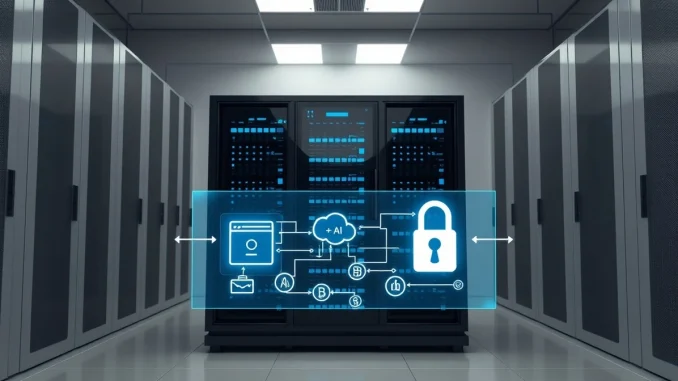
Financial technology company MoonPay has released a groundbreaking open-source wallet standard specifically designed for AI agents, fundamentally changing how autonomous systems interact with cryptocurrency networks. Announced on March 21, 2026, this framework addresses critical fragmentation in how AI agents manage digital assets across different blockchains. The standard enables AI systems to operate from unified fund pools rather than disconnected accounts, potentially accelerating adoption of machine-driven economic activity.
MoonPay’s AI Wallet Standard Solves Key Management Fragmentation
MoonPay’s new specification introduces a shared methodology for AI agents to access and utilize wallets across various tools and blockchain networks. Previously, autonomous systems faced significant challenges with fragmented setups where each platform managed separate keys and balances. Consequently, this fragmentation created operational inefficiencies and security vulnerabilities that hindered broader adoption of AI-driven transactions.
The standard employs several innovative approaches to address these challenges. First, it stores private keys in encrypted local vaults rather than within the AI agent’s runtime environment. Second, transaction signing occurs through isolated processes that maintain separation from the agent’s primary operations. Third, the framework includes comprehensive policy controls allowing users to establish spending limits and transaction restrictions before approval.
According to MoonPay’s technical documentation, the modular architecture covers four essential components:
- Secure Storage: Encrypted vault systems for private key management
- Isolated Signing: Separate processes for transaction authorization
- Policy Controls: Configurable spending rules and restrictions
- Chain Support: Interoperability across multiple blockchain networks
Industry Collaboration and Technical Implementation
More than a dozen companies contributed to developing this specification, creating a robust foundation for industry-wide adoption. Major participants included established financial technology firms like PayPal, cryptocurrency exchange OKX, and stablecoin issuer Circle. Additionally, several blockchain foundations and infrastructure providers provided technical input during the development process.
The standard’s open-source nature represents a strategic decision to encourage broad implementation. Developers can access components through popular platforms including GitHub, npm, and PyPI. This accessibility potentially accelerates integration across the cryptocurrency ecosystem. Furthermore, the modular design allows organizations to implement specific components based on their unique requirements while maintaining interoperability.
| Company | Primary Contribution | Sector |
|---|---|---|
| PayPal | Payment infrastructure expertise | Fintech |
| OKX | Exchange integration knowledge | Crypto Exchange |
| Circle | Stablecoin implementation guidance | Digital Assets |
| Blockchain Foundations | Protocol-level specifications | Blockchain Development |
The Evolution of Machine-Driven Payments
Recent industry efforts to enable machine-driven payments have primarily focused on transaction rails rather than comprehensive wallet management. For instance, Coinbase developed the x402 protocol enabling stablecoin transfers over HTTP for APIs, applications, and AI agents. Similarly, Visa and Stripe-backed Tempo recently launched tools allowing AI systems to initiate payments programmatically.
However, these solutions often overlooked fundamental challenges surrounding key management and wallet fragmentation. MoonPay’s approach directly addresses these gaps by providing a standardized framework for secure asset management. The company noted that previous implementations required AI agents to maintain multiple wallet instances across different networks, creating operational complexity and security risks.
Broader Industry Movement Toward AI Integration
MoonPay’s announcement coincides with increasing industry efforts to integrate cryptocurrency services with artificial intelligence systems. On the same day, digital asset custody provider BitGo revealed its Model Context Protocol server enabling AI-driven tools to access its developer platform using natural language. This integration allows agents to navigate wallet functions, transaction flows, and staking systems through conversational interfaces.
The cryptocurrency industry demonstrates growing recognition of AI’s potential as an economic actor. Companies increasingly experiment with methods for software to interact with financial infrastructure without traditional user interfaces. This trend reflects broader technological shifts toward autonomous systems capable of executing complex financial operations.
Research from academic institutions has informed these developments. MIT Sloan School of Management researchers previously noted that “AI agents can employ standard building blocks, such as APIs, to communicate with other agents and humans, receive and send money, and access and interact with the internet.” MoonPay’s standard operationalizes these concepts through practical implementation frameworks.
Security Architecture and Risk Mitigation
The wallet standard incorporates multiple security layers designed specifically for autonomous systems. The architecture maintains private keys within encrypted local vaults, preventing exposure to the AI agent’s runtime environment. Transaction signing occurs through isolated processes, creating additional separation between authorization mechanisms and operational logic.
Policy controls represent another critical security feature. Users can establish spending limits, transaction frequency restrictions, and destination validations before transactions receive approval. These controls potentially prevent unauthorized or excessive transactions by autonomous systems. Additionally, the framework supports audit trails and transaction monitoring for compliance purposes.
Security experts emphasize the importance of such controls for AI-driven financial systems. Autonomous agents operating without proper constraints could potentially execute unintended transactions or fall victim to manipulation. MoonPay’s approach addresses these concerns through configurable policy frameworks that maintain human oversight capabilities.
Potential Applications and Market Impact
The wallet standard enables numerous practical applications across different sectors. Decentralized autonomous organizations could utilize AI agents for treasury management and operational expenditures. Similarly, DeFi protocols might implement autonomous market makers with enhanced transaction capabilities. Furthermore, enterprise systems could deploy AI agents for routine financial operations across blockchain networks.
Market analysts suggest this development could accelerate adoption of cryptocurrency in traditional business processes. By providing standardized interfaces for AI interaction, organizations might more readily integrate blockchain transactions into automated workflows. This integration potentially reduces manual intervention requirements while maintaining security and compliance standards.
The timing coincides with growing enterprise interest in both artificial intelligence and blockchain technology. Many organizations seek methods to leverage these technologies for operational efficiency gains. MoonPay’s framework addresses a specific intersection point where both technologies converge for financial applications.
Conclusion
MoonPay’s open-source wallet standard represents a significant advancement in AI-agent cryptocurrency interaction. By addressing fundamental challenges of wallet fragmentation and key management, the framework potentially accelerates adoption of autonomous financial systems. The collaborative development approach involving major industry players suggests strong foundation for widespread implementation. As artificial intelligence continues evolving as an economic actor, standardized interfaces like MoonPay’s AI agent wallet standard will likely play crucial roles in secure, interoperable transactions across blockchain networks. The cryptocurrency industry’s increasing focus on AI integration reflects broader technological convergence with potentially transformative implications for financial systems.
FAQs
Q1: What problem does MoonPay’s AI wallet standard solve?
The standard addresses fragmentation in how AI agents manage cryptocurrency across different blockchains. Previously, autonomous systems needed separate wallets and key management for each network, creating operational inefficiencies and security vulnerabilities.
Q2: How does the standard handle security for AI agents?
It employs multiple security layers including encrypted local vaults for private keys, isolated processes for transaction signing, and configurable policy controls. These features keep keys out of the AI agent’s runtime environment while maintaining human oversight capabilities.
Q3: Which companies contributed to developing this standard?
More than a dozen organizations participated including PayPal, OKX, Circle, several blockchain foundations, and infrastructure providers. This collaborative approach helped create a robust specification with broad industry relevance.
Q4: How does this differ from previous machine payment solutions?
Earlier efforts like Coinbase’s x402 protocol focused primarily on transaction rails. MoonPay’s standard addresses the complete wallet management lifecycle including key storage, transaction signing, and policy controls specifically designed for autonomous systems.
Q5: What are potential applications for this technology?
Applications include decentralized autonomous organization treasury management, DeFi protocol operations, enterprise financial automation, and any scenario requiring AI agents to execute blockchain transactions as part of automated workflows.
Updated insights and analysis added for better clarity.
This article was produced with AI assistance and reviewed by our editorial team for accuracy and quality.