SINGAPORE, March 15, 2026 — In a move set to redefine live event access, Moongate, a leading Web3 activation platform, has announced a strategic integration with the high-speed TON (The Open Network) Blockchain. This partnership, confirmed today, aims to dismantle longstanding barriers in the global ticketing industry by enabling a unified system for purchasing event tickets using both traditional fiat currencies and various cryptocurrencies. The collaboration directly targets the friction and lack of interoperability that have plagued both conventional and decentralized ticketing models, promising tangible changes for event organizers and attendees worldwide. By leveraging TON’s scalability and Moongate’s infrastructure, the initiative seeks to create a seamless bridge between Web2 and Web3 commerce.
Moongate and TON Forge a New Path for Decentralized Ticketing
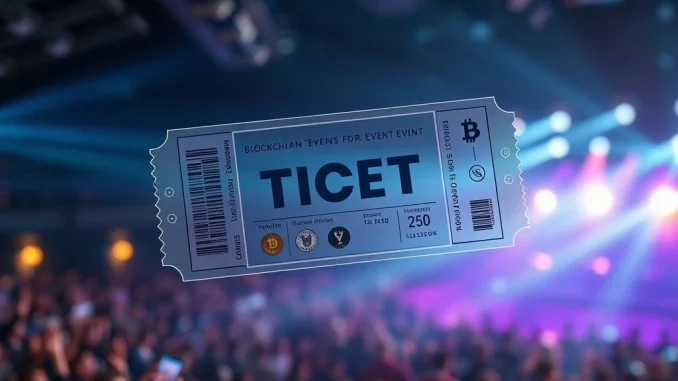
The core of the integration involves deploying Moongate’s ticketing smart contracts and minting infrastructure directly on the TON blockchain. This technical marriage combines Moongate’s proven Web3 engagement tools with TON’s capacity for processing thousands of transactions per second at minimal cost. A spokesperson for the TON Foundation, referenced in the official announcement, highlighted the network’s design for mass adoption, noting its integration with the Telegram messaging app’s massive user base as a key driver for accessibility. The system will allow event organizers to configure events where tickets can be purchased with credit cards, bank transfers, or a suite of cryptocurrencies, including Toncoin (TON), Ethereum (ETH), and stablecoins. All tickets, regardless of payment method, are minted as non-fungible tokens (NFTs) on-chain, providing verifiable ownership and enabling new utility.
Industry analysts point to the 2024-2025 period as a turning point where consumer frustration with opaque fees, speculative resale markets, and counterfeit paper tickets reached a critical mass. “The timing is strategic,” notes Dr. Lena Chen, a digital assets researcher at the Singapore University of Technology and Design, whose work on tokenized real-world assets was cited in the partnership’s whitepaper. “We’re past the phase of blockchain for blockchain’s sake. Projects like this are solving specific, painful problems—provenance, royalty distribution, and fan engagement—that existing platforms like Ticketmaster or Eventbrite have been slow to address effectively.” The Moongate-TON system automatically embeds resale royalty mechanisms, allowing artists and venues to earn a programmable percentage on secondary market sales, a feature increasingly demanded by the creative industry.
Redefining the Event Experience with Frictionless Crypto and Fiat Payments
The immediate impact of this integration centers on payment flexibility and reduced transactional friction. For the first time, a user in a region with limited banking infrastructure could purchase a ticket for a concert in London using cryptocurrency, while another attendee in London could buy a ticket to the same event with a standard credit card. Both tickets exist in the same digital ecosystem. This interoperability is the partnership’s primary value proposition. Decentralized event ticket management through this model addresses several pain points simultaneously: eliminating fraudulent duplicates, enabling transparent pricing and fee structures, and creating a portable digital asset that can unlock future perks.
- Unified Purchase Flows: A single event page offers multiple payment gateways, collapsing the typical separation between Web2 checkout pages and Web3 wallet connections.
- Dynamic Proof-of-Attendance: Post-event, ticket NFTs can be updated with metadata (e.g., exclusive content, merchandise discounts) serving as a persistent, verifiable record of participation.
- Global Accessibility: By supporting crypto payments, the system bypasses geographic restrictions and currency conversion hurdles that often lock international fans out of presales or direct purchases.
Expert Analysis on Market Disruption and Scalability
According to market data from Grand View Research, the global event ticketing market was valued at approximately $68 billion in 2025, with online channels dominating sales. However, the segment for blockchain-based ticketing remains a nascent but rapidly growing niche, projected to expand at a compound annual growth rate (CAGR) of over 25% from 2026 to 2030. “The Moongate and TON collaboration is significant because it tackles the scalability issue head-on,” states Marcus Thielen, Head of Research at a major digital asset analytics firm. “Previous blockchain ticketing pilots on networks like Ethereum have struggled with high gas fees during peak sales, creating a poor user experience. TON’s architecture, built for speed and low cost, theoretically removes that bottleneck, making it feasible for a 50,000-person festival.” The partnership’s pilot program, scheduled for Q2 2026, will involve a series of music festivals across Asia and Europe, providing the first real-world stress test of the system at scale.
Comparative Landscape: How Web3 Ticketing Solutions Stack Up
The entry of the Moongate-TON alliance creates a new competitor in a field with established players and emerging protocols. The differentiating factor lies in the dual focus on seamless fiat onboarding and leveraging a high-throughput blockchain integrated with a major messaging platform. The table below contrasts key approaches in the decentralized ticketing space as of early 2026.
| Platform / Protocol | Primary Blockchain | Key Feature | Target User |
|---|---|---|---|
| Moongate + TON | TON (The Open Network) | Fiat & crypto payments, Telegram integration, low fees | Mass-market events, global audiences |
| GET Protocol | Polygon / Other EVM | White-label digital twin ticketing, strong artist/venue focus | Traditional event organizers |
| Tokenproof / POAP | Ethereum, Gnosis Chain | Proof-of-attendance protocols, community engagement | Brands, conferences, community events |
| YellowHeart | Polygon | Music industry focus, NFT-gated experiences | Artists, labels, dedicated fan clubs |
The Road Ahead: Pilots, Partnerships, and Industry Adoption
The success of this integration hinges on execution and adoption. The announced roadmap details a phased rollout. The initial pilot phase in Q2 2026 will involve select event partners to refine the user interface and on-ramp processes. A full public launch is targeted for Q4 2026, coinciding with the peak year-end event season. Crucially, the partnership is not operating in a vacuum; discussions are reportedly underway with major ticketing aggregators and venue management software providers to embed the technology into existing workflows. “The goal isn’t to force organizers to use a completely new platform,” explained a Moongate business development lead in a recent industry webinar. “It’s to provide API-driven tools that can plug into their current sales and entry systems, adding Web3 functionality where it creates value.” This pragmatic approach lowers the barrier to entry for risk-averse institutional players.
Stakeholder Reactions and Market Sentiment
Initial reactions from the crypto community have been positive, with Toncoin seeing a noticeable uptick in trading volume following the announcement. Event organizers contacted for comment expressed cautious optimism, emphasizing the need for reliability and customer support that matches incumbent providers. “The promise is incredible—controlling the secondary market and directly rewarding our artists is a dream,” said the manager of an independent festival circuit in Europe. “But our neck is on the line if the scanners fail at the gate. We need to see the tech work flawlessly in the pilots.” Conversely, consumer advocacy groups have welcomed the transparency potential, particularly around fee breakdowns, which are often obscured in traditional ticketing.
Conclusion
The partnership between Moongate and TON Blockchain represents a substantive step toward mainstream Web3 ticketing by directly addressing the twin challenges of payment flexibility and scalability. By enabling seamless purchases with both crypto and fiat currencies, the integration breaks down a major adoption barrier for everyday users. The focus on providing tangible utility—from automated royalties to verifiable proof-of-attendance—moves beyond speculative NFT models. While the upcoming pilot programs will be the ultimate test, this collaboration signals a maturation in the application of blockchain technology to real-world commerce. The global events industry, long in need of innovation, now has a viable, high-throughput alternative that could reshape how tickets are issued, owned, and experienced. Observers should watch the Q2 2026 pilot results closely, as they will likely set the pace for broader industry transformation.
Frequently Asked Questions
Q1: How does the Moongate and TON integration actually make buying tickets easier?
The system provides a single checkout that accepts both traditional payments (credit/debit cards) and various cryptocurrencies. You don’t need to choose a “crypto-only” or “fiat-only” event page. Your ticket is then issued as a digital asset (NFT) in your connected wallet or app, regardless of how you paid.
Q2: What are the main benefits for event organizers using this system?
Organizers gain transparent control over secondary market sales through programmable royalties, significantly reduce fraud and counterfeit tickets via on-chain verification, and can unlock new fan engagement models by updating ticket NFTs with exclusive content after the event.
Q3: When will this new ticketing system be available for general use?
Following a pilot program with select event partners in the second quarter of 2026, a full public launch is currently scheduled for the fourth quarter of 2026, in time for major year-end events and festivals.
Q4: Do I need a cryptocurrency wallet to use this if I pay with a credit card?
For a simple entry experience, you may not. The system can generate a custodial digital ticket accessible via email or a dedicated app. However, to fully own the NFT asset, transfer it, or access future NFT-gated benefits, connecting a compatible Web3 wallet (like Tonkeeper) is recommended.
Q5: How does using the TON Blockchain improve upon earlier blockchain ticketing attempts?
TON is designed for high transaction throughput and very low fees. This solves the critical problem of network congestion and high “gas” costs that made buying a $50 ticket on other blockchains impractical during high-demand sales periods.
Q6: How does this affect international fans who want to buy tickets for events abroad?
This system is particularly advantageous for international fans. Cryptocurrency payments bypass traditional cross-border banking fees and currency exchange issues. A fan in Argentina can seamlessly purchase a ticket for an event in Japan using stablecoins, without needing a local bank account in the event’s country.