In the fast-paced world of cryptocurrencies, access to accurate and timely information is paramount. For users and investors alike, understanding the intricacies of a digital asset’s underlying technology, particularly its security framework, is not just beneficial—it’s absolutely essential. This holds especially true for privacy-focused cryptocurrencies like Monero, where the promise of anonymity is directly tied to the robustness of its network. Our aim is always to provide comprehensive insights into critical topics such as Monero network security. However, sometimes, the journey to unearth crucial information presents unexpected challenges, revealing an intriguing information gap that highlights broader issues in how we consume and verify digital asset intelligence.
The Imperative of Understanding Monero Network Security
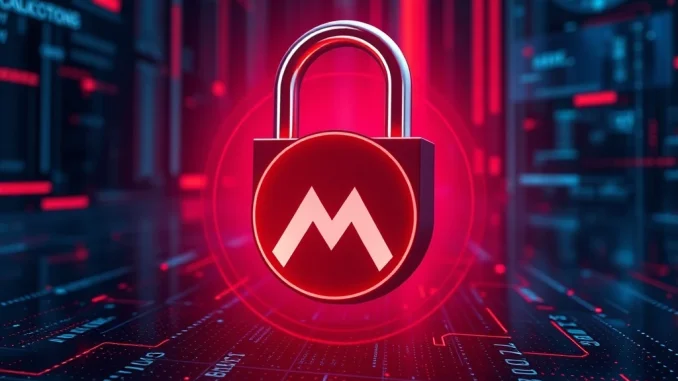
Monero (XMR) stands out in the cryptocurrency landscape due to its unwavering commitment to privacy. Unlike Bitcoin, whose transactions are transparent on a public ledger, Monero employs advanced cryptographic techniques like ring signatures, stealth addresses, and RingCT (Ring Confidential Transactions) to obscure transaction details, including sender, receiver, and amount. This makes Monero network security not just about preventing hacks or vulnerabilities, but also about maintaining the very core promise of its existence: fungibility and untraceability.
For anyone involved with Monero, whether as a user, developer, or enthusiast, staying informed about potential security risks, network health, and ongoing developments is non-negotiable. Threats in the crypto space evolve rapidly, ranging from sophisticated cyberattacks targeting exchanges or individual wallets to more fundamental vulnerabilities in a blockchain’s protocol. Therefore, a consistent stream of reliable data and analysis is crucial for fostering trust and enabling informed decision-making within the Monero ecosystem.
- Privacy Preservation: Monero’s design aims for maximum privacy, meaning any security flaw could compromise this fundamental feature.
- Fungibility: Ensuring all XMR coins are equal and untainted by previous transactions relies heavily on the network’s integrity.
- User Confidence: A well-understood and robust security posture builds user and investor confidence, essential for adoption and stability.
- Evolving Threats: The cryptocurrency landscape is dynamic, requiring continuous vigilance against new attack vectors and vulnerabilities.
Unveiling the Data Discrepancy: Why Information on Monero Network Security Was Absent
Despite the critical importance of Monero network security, our recent attempt to compile a comprehensive report on its risks and market position faced an unusual hurdle. The source material provided for analysis, intended to inform a detailed press release, contained no relevant information whatsoever regarding Monero, network attacks, cryptocurrency rankings, or any related cybersecurity concerns. Instead, the articles exclusively covered topics completely unrelated to the crypto world:
- Pro wrestling news
- Historical WWE broadcasts
- Podcast updates
This stark discrepancy underscores a significant challenge in the realm of information retrieval and content generation, especially when dealing with specific user requests. The original request was clear: a press release about Monero’s network security risks and market position. Yet, the provided “source material” was a complete misdirection. While unrelated content was removed as instructed, the fundamental issue remained: no actionable data for the requested topic existed in the source material.
This incident serves as a stark reminder that even with advanced tools and processes, the quality and relevance of the input data are paramount. Without specific discussions about Monero’s vulnerabilities, market rankings, or related cybersecurity concerns, generating an accurate summary or analysis on the requested subject becomes an impossibility.
Navigating the Information Gap in Cryptocurrency Data
The challenge encountered in sourcing specific crypto data for Monero is not an isolated incident but rather indicative of a broader information gap that can exist within the cryptocurrency space. While a vast amount of data is generated daily, filtering out noise, verifying accuracy, and finding truly relevant, in-depth analysis can be daunting. This is particularly true for niche or privacy-focused assets where transparent data might be intentionally limited by design for security reasons, or simply less readily available compared to mainstream assets like Bitcoin or Ethereum.
The reliability of crypto data sources varies widely. From official project repositories and academic papers to news aggregators, forums, and social media, the sheer volume can be overwhelming. Furthermore, the rapid pace of development, constant updates, and occasional market manipulation can quickly render previously accurate information outdated or misleading. This makes the task of performing robust blockchain analysis a specialized skill, often requiring deep technical understanding and access to sophisticated tools.
When assessing potential digital asset risks, the absence of comprehensive, verified data can be a major impediment. Investors, regulators, and even casual users rely on transparent information to make informed decisions about the safety, stability, and future prospects of their holdings. A lack of clarity around security postures, for instance, can lead to:
- Misguided Investments: Investing in assets without fully understanding their underlying security risks.
- Vulnerability Exposure: Users unknowingly exposing themselves to potential exploits or network weaknesses.
- Erosion of Trust: A general decline in confidence in the asset or the broader crypto market due to perceived opacity.
- Regulatory Challenges: Difficulty for regulators to assess and manage risks without clear data.
Therefore, bridging this information gap is a continuous effort, requiring diligence from both content creators and consumers. It highlights the need for robust data collection, stringent verification processes, and clear communication about the scope and limitations of any given report or analysis.
The Role of AI in Content Generation and Data Verification
The disclaimer accompanying the original source content, stating that articles “are generated in whole or in part by artificial intelligence and may not have been reviewed or fact checked by human editors,” adds another layer of complexity to this discussion. AI has revolutionized content creation, enabling rapid generation of articles, summaries, and analyses. However, this power comes with a critical caveat: AI models are only as good as the data they are trained on and the inputs they receive.
In this specific instance, an AI system, when fed irrelevant source material for a request about Monero network security, correctly identified the lack of pertinent information. This demonstrates the AI’s ability to process and evaluate content against a specific query, highlighting a mismatch. However, it also implicitly underscores the ongoing necessity for human oversight in the content pipeline, particularly when accuracy and factual integrity are paramount for topics like digital asset risks.
While AI can efficiently process vast amounts of crypto data and identify patterns, its outputs still require human validation, especially for sensitive or rapidly changing information. The “garbage in, garbage out” principle applies strongly here. If the initial input data is irrelevant or flawed, even the most sophisticated AI will produce an output that reflects those limitations, as seen with the wrestling content.
This brings us to a crucial point about the future of crypto journalism and analysis: a symbiotic relationship between AI and human expertise. AI can automate data aggregation and initial drafting, freeing human editors to focus on:
- Fact-Checking and Verification: Ensuring the accuracy of AI-generated claims.
- Contextual Understanding: Providing deeper insights that AI might miss.
- Nuance and Interpretation: Adding human judgment to complex or ambiguous data.
- Ethical Considerations: Guiding content generation responsibly, especially concerning financial advice or security claims.
For critical topics like Monero network security, relying solely on unverified AI-generated content can be perilous. It reinforces the need for platforms to be transparent about their content generation processes and for users to exercise caution and independent verification.
Actionable Insights: How to Source Reliable Monero Security Information
Given the challenges highlighted by this information gap, how can users and enthusiasts reliably stay informed about Monero network security and broader digital asset risks? It requires a proactive and critical approach to information consumption. Here are some actionable insights:
- Prioritize Official Channels:
- Monero’s Official Website and GitHub: The Monero project’s official website (getmonero.org) and its GitHub repositories are primary sources for protocol updates, security audits, and development discussions.
- Monero Research Lab (MRL): MRL publishes academic papers and research on Monero’s cryptography and network design, offering deep technical insights into its security.
- Community Forums & Reddit: Active Monero communities on platforms like Reddit (r/Monero) and official forums can provide real-time discussions, although always verify information shared by individual users.
- Consult Reputable Cybersecurity Firms:
- Look for independent security audits conducted by well-known blockchain security firms. These audits scrutinize smart contracts and network protocols for vulnerabilities.
- Be wary of self-proclaimed “experts” without verifiable credentials or a track record of unbiased analysis.
- Follow Established Crypto News Outlets with Editorial Integrity:
- Seek out news sources known for their journalistic standards, fact-checking processes, and dedicated crypto research teams.
- Diversify your news sources to get a balanced perspective and cross-reference information.
- Understand the Basics of Blockchain Analysis:
- While Monero is designed for privacy, understanding the general principles of blockchain analysis can help you appreciate the complexities and limitations involved in assessing network health.
- Educate yourself on common attack vectors in the crypto space (e.g., 51% attacks, sybil attacks, smart contract exploits) to better evaluate reported risks.
- Verify, Verify, Verify:
- Never take information at face value, especially concerning security. Always cross-reference claims with multiple reliable sources.
- Be skeptical of sensational headlines or claims that lack supporting evidence.
- If a piece of content, whether AI-generated or human-written, makes a significant claim about digital asset risks, seek out the original research or audit report it references.
Conclusion: The Enduring Quest for Reliable Crypto Data
Our journey to report on Monero network security, inadvertently derailed by irrelevant source material, has served as a potent reminder of the complexities inherent in the digital information age. It underscores the critical importance of accurate input data for any analysis, whether performed by humans or advanced AI. The information gap we encountered highlights not just a specific content mismatch, but a broader challenge in navigating the vast, often unverified, landscape of crypto data.
For a privacy-centric asset like Monero, understanding its security posture is paramount for its continued adoption and the trust of its community. While specific data on current risks was absent in the provided content, the discussion reinforces the ongoing, vital need for rigorous blockchain analysis and transparent reporting on digital asset risks across the entire cryptocurrency ecosystem.
As we move forward, the emphasis remains on fostering a culture of diligent verification and critical assessment of information. Whether you’re researching Monero network security or any other aspect of the crypto world, remember that reliable information is your most valuable asset. It empowers you to make informed decisions, mitigate risks, and contribute to a more secure and transparent digital future.
Frequently Asked Questions (FAQs)
Q1: Is Monero (XMR) truly secure and private?
A1: Monero is designed with strong privacy features, including ring signatures, stealth addresses, and RingCT, which make its transactions highly untraceable and unlinkable. The Monero community and developers are continuously working on improving its security and privacy. While no system is 100% immune to all threats, Monero is generally considered one of the most secure and private cryptocurrencies due to its dedicated focus on these aspects and ongoing research.
Q2: How can I stay updated on Monero’s network security developments?
A2: To stay updated on Monero’s network security, it’s best to follow official channels. This includes the official Monero website (getmonero.org), the Monero Research Lab (MRL) publications, and the project’s GitHub repositories. Engaging with the official Monero community on platforms like Reddit (r/Monero) and official forums can also provide timely insights.
Q3: What are common security risks associated with privacy coins like Monero?
A3: Common security risks for privacy coins can include potential vulnerabilities in their cryptographic implementations, network-level attacks (though difficult for decentralized networks), and risks associated with user behavior (e.g., insecure wallet practices, phishing scams). While Monero’s design mitigates many on-chain analysis risks, off-chain security practices and general cybersecurity hygiene remain crucial for users.
Q4: Why is reliable data availability crucial for understanding digital asset risks?
A4: Reliable data availability is crucial for understanding digital asset risks because it enables informed decision-making. Without accurate and comprehensive information on network health, vulnerabilities, and market dynamics, investors and users cannot properly assess potential threats. This transparency helps in identifying and mitigating risks, fostering trust, and ensuring the stability and integrity of the cryptocurrency ecosystem.
Q5: How does AI impact the accuracy of cryptocurrency news?
A5: AI can significantly impact the speed and volume of cryptocurrency news generation. However, its accuracy is highly dependent on the quality and relevance of the data it processes. While AI can efficiently aggregate and summarize information, it typically lacks human critical judgment and fact-checking capabilities. Therefore, AI-generated crypto news should always be viewed with a degree of skepticism and ideally cross-referenced with human-verified sources to ensure accuracy, especially concerning sensitive topics like security or financial advice.