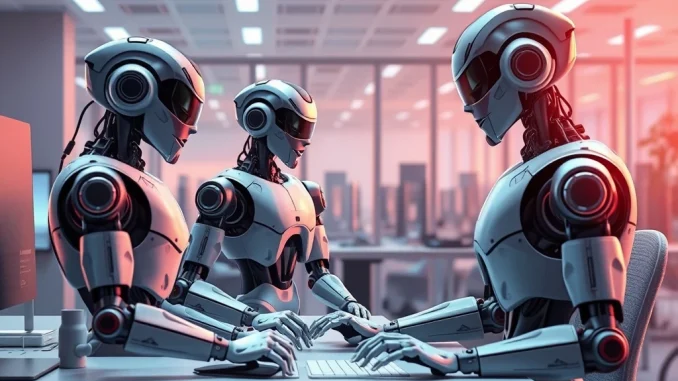
Generative AI is transforming industries at an unprecedented pace, and a new Microsoft study has identified the 40 jobs most exposed to its impact. From writers to customer service reps, discover which roles are at risk and how professionals can adapt.
How Generative AI Impact Is Reshaping the Workforce
Microsoft researchers analyzed occupations where AI can assist or replace tasks, focusing on knowledge-based roles. Here are the key findings:
- Translators, historians, and writers top the list due to AI’s language capabilities.
- Customer service and sales roles (5 million U.S. jobs) are highly exposed.
- Higher education doesn’t guarantee protection—many degree-required jobs face AI integration.
AI Jobs: Which Roles Are Safe?
Not all professions are equally vulnerable. Hands-on jobs like dredge operators and water treatment plant workers remain low-risk. Healthcare roles, especially those requiring human interaction, are also growing despite AI advancements.
Microsoft AI Study: Key Takeaways
| High-Risk Jobs | Low-Risk Jobs |
|---|---|
| Translators | Dredge operators |
| Journalists | Healthcare aides |
| Customer service reps | Construction workers |
Preparing for AI Workforce Disruption
Nvidia CEO Jensen Huang warns: “You’re not going to lose your job to AI, but to someone using AI.” Professionals should:
- Learn AI tools relevant to their field
- Focus on skills AI can’t replicate (creativity, emotional intelligence)
- Stay informed about industry changes
Frequently Asked Questions
Which jobs are most at risk from generative AI?
Roles involving writing, research, and repetitive information tasks (translators, customer service, journalists) face the highest exposure.
Will AI completely replace these jobs?
Microsoft researchers emphasize AI will likely reshape rather than replace most jobs, augmenting human work rather than eliminating it entirely.
How can I future-proof my career against AI?
Develop skills in areas where humans outperform AI: complex problem-solving, emotional intelligence, and creative thinking.
Are there industries growing despite AI?
Yes, healthcare and personal care services are expanding, as are trades requiring physical skills and human interaction.