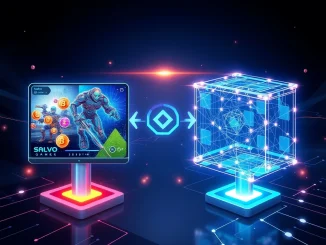
SINGAPORE, March 15, 2026 — In a move signaling consolidation within the blockchain gaming sector, METYA has announced a strategic partnership with Kult Games to significantly expand its Web3 gaming ecosystem. The collaboration, formalized today, directly targets the growing demand for games that blend deep community engagement with tangible, player-owned progression systems. This METYA Kult Games Web3 gaming partnership reflects a pivotal industry shift away from speculative asset models and toward sustainable, gameplay-first experiences anchored in decentralized technology.
Anatomy of the METYA and Kult Games Strategic Alliance
The partnership centers on integrating Kult Games’ development expertise with METYA’s established platform for community-led activation. According to the joint announcement, the initial phase will involve porting two of Kult’s flagship narrative-driven RPG titles onto METYA’s infrastructure. Consequently, these games will incorporate non-fungible token (NFT) based item ownership and a decentralized governance model for in-game economies. A key architect of the deal, METYA’s Head of Ecosystem Growth, Anya Sharma, stated the goal is to “create worlds where player investment translates directly into creative influence and economic participation.” This approach mirrors a 2025 DappRadar report which found that games with robust governance mechanisms retained users 40% longer than those focused solely on asset trading.
The technical integration will leverage METYA’s recently launched “Nexus” protocol, designed to reduce gas fees for in-game transactions by an average of 70%. Kult Games, known for its mobile-first strategy, brings an audience of over 2.5 million registered users, a significant portion of which has not previously engaged with Web3 elements. The timeline projects a soft launch of the first integrated title, “Chronicles of the Echoing Realm,” by Q4 2026, with full ecosystem features live by Q1 2027.
Impact on the Evolving Web3 Gaming Landscape
This collaboration arrives at a critical juncture for blockchain gaming. Following the market corrections of 2023-2024, the sector has pivoted toward building lasting utility and player retention. The METYA-Kult deal exemplifies this new phase, prioritizing fun and community over pure financialization. The immediate impact is twofold: it validates the “platform-plus-studio” model for scaling Web3 ecosystems and provides a major studio with a clear pathway to tokenization without building blockchain expertise from scratch.
- Market Validation: The partnership signals to traditional gaming studios that established Web3 platforms offer viable, lower-risk entry points, potentially accelerating mainstream adoption.
- Player Experience Shift: By embedding progression mechanics directly into engaging gameplay, the model aims to reduce the perceived friction of wallet management and crypto transactions for new users.
- Economic Model Innovation: The focus shifts from speculative asset flips to rewarding time and skill investment, creating more stable in-game economies less prone to volatility.
Expert Analysis on the Partnership’s Significance
Dr. Leo Chen, a gaming economist at the Singapore University of Technology and Design, views the partnership as a natural evolution. “The initial ‘play-to-earn’ wave proved economically unstable,” Chen explained in a recent industry white paper. “What we see now with alliances like METYA and Kult is a maturation into ‘play-and-own.’ The value is derived from the enjoyment of the game and the verifiable ownership of digital items, not from daily token farming.” This perspective is echoed by data from Footprint Analytics, which shows a 215% year-over-year increase in unique active wallets interacting with game-focused decentralized applications (dApps) that emphasize crafting and exploration over simple yield generation.
Broader Context: The Web3 Gaming Consolidation Trend
The METYA-Kult Games deal is not an isolated event. It forms part of a wider consolidation trend within Web3 gaming, as platforms seek to aggregate high-quality content and studios seek scalable blockchain solutions. This mirrors the earlier consolidation in mobile gaming, where platform holders like Apple and Google partnered with major developers. The current Web3 landscape is becoming stratified between large ecosystem players, independent studios forging strategic alliances, and niche builders.
| Partnership (2025-2026) | Core Focus | Notable Feature |
|---|---|---|
| METYA & Kult Games | Community-led RPGs with progression mechanics | Mobile-first integration, low-fee protocol |
| Immutable & Polygon Labs (2025) | Scalability for AAA-style Web3 games | zkEVM compatibility for complex game logic |
| Gala Games & Ember Entertainment (2025) | Mid-core strategy and simulation games | Node-based distribution and governance |
What Happens Next: Roadmap and Industry Implications
The announced roadmap provides clear milestones. Following the integration of the first two titles, the partnership includes an option for Kult Games to develop a new IP exclusively for the METYA ecosystem, funded through a joint treasury. Furthermore, METYA has indicated plans to use this partnership as a template, potentially onboarding 3-4 additional studios with similar profiles by the end of 2027. The success metrics, according to internal documents, will prioritize daily active users, retention at 30 and 90 days, and the volume of peer-to-peer item trading over simple token price appreciation.
Initial Reactions from the Gaming Community
Early reactions from both traditional gaming forums and Web3-native communities have been cautiously optimistic. On platforms like ResetEra, skepticism remains regarding the implementation of NFT elements, with users emphasizing that gameplay quality must be paramount. Conversely, within METYA’s Discord channels, existing community members have expressed enthusiasm about the influx of new players and professionally developed content. Kult Games’ CEO, Marcus Thorne, addressed these concerns directly in a Reddit AMA, stating, “For our existing players, nothing about the core gameplay loop they love will change. We are simply adding layers of true ownership and community governance on top of a foundation of great gameplay.”
Conclusion
The strategic METYA Kult Games Web3 gaming partnership represents a decisive step toward the maturation of the blockchain gaming industry. By merging Kult’s development prowess and existing user base with METYA’s specialized ecosystem tools, the alliance focuses on sustainable growth through player engagement and owned progression. This move away from hyper-financialization toward enriched gameplay experiences could serve as a blueprint for future collaborations. As the first integrated titles launch later this year, the industry will watch closely to see if this model successfully bridges the gap between traditional gaming audiences and the promises of Web3, ultimately determining the next phase of growth for the entire sector.
Frequently Asked Questions
Q1: What is the primary goal of the METYA and Kult Games partnership?
The primary goal is to expand the Web3 gaming ecosystem by integrating Kult Games’ popular RPG titles into METYA’s platform, adding blockchain-based ownership and community governance features while maintaining a focus on high-quality, engaging gameplay.
Q2: How will this partnership affect existing Kult Games players?
Existing players will see no immediate change to the core gameplay of current titles. The Web3 features will be introduced as optional layers, allowing players to choose whether to engage with ownership and governance mechanics without disrupting the standard game experience.
Q3: What is the timeline for the first game launch from this collaboration?
The first integrated title, “Chronicles of the Echoing Realm,” is projected for a soft launch in Q4 2026, with a full release including all planned Web3 ecosystem features expected in Q1 2027.
Q4: Why is this partnership considered significant for the broader gaming industry?
It represents a model for traditional game studios to adopt Web3 technology through partnership rather than building costly in-house blockchain divisions, potentially lowering the barrier to entry and accelerating mainstream adoption of player-owned economies.
Q5: How does this deal reflect current trends in Web3 gaming?
It aligns with the industry’s post-2024 pivot towards “play-and-own” models that prioritize gameplay retention and sustainable in-game economies over speculative “play-to-earn” token farming, focusing on long-term utility.
Q6: What should investors and gamers watch for as this partnership develops?
Key indicators will be user retention rates, the volume of peer-to-peer item trading within the new games, and community participation in governance proposals, as these metrics will demonstrate the real-world success of the integrated model beyond mere token price movement.
Updated insights and analysis added for better clarity.
This article was produced with AI assistance and reviewed by our editorial team for accuracy and quality.