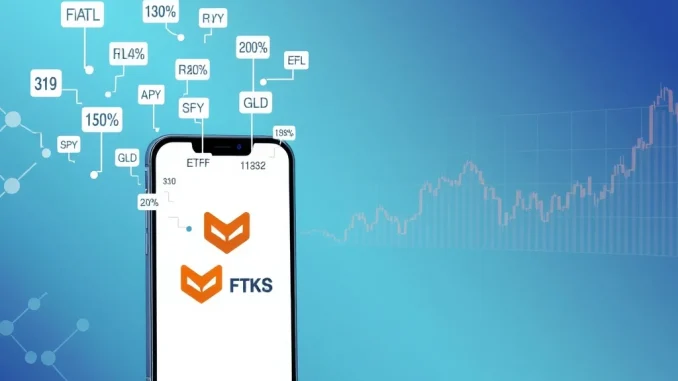
Global, May 2025: In a significant move that blurs the lines between traditional finance and decentralized ecosystems, Consensys has announced that its flagship product, the MetaMask wallet, now supports direct access to over 200 tokenized real-world assets. This groundbreaking MetaMask Ondo partnership integrates offerings from Ondo Finance, allowing users to trade tokenized US stocks, exchange-traded funds (ETFs), and commodities directly within their self-custodial wallet. The integration marks a pivotal evolution for MetaMask, transforming it from a primarily cryptocurrency-focused tool into a unified portal for a broad spectrum of digital assets.
Understanding the MetaMask and Ondo Finance Integration
The core of this development is the technical and strategic collaboration between MetaMask, the world’s most popular non-custodial Ethereum wallet, and Ondo Finance, a leading institution in the real-world asset (RWA) tokenization space. Ondo creates blockchain-based tokens that represent ownership in traditional financial instruments. These tokens, often built on compliant frameworks, are fully backed by the underlying assets held in regulated custodians. Through this new integration, MetaMask’s vast user base—estimated in the tens of millions—can now discover, hold, and transfer these tokenized assets as easily as they do Ethereum or ERC-20 tokens.
This functionality is not a simple listing. It represents a deep integration that leverages MetaMask’s Portfolio interface and Swap feature. Users can view their tokenized stock holdings alongside their crypto assets, creating a consolidated financial dashboard. The partnership emphasizes accessibility, removing previous barriers that required users to navigate separate platforms or centralized exchanges to access tokenized RWAs.
The Mechanics of Trading Tokenized Assets in Your Wallet
For the end-user, the process is designed for simplicity, mirroring familiar crypto interactions. A user connects their MetaMask wallet to the integrated interface. They can then browse the available tokenized assets, which include major offerings like:
- US Stocks: Shares in companies such as Tesla (TSLA), Apple (AAPL), and Microsoft (MSFT).
- ETFs: Broad market funds like the SPDR S&P 500 ETF (SPY) or the Invesco QQQ Trust (QQQ).
- Commodities: Tokens representing assets like gold (GLD) or treasury yields.
To acquire an asset, a user swaps a supported cryptocurrency, such as USDC or ETH, for the desired tokenized stock or ETF. The key operational detail is the trading window: while the transfer of these tokens on the blockchain can occur 24/7, the minting and redemption tied to the underlying traditional markets are bound to a 24/5 schedule, reflecting the operating hours of the New York Stock Exchange and NASDAQ. This hybrid model offers unprecedented flexibility for after-hours settlement and peer-to-peer transfer while maintaining a tether to real-world market mechanics.
Historical Context: The Long Road to Asset Tokenization
The concept of representing traditional securities on a blockchain is not new. The journey began with early experiments and regulatory challenges following the 2017 ICO boom. Projects like tZERO and platforms such as Polymath pioneered security token offerings (STOs). However, liquidity and mainstream accessibility remained significant hurdles. The 2021-2022 rise of DeFi (Decentralized Finance) provided the necessary infrastructure—decentralized exchanges, liquidity pools, and composable smart contracts—for tokenized assets to find a functional home.
Ondo Finance emerged in this latter wave, focusing on institutional-grade products and regulatory compliance. Their strategy involved partnering with registered investment advisers and using established legal structures to ensure each token is a legitimate claim on an underlying asset. The MetaMask integration represents the culmination of this years-long trend, moving tokenized RWAs from niche institutional products to the fingertips of retail crypto users.
Implications for Self-Custody and Portfolio Management
The most profound consequence of this partnership is the advancement of true self-sovereign finance. For the first time, an individual can hold a diversified portfolio of cryptocurrencies, blue-chip stocks, and index funds entirely in their own custody, secured by their private keys. This eliminates counterparty risk associated with centralized crypto exchanges and traditional brokerages, where assets are technically held in the institution’s name.
This shift has several practical implications:
- Unified Control: Users manage all assets from a single interface with one set of security practices (seed phrase protection).
- Borderless Transfer: Tokenized stocks can be sent to any Ethereum wallet address globally, instantly, potentially revolutionizing peer-to-peer securities lending or gifting.
- Composability Potential: In the future, these tokenized assets could be used as collateral in DeFi lending protocols, unlocking liquidity from traditional stock portfolios without needing to sell the underlying position.
However, this new model also places greater responsibility on the user. They become their own custodian for these valuable assets, requiring a heightened understanding of private key security, blockchain transaction fees (gas), and the regulatory landscape of their jurisdiction.
Regulatory Landscape and Future Challenges
The integration operates within a complex and evolving global regulatory framework. Ondo Finance structures its products to comply with U.S. securities regulations, primarily under exemptions that limit ownership to accredited investors in certain jurisdictions. MetaMask, as a non-custodial software interface, acts as a gateway rather than a seller or custodian of the securities.
This distinction is critical for compliance. The partnership likely includes geographic access controls and investor accreditation checks through integrated know-your-customer (KYC) processes managed by Ondo or its partners. The success and expansion of this model will heavily depend on continued dialogue with regulators like the U.S. Securities and Exchange Commission (SEC) and global counterparts, who are actively shaping policies for digital asset securities.
The future trajectory may see an expansion of supported asset classes, integration with more DeFi protocols, and potentially, the tokenization of more complex financial products. The long-term vision is a fully interoperable financial system where the boundaries between stock, bond, and crypto markets are defined by asset characteristics, not by the legacy platforms that trade them.
Conclusion
The MetaMask Ondo partnership is far more than a simple feature addition. It is a landmark event in the convergence of traditional and decentralized finance. By bringing tokenized ETFs and stocks directly into the leading self-custody wallet, it empowers users with unprecedented control over a unified asset portfolio. This move accelerates the trend toward a more open, accessible, and composable global financial system, built on the foundational principles of blockchain technology. While regulatory navigation and user education remain key challenges, this integration provides a compelling, practical glimpse into the future of digital ownership and investment.
FAQs
Q1: What exactly are tokenized stocks and ETFs?
Tokenized stocks and ETFs are digital tokens on a blockchain that represent legal ownership of a share of the underlying traditional security. They are created by a regulated entity that holds the actual stock or ETF shares in custody, issuing a corresponding number of tokens on the blockchain.
Q2: Can anyone with a MetaMask wallet buy these tokenized assets?
Not necessarily. Due to securities regulations, access is often restricted based on the user’s geographic location and investor accreditation status. The integration will include compliance checks to ensure only eligible users in permitted jurisdictions can participate.
Q3: How does the 24/5 trading work with 24/7 transfers?
You can initiate a swap for a tokenized asset at any time, but the creation (minting) or dissolution (redemption) of the token against the real-world asset only processes during traditional market hours (24/5). Once you own the token, however, you can transfer it to another wallet 24/7 on the blockchain.
Q4: Are my tokenized stocks as safe as my crypto in MetaMask?
They share the same self-custody security model. Their safety depends entirely on you safeguarding your wallet’s seed phrase and private keys. The additional layer is the regulatory and custodial backing of the token itself by Ondo Finance and its partners.
Q5: What are the main benefits of holding tokenized assets in MetaMask vs. a traditional brokerage?
The primary benefits are self-custody (you control the assets directly), the ability to transfer ownership peer-to-peer instantly, potential future use in DeFi applications, and a unified view of your crypto and traditional holdings in one interface.
This article was produced with AI assistance and reviewed by our editorial team for accuracy and quality.