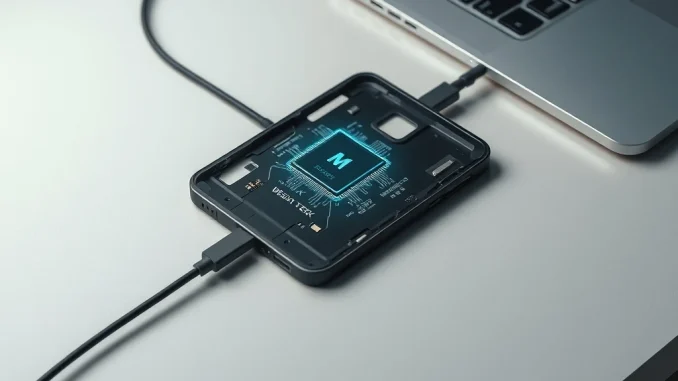
January 5, 2026 — Taipei, Taiwan. Semiconductor giant MediaTek has urgently patched a critical security vulnerability in its smartphone chipsets that enabled attackers to steal cryptocurrency wallet seed phrases in just 45 seconds using only a USB cable. The flaw, discovered by Ledger’s elite white-hat security team Donjon, exploited a weakness in MediaTek’s secure boot chain—a fundamental hardware security mechanism. Consequently, this vulnerability potentially exposed sensitive data on millions of Android devices worldwide before the patch was issued. Users who have not installed the latest January 2026 security updates are strongly advised to do so immediately.
MediaTek Secure Boot Chain Vulnerability Exposed
Ledger’s Donjon team identified the flaw within MediaTek’s secure boot chain, a hardware-level security feature designed to ensure a device boots only with authorized, verified software. Specifically, the vulnerability allowed an attacker with physical access to bypass these protections entirely. Charles Guillemet, Ledger’s Chief Technology Officer, explained the severity to Cointelegraph. “An attacker could connect an affected Android phone to a computer via USB,” he stated. “Without ever booting into the Android operating system, they could then extract PINs, decrypt storage, and recover seed phrases from popular software wallets.” The team demonstrated this attack on a Nothing CMF Phone 1, compromising the device’s core security in approximately 45 seconds.
MediaTek, a leading supplier for devices across brands like Xiaomi, Oppo, and Realme, developed the patch in coordination with Ledger and released it on January 5. However, the patch’s effectiveness depends entirely on end-users installing the latest security updates provided by their device manufacturers. This process often involves significant delays as OEMs test and roll out firmware updates to their specific device models.
Widespread Impact on Android Ecosystem and Crypto Users
The vulnerability’s reach is substantial due to MediaTek’s significant market share in the mid-range and budget smartphone segments. Industry analysts estimate that around 25% of all Android phones globally use the combination of MediaTek processors and the Trustonic Trusted Execution Environment (TEE) that this exploit targeted. With nearly 36 million people reportedly managing digital assets on their mobile devices as of early 2025, even a single, widely-exploitable flaw represents a systemic risk to a significant portion of the crypto-holding public.
- Direct Seed Phrase Extraction: The exploit automatically recovered seed phrases from major software wallets including Trust Wallet, Base, Kraken Wallet, Rabby, Tangem’s Mobile Wallet, and Phantom without user interaction.
- Bypass of All Software Defenses: Because the attack occurs before the operating system loads, software-based security apps, biometric locks, and on-device encryption become ineffective.
- Physical Access Requirement: While requiring physical access to the device is a limiting factor, it highlights risks from theft, repair scams, or border security scenarios where devices are temporarily confiscated.
Expert Analysis from Ledger’s Security Team
Ledger’s researchers have consistently warned about the architectural limitations of general-purpose mobile chips for securing cryptographic secrets. In a statement following the disclosure, Guillemet reinforced this view. “Smartphones aren’t built for security first,” he posted on social media platform X. “Even when powered off, user data—including pins & seeds—can be extracted in under a minute.” He contrasted this with dedicated Secure Element chips, like those used in Ledger’s hardware wallets. “A dedicated Secure Element isolates secrets from the rest of the system, protecting them even under physical attack,” Guillemet explained. This research underscores a ongoing debate in cybersecurity: the trade-off between convenience on general-purpose devices and the robust, isolated security of specialized hardware.
Broader Context of Mobile Hardware Security Flaws
This incident is not isolated. It follows a pattern of discovered vulnerabilities in the hardware trust anchors of mobile devices. In December 2025, Ledger revealed it had tested a similar attack on the MediaTek Dimensity 7300 chipset, gaining “full and absolute control over the smartphone, with no security barrier left standing.” These revelations point to a deeper, industry-wide challenge. Mobile System-on-Chip (SoC) manufacturers like MediaTek, Qualcomm, and Samsung design for performance, power efficiency, and cost. Security, while increasingly important, often becomes a complex layer added to a fundamentally open architecture, unlike the purpose-built, locked-down design of a hardware security module (HSM) or Secure Element.
| Security Component | General-Purpose Mobile SoC (e.g., MediaTek) | Dedicated Secure Element (e.g., in Hardware Wallet) |
|---|---|---|
| Primary Design Goal | Performance, Versatility, Cost | Key Protection & Isolation |
| Attack Surface | Large (OS, apps, drivers, firmware) | Extremely Small (dedicated functions only) |
| Physical Attack Resistance | Limited | High (tamper-detection, obfuscation) |
| Example Vulnerability | Secure Boot Bypass | Extremely Rare; requires advanced lab attacks |
What Happens Next: Patching, Awareness, and Architectural Shifts
The immediate path forward involves a massive and fragmented patching effort across the Android ecosystem. MediaTek has provided the fix to its OEM partners, but the rollout speed depends on each phone manufacturer. Users of affected devices must proactively check for and install system updates. Furthermore, Ledger and other security advocates will likely use this case to push for greater adoption of hardware-backed security standards, like Google’s Android StrongBox Keymaster, which aims to leverage dedicated hardware within the SoC for key storage. However, as this flaw shows, the implementation of these standards is only as strong as the underlying hardware security architecture.
Industry and Community Response
The disclosure has sparked renewed discussion within the cryptocurrency and infosec communities. Many experts are reiterating the long-standing security principle: mobile phones should not be considered secure vaults for high-value cryptographic keys. Instead, they should be viewed as convenient interfaces, with the actual private keys stored offline in hardware wallets or other secure, dedicated devices. The incident also puts pressure on smartphone makers to be more transparent about their security architecture and update timelines, especially for devices marketed with features like “crypto wallet security” or “blockchain keystore.”
Conclusion
The patched MediaTek vulnerability serves as a critical reminder of the inherent security limitations in general-purpose consumer hardware. While the immediate threat is mitigated for updated devices, the underlying architectural tension remains. For cryptocurrency users, the key takeaway is unambiguous: seed phrases for substantial assets belong on purpose-built, air-gapped hardware wallets, not on smartphones—regardless of the brand or security claims. This event will likely accelerate two trends: more rigorous third-party security auditing of mobile chipsets and increased consumer demand for transparent, timely security updates from device manufacturers. The race between hardware exploit developers and defenders continues, but this episode clearly highlights where the defensive weaknesses often lie.
Frequently Asked Questions
Q1: Which phones are affected by the MediaTek vulnerability?
Phones using MediaTek chipsets with the Trustonic Trusted Execution Environment (TEE) are potentially affected. This includes many devices from brands like Xiaomi, Realme, Oppo, and others in the mid-range market. The specific Nothing CMF Phone 1 was used in the demonstration. Users should check their device model and chipset and install all available security updates.
Q2: How can I protect my crypto assets if I use a software wallet on my phone?
For significant holdings, transfer assets to a wallet whose seed phrase is generated and stored on a dedicated hardware wallet, not on your smartphone. Use your phone’s software wallet only for small, daily-use amounts. Always install security updates immediately and use strong device PINs/passwords, though these are ineffective against this specific hardware-level exploit.
Q3: Has this vulnerability been actively exploited in the wild?
Ledger’s Donjon team discovered and responsibly disclosed the flaw to MediaTek. There is no public evidence of widespread exploitation before the patch was issued on January 5, 2026. However, the nature of such vulnerabilities means it is impossible to guarantee they were not discovered and used by malicious actors prior to disclosure.
Q4: What is a secure boot chain, and why is it important?
The secure boot chain is a series of hardware and firmware checks that happen when a device powers on. Each stage verifies the integrity and cryptographic signature of the next stage before loading it. This prevents unauthorized or tampered software from running. A flaw in this chain, like the one MediaTek patched, can allow an attacker to bypass all subsequent software security.
Q5: Does this affect iPhones or phones with Qualcomm chips?
This specific flaw is in certain MediaTek chipsets. However, the broader architectural challenge applies to all general-purpose mobile processors. iPhones use Apple’s custom chips with a different security architecture (the Secure Enclave), which is also subject to research and occasional vulnerabilities, though historically robust. Qualcomm chips have faced their own published vulnerabilities in the past.
Q6: I haven’t received a security update yet. What should I do?
First, manually check for updates in your phone’s Settings. If no update is available, contact your device manufacturer’s support for information on their update schedule for your model. As a precaution, avoid storing sensitive cryptographic keys or high-value wallet seed phrases on the device until you can confirm it is patched.