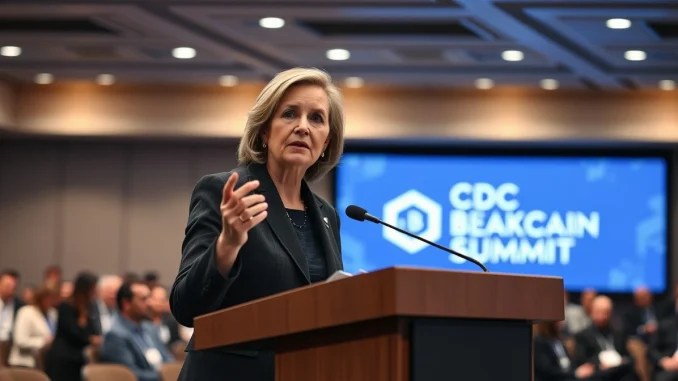
WASHINGTON D.C., March 19, 2026 — Senator Cynthia Lummis (R-WY) expressed significant optimism today regarding the long-awaited digital asset market structure bill, stating lawmakers are ‘so close’ to resolving key disputes that have stalled the legislation. Her comments came during a keynote address at the DC Blockchain Summit, where she outlined remaining hurdles and a potential timeline for congressional action.
Digital Asset Market Structure Bill Faces Final Hurdles
The proposed legislation, which aims to establish a comprehensive regulatory framework for cryptocurrencies and digital assets, passed the U.S. House of Representatives in July 2025. However, the bill has since encountered substantial delays in the Senate. Senator Lummis, a leading proponent, acknowledged unexpected challenges in 2025 and 2026 that prevented the anticipated ‘victory lap’ for the crypto industry.
According to legislative experts, the bill seeks to clarify jurisdictional boundaries between the Securities and Exchange Commission (SEC) and the Commodity Futures Trading Commission (CFTC). Furthermore, it intends to create clear definitions for digital assets, establish consumer protection standards, and provide regulatory certainty for businesses operating in the blockchain space. The lack of such clarity has been a persistent issue for the U.S. digital asset industry, often cited as a reason for innovation moving offshore.
Stablecoin Yield Emerges as Primary Sticking Point
Senator Lummis identified the debate over stablecoin yield and rewards as the central issue currently holding up the legislation. This complex topic involves determining how interest or returns generated from the reserves backing stablecoins should be treated under law, and whether their distribution constitutes a security.
‘The main thing that has held up the legislation was the fight over stablecoin yield and rewards between banking and crypto industry representatives,’ Lummis told summit attendees. She revealed that stakeholders have been working closely with the White House to forge a compromise. ‘We think we’ve got it,’ she added, suggesting a breakthrough may be imminent. A spokesperson for the senator later indicated a deal on this language could be reached ‘in the next few days.’
Committee Dynamics and Legislative Process
The bill’s path has been complicated by its division between two powerful Senate committees. The Senate Agriculture Committee, which oversees the CFTC, advanced its version of the legislation in January 2026. Conversely, the Senate Banking Committee, chaired by Senator Tim Scott (R-SC), indefinitely postponed a markup session that same month.
This bifurcation means the final bill must reconcile provisions from both committees before a full Senate vote can occur. Lummis stated that her colleagues are planning for an April markup session, following the congressional Easter recess. However, as of March 19, the Banking Committee had not officially rescheduled its session.
DeFi and Other Provisions Reportedly Resolved
In a positive development for the bill’s proponents, Senator Lummis stated that provisions related to decentralized finance (DeFi) have largely been settled. ‘We think we’ve got the DeFi issue put to bed,’ she announced. This suggests lawmakers have reached consensus on how to approach non-custodial, protocol-based financial services within the regulatory framework.
Other contentious topics include:
- Tokenized Equities: Regulating digital representations of traditional securities.
- Ethics Language: Addressing concerns about elected officials potentially profiting from crypto investments.
- Money Transmitter Definitions: Clarifying which entities fall under existing money transmission laws.
- Security vs. Commodity Classification: The perennial question of how to definitively categorize various digital assets.
The White House has hosted at least three meetings in 2026 with both crypto and banking industry representatives in an effort to broker agreements on these points and move the legislation forward.
The 2026 Election Clock and Legislative Urgency
A significant external pressure on the bill’s timeline is the upcoming November 2026 midterm elections. All 435 House seats and 33 Senate seats will be contested, potentially altering the balance of power in Congress come January 2027. This political reality creates a narrow window for passing complex legislation.
‘This may be our only chance to get market structure done,’ Lummis warned in a social media post on March 18, emphasizing the current White House’s support for the bill. Senator Bernie Moreno (R-OH) echoed this urgency at the summit, stating, ‘If we don’t get the CLARITY Act passed by May, digital asset legislation will not pass for the foreseeable future.’
Senator Lummis, who announced in December 2025 that she will not seek re-election, is pushing for a resolution within this congressional session. Senator Tim Scott indicated he expects to present a proposal on the stablecoin yield issue before the end of this week.
Conclusion
The digital asset market structure bill stands at a critical juncture. While significant progress has been made on complex issues like DeFi, the final hurdle of stablecoin yield regulation remains. With key senators expressing optimism and a defined political deadline looming, the coming weeks will determine whether the United States enacts a foundational regulatory framework for its digital asset industry. The outcome will have profound implications for financial innovation, consumer protection, and the country’s competitive position in the global blockchain ecosystem.
FAQs
Q1: What is the digital asset market structure bill?
The bill is proposed U.S. legislation designed to create a comprehensive federal regulatory framework for cryptocurrencies and other digital assets. It aims to clarify which agencies have jurisdiction, define different types of digital assets, and establish rules for trading, custody, and consumer protection.
Q2: Why is stablecoin yield such a contentious issue?
Stablecoin yield refers to interest or returns generated from the reserves (like Treasury bills) that back stablecoins. The debate centers on whether distributing this yield to stablecoin holders constitutes an investment contract or security, which would trigger strict SEC regulations, or if it falls under a different regulatory category.
Q3: What did Senator Lummis mean by having the DeFi issue ‘put to bed’?
This statement suggests that lawmakers negotiating the bill have reached a workable compromise on how to regulate decentralized finance protocols. This likely involves creating definitions and rules that address the unique, non-custodial nature of DeFi without applying traditional financial regulations meant for centralized intermediaries.
Q4: How do the 2026 elections affect the bill’s chances?
The midterm elections could change the majority party in one or both chambers of Congress. If the bill is not passed before the new Congress convenes in January 2027, the entire legislative process would likely need to restart from the beginning, causing significant delay or outright failure.
Q5: Which Senate committees are handling this bill?
The legislation is split between the Senate Banking Committee, which handles securities-related aspects, and the Senate Agriculture Committee, which oversees the Commodity Futures Trading Commission (CFTC). Both committees must agree on a combined version before the full Senate can vote.
Updated insights and analysis added for better clarity.
This article was produced with AI assistance and reviewed by our editorial team for accuracy and quality.