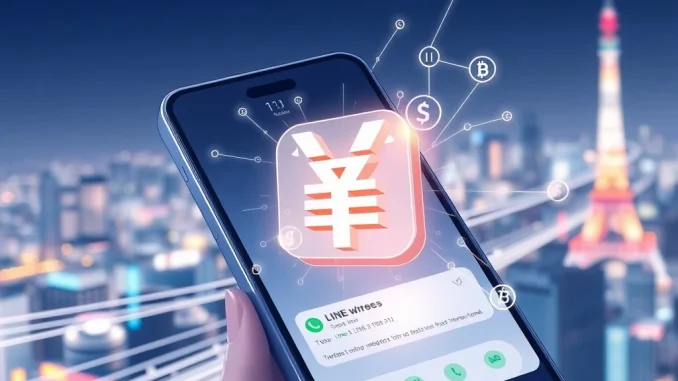
In a significant development for Japan’s digital finance landscape, LINE NEXT has announced a strategic partnership with JPYC Inc. to integrate the Japanese yen-pegged stablecoin, JPYC, directly into its forthcoming LINE Messenger wallet. This move, reported by Newsis, signals a major step toward mainstream cryptocurrency adoption by combining a ubiquitous messaging platform with regulated digital currency. Consequently, millions of users could soon access yen-based digital payments within their daily communication app.
LINE Messenger Stablecoin Partnership: Details and Immediate Impact
LINE NEXT, the blockchain and digital asset-focused subsidiary of the LINE conglomerate, formalized its collaboration with JPYC Inc. through a memorandum of understanding (MOU). The core objective involves introducing the JPYC stablecoin to a new, dedicated stablecoin wallet built on the LINE Messenger platform. This partnership will not only facilitate wallet integration but also explore enhanced payment functionalities and user reward mechanisms. Therefore, the initiative directly targets improving user experience and financial utility within the app’s ecosystem.
The timing of this announcement is crucial, aligning with broader regulatory shifts in Japan. For instance, the country’s Payment Services Act amendments, which took effect in 2023, established a clear legal framework for stablecoins as digital money. JPYC operates as a legally recognized, yen-backed stablecoin under these regulations, with each token redeemable for one Japanese yen held in trust. This regulatory clarity provides a foundation of trust that is essential for mass adoption.
Understanding the JPYC Stablecoin and Its Market Role
JPYC Inc. issued Japan’s first yen-pegged stablecoin compliant with the nation’s fund settlement laws. Unlike algorithmic or crypto-collateralized stablecoins, JPYC maintains a 1:1 reserve with Japanese yen held in segregated bank accounts. Regular audits ensure full transparency and backing. The stablecoin primarily operates on the Ethereum blockchain, enabling fast and low-cost transactions compared to traditional bank transfers.
The potential impact of this integration is substantial. LINE Messenger boasts over 96 million monthly active users in Japan alone, representing a massive built-in audience. Introducing a familiar, yen-denominated digital asset lowers the entry barrier for cryptocurrency. Users can potentially send money to friends, pay for services, or earn rewards without confronting the volatility typically associated with assets like Bitcoin or Ethereum.
Expert Analysis on the Fintech Convergence
Industry observers note this partnership exemplifies the “super app” model converging with fintech. “Integrating a regulated stablecoin into a dominant social platform is a logical evolution,” explains a fintech analyst from the Nomura Research Institute. “It addresses key friction points in digital payments: currency stability, regulatory safety, and user convenience. The real innovation lies in embedding financial infrastructure into a social graph, which could accelerate peer-to-peer (P2P) transactions and micro-payments.”
Furthermore, this development occurs within a competitive global context. Other messaging giants, like Telegram, have explored token integration with varying success. However, LINE’s approach, centered on a nationally regulated fiat-backed stablecoin, may offer a more stable and compliant pathway. The table below contrasts key aspects of this integration with other major platform attempts:
| Platform/Initiative | Asset Type | Primary Region | Regulatory Status |
|---|---|---|---|
| LINE Messenger (JPYC) | Fiat-Collateralized Stablecoin | Japan | Fully regulated under Japanese law |
| Telegram (TON, Grams) | Native Blockchain & Token | Global | Faced significant regulatory challenges |
| WeChat Pay / AliPay | Digital Fiat (CNY) Integration | China | Integrated with central bank digital currency trials |
The Strategic Vision Behind LINE NEXT’s Blockchain Push
LINE’s foray into blockchain is not a recent experiment. The company has systematically built its Web3 capabilities for years. Its subsidiary, LINE NEXT, oversees the LINK blockchain and the NFT platform DOSI. The planned stablecoin wallet represents a pragmatic extension of this strategy, focusing on utility rather than speculation. By prioritizing payments and rewards, LINE aims to create a closed-loop economy where users can:
- Transfer value instantly to other LINE users without bank details.
- Pay for digital goods and services within LINE’s ecosystem and partner merchants.
- Earn and redeem loyalty points or rewards in the form of JPYC, which holds tangible value.
This approach dovetails with Japan’s national digital transformation goals. The government has actively promoted cashless payments and digital innovation. A stablecoin integrated into a major platform could serve as a practical testbed for wider digital yen adoption, potentially informing the Bank of Japan’s ongoing Central Bank Digital Currency (CBDC) experiments.
Potential Challenges and Market Considerations
Despite the promising outlook, the initiative faces several hurdles. User education remains paramount; many must understand the distinction between JPYC in a self-custody wallet and regular yen in a linked bank account. Security is another critical concern. While blockchain offers inherent security features, the wallet’s design must protect users from phishing scams and key loss. Additionally, widespread merchant adoption is necessary for the payment functionality to realize its full potential beyond P2P transfers.
Market competition is also intensifying. Other Japanese financial institutions and tech firms are exploring their own stablecoin and digital asset services. LINE’s first-mover advantage with its vast user network is significant, but execution and user experience will ultimately determine success. The partnership must deliver a seamless, secure, and genuinely useful product to convert casual users into active participants.
Conclusion
The integration of the JPYC stablecoin into the LINE Messenger wallet marks a pivotal moment in Japan’s fintech evolution. This partnership bridges the gap between traditional finance, regulated digital assets, and everyday social communication. By leveraging a trusted messaging platform and a fully compliant Japanese yen stablecoin, the initiative has the potential to demystify cryptocurrency for millions and redefine digital payments. The success of this LINE Messenger stablecoin project will likely influence not only the domestic market but also global approaches to integrating social platforms with decentralized financial tools.
FAQs
Q1: What is JPYC?
JPYC is a Japanese yen-pegged stablecoin. It is a digital token that maintains a 1:1 value with the Japanese yen, backed by yen reserves held in regulated trust accounts. It operates primarily on the Ethereum blockchain.
Q2: How will the JPYC stablecoin be used in LINE Messenger?
LINE NEXT plans to introduce a dedicated stablecoin wallet within the LINE Messenger app. Users will likely be able to hold, send, receive, and potentially spend JPYC for peer-to-peer payments, merchant purchases, and reward programs directly within the messaging platform.
Q3: Is JPYC a regulated cryptocurrency?
Yes. JPYC operates in full compliance with Japan’s revised Payment Services Act. It is recognized as a legally compliant digital currency, distinguishing it from many other stablecoins globally by having explicit regulatory approval in its home jurisdiction.
Q4: When will the JPYC wallet launch on LINE Messenger?
The announcement is based on a memorandum of understanding (MOU). While specific launch dates were not provided in the initial Newsis report, such MOUs typically lead to development and testing phases. Further announcements from LINE NEXT and JPYC Inc. are expected to detail the timeline.
Q5: What are the benefits of using a stablecoin like JPYC over traditional bank transfers?
Potential benefits include faster transaction settlement (especially outside traditional banking hours), lower transfer fees for certain transactions, programmable functionality for rewards, and seamless integration with other blockchain-based services and applications.
Updated insights and analysis added for better clarity.
This article was produced with AI assistance and reviewed by our editorial team for accuracy and quality.