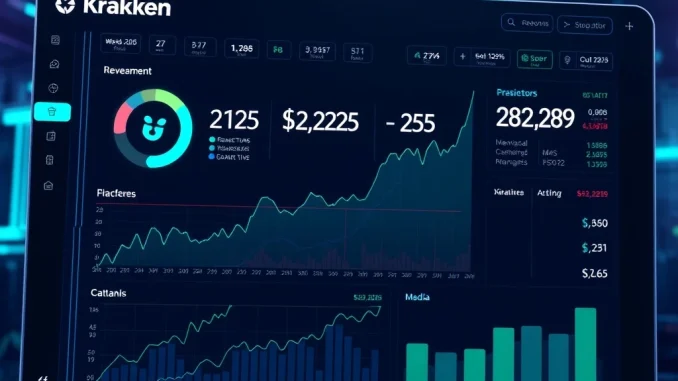
Kraken, one of the leading crypto exchanges, has reported an impressive 18% year-on-year revenue growth in Q2 2025, reaching $412 million. However, the journey wasn’t all smooth sailing—adjusted EBITDA dropped by 7%, highlighting the challenges of navigating a volatile market. Let’s dive into the details.
Kraken Q2 Revenue: A Closer Look at the Numbers
Kraken’s financial performance in Q2 2025 reveals a mix of growth and challenges. Here’s a breakdown of the key metrics:
- Revenue: $412 million (up 18% YoY)
- Adjusted EBITDA: $79.7 million (down 7% YoY)
- Total Exchange Volume: $186.8 billion (up 19% YoY)
- Assets on Platform: $43.2 billion (up 47% YoY)
While revenue and volumes grew, the decline in adjusted EBITDA underscores the pressure crypto exchanges face in maintaining profitability amid market turbulence.
How Did Market Uncertainty Impact Kraken’s Performance?
Kraken attributed an 11% quarterly drop in trading volumes to seasonal trends and macroeconomic uncertainty, including U.S. tariff concerns. The crypto exchange also noted a shift in trader behavior, with stable-fiat spot volumes rising from 43% to 68% of total volume. This suggests investors are leaning toward stability during volatile periods.
Kraken’s Strategic Expansions: What’s Next?
Kraken isn’t standing still. The exchange has been aggressively expanding its offerings:
- Launched commission-free equities trading in the U.S. (April 2025)
- Expanded crypto derivatives services in Europe (May 2025)
- Plans to roll out commission-free stock and ETF trading in the U.K., Europe, and Australia
- Wider access to tokenized equities across multiple jurisdictions
These moves aim to diversify revenue streams and attract a broader user base.
Can Kraken Balance Growth and Profitability?
The decline in adjusted EBITDA raises questions about Kraken’s ability to sustain profitability while expanding. The crypto exchange is reportedly raising $500 million at a $15 billion valuation ahead of a potential 2026 IPO. This capital injection could strengthen its position, but the broader crypto market’s regulatory and macroeconomic challenges remain a hurdle.
Conclusion: Kraken’s Resilience in a Turbulent Market
Kraken’s Q2 results highlight its resilience amid market uncertainty. While revenue growth is impressive, profitability remains a challenge. The exchange’s strategic expansions and upcoming IPO plans position it for long-term success—if it can navigate the volatile crypto landscape.
Frequently Asked Questions (FAQs)
1. Why did Kraken’s adjusted EBITDA drop despite revenue growth?
Increased operational costs, market volatility, and strategic investments likely contributed to the decline in profitability.
2. What drove Kraken’s revenue growth in Q2?
Higher trading volumes ($186.8 billion, up 19% YoY) and increased assets on the platform ($43.2 billion, up 47% YoY) were key drivers.
3. How is Kraken expanding its services?
Kraken is adding commission-free equities trading, expanding crypto derivatives in Europe, and planning to offer tokenized equities globally.
4. What’s next for Kraken?
The exchange is reportedly raising $500 million ahead of a potential 2026 IPO, signaling ambitious growth plans.
5. How did market uncertainty affect Kraken?
Trading volumes dipped 11% quarterly due to macroeconomic concerns, though stable-fiat trading surged as investors sought safer assets.