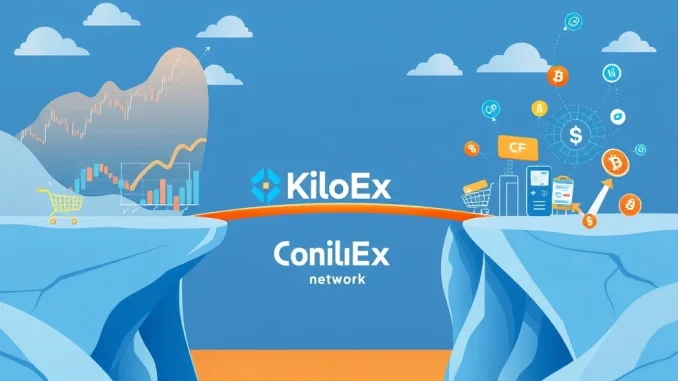
Singapore, April 2025: In a significant move to merge decentralized finance with tangible economic activity, the decentralized perpetual exchange protocol KiloEx has announced a strategic partnership with the high-performance blockchain Conflux Network. The collaboration aims to develop and deploy robust stablecoin-powered payment solutions, marking a pivotal step in expanding DeFi’s utility beyond speculative trading and into the realm of everyday transactions and real-world commerce.
KiloEx and Conflux Network Forge a Path for Stablecoin Payments
The partnership between KiloEx and Conflux Network represents a deliberate convergence of specialized expertise. KiloEx brings its deep experience in building user-centric DeFi trading infrastructure, known for its efficient perpetual swaps platform. Conflux Network contributes its scalable, secure, and regulatory-friendly blockchain architecture, which has seen growing adoption, particularly in Asian markets. The core objective is to leverage stablecoins—digital assets pegged to stable reserves like the US dollar—to create payment channels that are fast, low-cost, and globally accessible. This initiative directly addresses a persistent critique of the crypto sector: the gap between complex financial protocols and practical, daily-use applications. By focusing on payments, the alliance targets a fundamental pillar of the global economy.
Technical Architecture and the Role of Conflux Blockchain
The success of this venture hinges on the underlying technology. Conflux Network’s unique Tree-Graph consensus mechanism allows for high throughput and rapid transaction finality, which are non-negotiable requirements for a viable payment system. Unlike some networks that face congestion and high fees during peak usage, Conflux’s design aims to maintain performance scalability. For KiloEx, this provides a reliable settlement layer upon which to build its payment solutions. The technical roadmap likely involves creating smart contract frameworks that facilitate:
- Instant Settlement: Enabling merchants to receive stablecoin payments with confirmation times measured in seconds.
- Cross-Chain Interoperability: Developing bridges to allow users to move stablecoins from other major chains like Ethereum or BNB Chain onto Conflux for payment purposes.
- User Experience Wrappers: Building intuitive interfaces, possibly integrating with existing point-of-sale systems or digital wallets, to abstract away blockchain complexity for end-users.
This technical foundation is critical for moving from concept to a system capable of handling real-world transaction volumes.
The Evolving Landscape of DeFi and Real-World Assets
This partnership is not an isolated event but part of a broader industry trend often referred to as “DeFi 2.0” or “Institutional DeFi.” The initial phase of decentralized finance was dominated by lending, borrowing, and yield farming—activities largely contained within the crypto ecosystem. The current evolution focuses on connecting these digital liquidity pools to tangible assets and use cases. Stablecoins have emerged as the ideal bridge asset for this connection due to their price stability. Other projects are exploring tokenized real estate, commodities, and bonds. KiloEx and Conflux are targeting the most immediate and universal application: payments. This shift is driven by a recognition that for blockchain technology to achieve mass adoption, it must solve problems for businesses and consumers outside of crypto-native circles.
Implications for Merchants, Consumers, and Global Finance
The potential implications of functional, blockchain-based stablecoin payments are profound. For merchants, especially those engaged in cross-border e-commerce, the benefits could include dramatically lower processing fees compared to traditional credit card networks and the elimination of multi-day settlement waits. Chargeback fraud, a major cost center, could also be reduced due to the immutable nature of blockchain transactions. For consumers, it promises greater financial inclusion, particularly for the unbanked or underbanked populations who can access global commerce with just a smartphone and an internet connection. On a macro scale, efficient global payment rails could facilitate smoother international trade and remittances. However, the path forward is not without challenges, which the partnership must navigate.
Navigating Regulatory Compliance and Market Adoption
A key factor in the long-term viability of this project will be its approach to regulation. Payment systems are heavily regulated domains globally. Conflux Network’s established relationships and compliance-focused stance in regions like China could provide a strategic advantage in developing solutions that meet regulatory standards. The partners will need to engage with financial authorities to ensure their stablecoin payment frameworks comply with Anti-Money Laundering (AML) and Know Your Customer (KYC) regulations. Furthermore, market adoption requires more than just technology; it requires building trust and demonstrating clear superiority over existing options. Educational initiatives for merchants and seamless integration into popular e-commerce platforms will be crucial for moving from pilot programs to widespread use.
Conclusion
The partnership between KiloEx and Conflux Network to build stablecoin payment solutions is a concrete step toward maturing the decentralized finance ecosystem. By focusing on the practical utility of payments, the collaboration seeks to move blockchain technology from the periphery to the mainstream of economic activity. While technical hurdles and regulatory landscapes present significant challenges, the combined expertise in DeFi trading infrastructure and scalable blockchain architecture positions this initiative as one of the most watched developments in the 2025 crypto landscape. Its success or failure will serve as a key indicator of DeFi’s ability to transition from a niche financial experiment to a foundational component of global commerce.
FAQs
Q1: What is the main goal of the KiloEx and Conflux Network partnership?
The primary goal is to develop and deploy stablecoin-powered payment solutions that bridge the gap between decentralized finance (DeFi) trading and real-world commerce, enabling fast, low-cost transactions for everyday use.
Q2: Why is Conflux Network’s blockchain considered suitable for payment solutions?
Conflux Network utilizes a Tree-Graph consensus mechanism designed for high throughput and rapid transaction finality, which are essential technical requirements for a scalable and reliable payment system that can handle commercial volume.
Q3: How could stablecoin payments benefit online merchants?
Merchants could benefit from significantly lower processing fees compared to traditional payment gateways, faster settlement times (potentially instant), and reduced exposure to fraudulent chargebacks due to the immutable nature of blockchain transactions.
Q4: What is a key challenge facing this kind of blockchain payment initiative?
A major challenge is regulatory compliance. Payment systems are highly regulated, and the project must navigate global Anti-Money Laundering (AML) and Know Your Customer (KYC) requirements to achieve widespread legal adoption.
Q5: How does this partnership fit into the larger trend in the cryptocurrency industry?
It aligns with the “DeFi 2.0” trend, which focuses on connecting decentralized finance protocols with real-world assets and practical use cases, moving beyond speculative trading to provide tangible utility in the broader economy.
Updated insights and analysis added for better clarity.
This article was produced with AI assistance and reviewed by our editorial team for accuracy and quality.