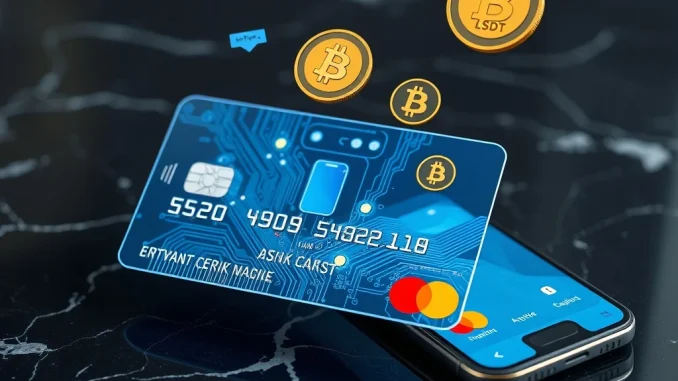
Hybrid Digital Asset Payment Technology: KB Kookmin Card Files Groundbreaking Patent for Seamless Crypto-Credit Integration
In a strategic move that could redefine everyday financial transactions, South Korea’s KB Kookmin Card has officially filed a patent application for a novel hybrid digital asset payment technology. This development, reported by Newsis in Seoul, South Korea, on April 10, 2025, represents a significant step toward mainstream cryptocurrency adoption by leveraging existing card infrastructure. The proposed system ingeniously links a user’s blockchain-based e-wallet to their current credit card, eliminating the need for specialized hardware and creating a frictionless bridge between digital and fiat currencies.
Decoding the Hybrid Digital Asset Payment Technology
KB Kookmin Card’s patent outlines a sophisticated yet user-friendly payment architecture. Fundamentally, the technology creates a dynamic link between a customer’s traditional credit card account and a designated blockchain e-wallet address. Consequently, a single physical or digital card can facilitate two distinct payment rails. The system employs intelligent transaction routing, prioritizing the user’s digital asset holdings for each purchase. This approach provides a practical solution for managing multiple forms of value within a unified interface.
The operational flow is deliberately straightforward for consumers. When a user makes a purchase, the payment gateway first checks the balance of stablecoins—digital currencies pegged to fiat values like the US dollar—within the linked e-wallet. If sufficient stablecoin funds exist, the transaction settles instantly on the blockchain. However, if the digital balance is insufficient, the system automatically defaults to processing the payment as a standard credit card transaction. This seamless failover mechanism ensures payment reliability while encouraging digital asset utilization.
The Technical Architecture and Consumer Benefits
The proposed system relies on several key technical components working in concert. First, a secure application programming interface (API) layer connects the bank’s legacy payment processing systems with blockchain networks. Second, real-time balance monitoring and conversion protocols manage the valuation between stablecoins and local fiat currency. Finally, robust security modules, likely involving multi-signature wallets and transaction signing, protect user funds. For consumers, the immediate benefits are multifold:
- No New Card Required: Users activate the feature through their banking app without waiting for a replacement card.
- Spending Flexibility: It enables the practical use of cryptocurrency holdings for daily expenses like groceries and bills.
- Automated Optimization: The system intelligently selects the optimal funding source for each transaction.
- Enhanced Financial Management: It provides a consolidated view of both traditional and digital asset spending.
The Strategic Context of Fintech Patent Filings
KB Kookmin Card’s patent filing occurs within a highly competitive global landscape. Major financial institutions and technology firms are aggressively pursuing intellectual property related to blockchain and digital asset integration. For instance, Visa and Mastercard have filed numerous patents concerning central bank digital currency (CBDC) settlement and blockchain interoperability. Similarly, traditional banks like JPMorgan Chase have developed their own tokenization platforms. This patent represents South Korea’s assertive entry into this strategic arena, aiming to secure a first-mover advantage in a key Asian market.
The timing of this filing is particularly noteworthy. Regulatory clarity around digital assets has been increasing in several jurisdictions, including South Korea’s updated Framework Act on Digital Assets. Furthermore, consumer adoption of cryptocurrencies for payments, while growing, still faces significant usability hurdles. KB Kookmin’s technology directly addresses this friction point by embedding crypto functionality into the world’s most familiar payment tool—the credit card. This strategy bypasses the consumer education barrier associated with standalone crypto wallets and decentralized applications.
Market Impact and Competitive Analysis
The introduction of a viable hybrid payment system could trigger substantial shifts in the financial services market. Primarily, it positions KB Kookmin Card as an innovator, potentially attracting tech-savvy customers. It also creates a new revenue stream through transaction fees on digital asset settlements. Competitively, this move pressures other card issuers and neobanks to accelerate their own crypto-integration roadmaps. The table below contrasts this hybrid approach with existing market solutions:
| Solution Type | Example Providers | User Requirement | Key Limitation |
|---|---|---|---|
| Dedicated Crypto Cards | Crypto.com, Coinbase Card | Separate card application & pre-loading | Isolated from primary banking relationship |
| Bank-Linked Crypto Accounts | Fidelity, Revolut | New brokerage or app-based account | Often functions as a separate investment product |
| KB Kookmin Hybrid Patent | KB Kookmin Card | Software activation on existing card | Pending patent approval and regulatory green light |
Regulatory Considerations and Implementation Timeline
Despite the innovative design, the path to commercial launch is intertwined with regulatory oversight. South Korea’s Financial Services Commission (FSC) and Financial Supervisory Service (FSS) will scrutinize the system for compliance with anti-money laundering (AML) and know-your-customer (KYC) regulations. Specifically, regulators will examine how the system handles the travel rule for cryptocurrency transactions and ensures stablecoin reserves are fully backed. The patent itself is a claim to the methodology, not an automatic license to operate.
Industry analysts project a multi-phase rollout if the patent is granted and regulatory approvals are secured. An initial pilot program with a limited user group would likely test security and usability. Subsequently, a broader launch would target existing KB Kookmin Card customers, leveraging the bank’s substantial user base. The full implementation timeline could span 18 to 36 months, depending on technical integration challenges and the evolving regulatory landscape for digital assets in South Korea and internationally.
Expert Perspectives on the Technology’s Potential
Financial technology analysts view this patent as a logical evolution in payment systems. “This represents the maturation of crypto payment infrastructure,” notes a fintech research director at S&P Global Market Intelligence. “Instead of forcing consumers into a parallel crypto economy, it brings digital assets into the existing financial workflow. The automatic fallback to credit is crucial—it removes the risk of a declined transaction, which has been a major pain point.” Another expert from the Bank for International Settlements (BIS) Innovation Hub highlighted the importance of using stablecoins as the bridging asset, noting their price stability makes them far more suitable for payments than volatile cryptocurrencies like Bitcoin.
Conclusion
KB Kookmin Card’s patent for hybrid digital asset payment technology marks a pivotal moment in the convergence of traditional finance and cryptocurrency. By proposing a system that seamlessly merges blockchain e-wallets with conventional credit card infrastructure, the company addresses critical barriers to crypto’s everyday use. This innovation promises enhanced consumer flexibility, positions the issuer at the forefront of fintech, and could accelerate the broader integration of digital assets into the global economy. While regulatory and technical hurdles remain, the patent filing itself signals a clear directional shift toward a more integrated and versatile future for payments.
FAQs
Q1: What is the core innovation of KB Kookmin Card’s hybrid payment patent?
The core innovation is a software-based system that dynamically links an existing credit card to a blockchain wallet, allowing a single payment instrument to draw funds from either stablecoins or a traditional credit line automatically.
Q2: Do users need to get a new credit card to use this feature?
No. According to the patent documentation, the technology is designed to work with a customer’s existing KB Kookmin credit card through a software activation process, requiring no new physical card.
Q3: Why does the system prioritize stablecoins over other cryptocurrencies?
Stablecoins are prioritized because their value is pegged to stable assets like the US dollar. This minimizes price volatility at the point of sale, making them predictable and practical for daily payments, unlike more volatile cryptocurrencies.
Q4: What happens if the merchant does not accept cryptocurrency?
The merchant’s acceptance is irrelevant at the point of sale. The transaction is initiated as a standard card payment. The hybrid technology determines the funding source (stablecoins or credit) on the backend, invisible to the merchant.
Q5: When might this technology become available to the public?
There is no official launch date. The technology is currently a patent application. Public availability depends on patent approval, successful regulatory review, and technical development, a process that typically takes several years.
Related News
- Why Regulators Are Struggling to Control Crypto-Driven No KYC Gambling
- Binance Alpha Unveils SatLayer (SLAY) Listing: A New Era for Early-Stage Crypto Projects
- Crypto Presale Analysis: DeepSnitch AI, Nexchain, and SUBBD Attract Scrutiny Amid Bitcoin ETF Turbulence
Related: GameFi Infrastructure Gets Major Boost as PlayZap Games Partners with GamePadCo
Related: Crypto SuperApp Secures $11.5M from Pantera to Bridge On-Chain Trading and Real-World Spending
Related: World Liberty's USD1 Stablecoin Survives Alleged Coordinated Market Attack