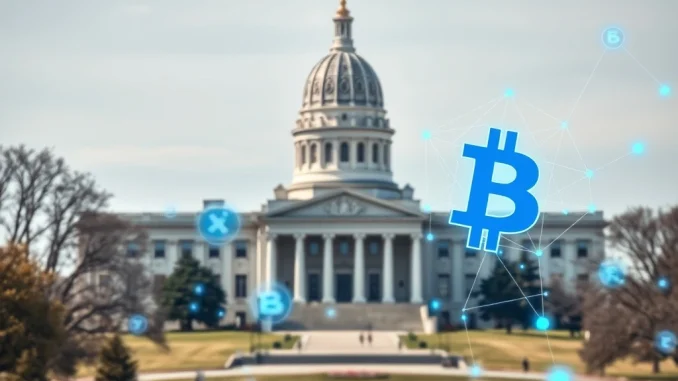
TOPEKA, Kansas – January 2025 marks a potential turning point in state-level cryptocurrency adoption as Kansas legislators introduce groundbreaking Senate Bill 352, proposing to establish the nation’s first public Bitcoin reserve funded entirely through abandoned digital assets rather than taxpayer dollars. This innovative approach to state treasury management represents a strategic shift in how governments might interact with cryptocurrency ecosystems while addressing the growing issue of unclaimed digital property.
Kansas Bitcoin Reserve: A Novel Approach to State Treasury Management
The proposed Kansas Bitcoin reserve operates on a fundamentally different principle than traditional state investments. Rather than allocating taxpayer funds to purchase cryptocurrency, the legislation creates mechanisms to collect and manage digital assets that have been abandoned by their original owners. This approach addresses several practical concerns simultaneously while positioning the state at the forefront of financial innovation.
State Treasurer Lynn Rogers, who would oversee the proposed reserve, explained the rationale during committee hearings. “We’re seeing increasing amounts of digital property that essentially becomes lost or abandoned,” Rogers testified. “This legislation provides a framework to responsibly manage these assets while potentially creating value for Kansas citizens without risking public funds.”
The bill establishes clear protocols for determining when digital assets qualify as abandoned, typically after a specified period of inactivity with no contact from the owner. These protocols mirror existing procedures for traditional unclaimed property while adapting them to the unique characteristics of blockchain-based assets.
SB 352 Bill Mechanics and Implementation Framework
Senate Bill 352 creates a comprehensive legal framework for managing abandoned digital assets through several key provisions. The legislation defines cryptocurrency within Kansas statutes, establishes custody requirements, and creates governance structures for the proposed reserve fund. These definitions provide necessary legal clarity for state agencies operating in the digital asset space.
The bill specifies that 10% of collected digital deposits must fund the state’s general operating budget, with Bitcoin receiving special treatment through separate accounting. This distinction recognizes Bitcoin’s unique position as both a potential store of value and the most established cryptocurrency. The legislation also authorizes investment of up to 10% of certain state funds in Bitcoin exchange-traded funds (ETFs), creating additional exposure pathways.
Implementation would involve multiple state agencies collaborating on technical and security requirements. The Kansas Office of Information Technology Services would establish secure storage protocols, while the Treasury Department would manage asset allocation decisions. Regular audits and reporting requirements ensure transparency throughout the process.
Comparative Analysis: Kansas vs. Other State Approaches
| State | Cryptocurrency Approach | Funding Source | Legal Status |
|---|---|---|---|
| Kansas | Public reserve from abandoned assets | Unclaimed property | Proposed legislation |
| Wyoming | Banking charter framework | Private investment | Implemented 2019 |
| Texas | Bitmining incentives | Private/Corporate | Implemented 2021 |
| Colorado | Tax payment acceptance | State revenue | Implemented 2022 |
Abandoned Digital Assets: Legal Precedents and Practical Considerations
The concept of managing abandoned property has deep roots in American law, with all states maintaining unclaimed property programs for traditional assets like bank accounts, stocks, and insurance proceeds. Kansas currently holds approximately $350 million in various unclaimed properties through its existing program. Extending this framework to digital assets represents a logical evolution, though it presents unique challenges.
Professor Michael Goldberg, a cryptocurrency law expert at the University of Kansas School of Law, notes several legal considerations. “The decentralized nature of cryptocurrency creates jurisdictional questions,” Goldberg explains. “However, states have clear authority over abandoned property within their borders, and digital wallets with connections to Kansas residents likely fall under this jurisdiction.”
Practical implementation requires addressing several technical issues:
- Identification protocols: Determining when digital assets qualify as abandoned
- Secure custody solutions: Protecting private keys and preventing unauthorized access
- Valuation methodologies: Establishing fair market value for reporting purposes
- Owner reclamation processes: Creating accessible pathways for legitimate owners to recover assets
The legislation proposes using multiple verification methods before declaring assets abandoned, including monitoring wallet activity, checking for associated email communications, and following established due diligence procedures. These safeguards aim to balance efficient asset management with property rights protection.
Strategic Implications for State Financial Management
The Kansas Bitcoin reserve proposal reflects broader trends in institutional cryptocurrency adoption while addressing specific state financial considerations. By potentially creating value from otherwise dormant assets, the approach offers several strategic advantages for state treasury management.
First, it provides exposure to cryptocurrency’s potential appreciation without direct budget allocations. This non-appropriation funding model reduces political resistance while allowing participation in digital asset markets. Second, the reserve could serve as a hedge against traditional market volatility, similar to how some institutions view gold reserves.
Third, successful implementation might attract cryptocurrency businesses and talent to Kansas, supporting economic development goals. The state has already positioned itself as technology-friendly through various initiatives, and this legislation would further that reputation. Finally, the program creates a framework for managing digital assets that will become increasingly relevant as cryptocurrency adoption continues.
Financial analysts note that even modest success could have meaningful impacts. “If Kansas collects just 0.1% of estimated abandoned cryptocurrency nationwide, we’re discussing potentially significant value,” observes treasury management consultant Sarah Chen. “The real question is whether the administrative costs justify the potential returns, which the legislation attempts to address through efficient protocols.”
Security and Custody: Critical Implementation Challenges
Secure management represents the most significant practical challenge for the proposed Bitcoin reserve. Unlike traditional assets held by financial institutions, cryptocurrency requires protecting private cryptographic keys from theft or loss. The legislation mandates several security measures based on institutional best practices.
These include mandatory multi-signature wallet configurations requiring multiple authorized parties for transactions, geographic distribution of key components to prevent single-point failures, and regular third-party security audits. The state would likely partner with established institutional custody providers while maintaining ultimate control over asset management decisions.
Insurance requirements present another consideration. While traditional assets benefit from FDIC insurance or similar protections, cryptocurrency insurance markets remain developing. The legislation authorizes appropriate insurance purchases while recognizing current market limitations. These practical considerations demonstrate the bill’s grounding in real-world implementation challenges rather than theoretical possibilities.
Potential National Impact and Legislative Precedent
Kansas Senate Bill 352 arrives during a period of increasing state-level cryptocurrency experimentation nationwide. Several states have implemented various digital asset initiatives, but the Kansas approach represents particular innovation in funding methodology. Success could inspire similar legislation elsewhere, while failure might slow state-level cryptocurrency adoption.
The legislation’s passage would establish several important precedents. First, it would create a model for integrating cryptocurrency into existing unclaimed property systems. Second, it would demonstrate that states can participate in digital asset markets without direct appropriation. Third, it would provide a regulatory framework that other jurisdictions might adapt.
National organizations are monitoring the legislation closely. The National Association of State Treasurers has established a cryptocurrency working group that will likely study the Kansas approach regardless of outcome. Similarly, the Uniform Law Commission, which develops model legislation for state adoption, has cryptocurrency projects that might incorporate elements of the Kansas framework.
Political dynamics also influence the legislation’s prospects. Bipartisan support has emerged around certain aspects, with Republicans generally supporting innovation and limited government intervention, while Democrats appreciate consumer protection elements and potential revenue generation. This unusual alignment improves passage prospects despite cryptocurrency’s sometimes controversial nature.
Conclusion
The proposed Kansas Bitcoin reserve represents a carefully considered approach to state-level cryptocurrency integration that balances innovation with practical governance. By utilizing abandoned digital assets rather than taxpayer funds, the legislation addresses common concerns about public cryptocurrency investment while creating potential value for Kansas residents. The SB 352 bill’s comprehensive framework covers legal definitions, security protocols, and governance structures necessary for successful implementation.
As cryptocurrency continues evolving from speculative investment to established asset class, states must develop appropriate management frameworks. Kansas positions itself at this development’s forefront through innovative legislation grounded in existing legal principles and practical considerations. Whether this specific proposal becomes law or inspires alternative approaches, it demonstrates serious engagement with digital assets’ growing role in modern finance.
FAQs
Q1: How would Kansas determine when cryptocurrency is abandoned?
Kansas would apply similar criteria used for traditional unclaimed property, typically after a specified period of wallet inactivity with no owner contact. The legislation establishes due diligence requirements including monitoring transactions and attempting owner notification before declaring assets abandoned.
Q2: What happens if the original owner claims their cryptocurrency after the state takes custody?
The legislation includes reclamation procedures allowing legitimate owners to recover their assets, similar to existing unclaimed property processes. Owners would need to provide appropriate proof of ownership following established verification protocols.
Q3: How would Kansas secure the cryptocurrency in its reserve?
The bill mandates institutional-grade security measures including multi-signature wallets, geographic key distribution, regular security audits, and appropriate insurance coverage. These protocols follow established best practices for institutional cryptocurrency custody.
Q4: Could other states implement similar programs if Kansas succeeds?
Yes, the legislation creates a potential model for other states. Many states have existing unclaimed property programs that could potentially expand to include digital assets following appropriate legal and technical adaptations.
Q5: What percentage of state funds could be invested in Bitcoin ETFs under this legislation?
The bill authorizes investment of up to 10% of certain state funds in Bitcoin exchange-traded funds, providing additional cryptocurrency exposure beyond the abandoned asset reserve. This provision recognizes Bitcoin ETFs as regulated investment vehicles suitable for institutional portfolios.