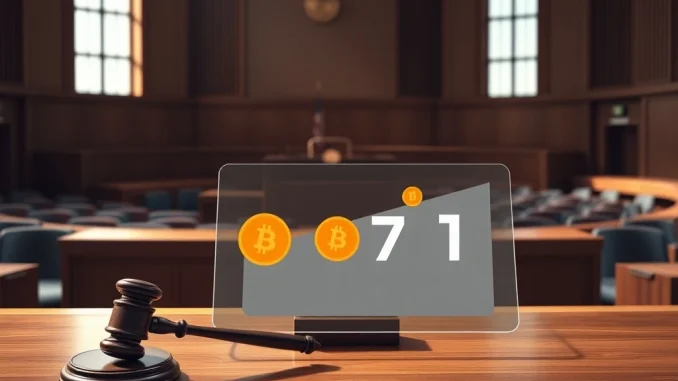
A federal judge in the Southern District of New York has frozen 70.6 Bitcoin, worth approximately $5 million, belonging to cryptocurrency firm BlockFills. Judge Mary Kay Vyskocil issued the emergency temporary restraining order on Tuesday, March 4, 2026, after investment company Dominion Capital filed a complaint alleging BlockFills misappropriated customer assets. The dramatic court action follows BlockFills’ decision three weeks earlier to halt all customer withdrawals, impacting about 2,000 institutional clients. This BlockFills Bitcoin frozen case represents one of the most significant crypto lending lawsuits of 2026, testing regulatory boundaries for institutional digital asset platforms.
Federal Court Freezes 71 Bitcoin in BlockFills Emergency Order
Judge Vyskocil’s temporary restraining order specifically targets 70.6 Bitcoin currently held by Chicago-based BlockFills. According to court documents filed February 27, Dominion Capital accused BlockFills of unlawfully retaining millions in customer cryptocurrency and commingling funds to cover trading losses. Consequently, the judge determined Dominion showed “immediate and irreparable injury” would occur without the emergency freeze. The TRO was granted without prior notice to BlockFills, a rare legal move reserved for situations where asset dissipation appears imminent.
BlockFills now faces a March 17, 2026 deadline to respond to the court order and provide a complete accounting of segregated customer funds. Meanwhile, the company’s annual report reveals it processed $60 billion in trading volume during 2025, serving professional traders, hedge funds, and asset managers with minimum $10 million thresholds for certain services. This scale makes the fund freeze particularly consequential for institutional crypto markets.
Customer Fund Misuse Allegations and Platform Withdrawal Halt
Dominion Capital’s complaint alleges systematic customer fund misuse spanning several months. The New York-based investment firm claims BlockFills used commingled client assets to cover proprietary trading losses, violating standard custodial agreements. These allegations emerged publicly after BlockFills announced a withdrawal halt on February 11, 2026, citing “broader crypto market correction” and Bitcoin’s decline to $60,000 as contributing factors.
- Institutional Client Impact: Approximately 2,000 professional clients cannot access funds, though they can still open and close existing positions.
- Platform Liquidity Crisis: BlockFills stated management was “working hand in hand with investors and clients” to restore platform liquidity.
- Market Timing Significance: The withdrawal freeze coincided with increased regulatory scrutiny of crypto lending practices following 2025’s legislative changes.
Legal Experts Analyze the BlockFills Case Precedents
Sarah Jenkins, a financial regulation attorney at Stanford Law School’s Digital Assets Project, notes the case follows established patterns. “We’ve seen similar allegations in traditional finance for decades,” Jenkins explained. “The novel element here involves proving custody chains for Bitcoin specifically.” She references the 2024 SEC v. Gemini Earn settlement as establishing relevant precedents for crypto lending platforms. Additionally, the Commodity Futures Trading Commission’s 2025 guidance on digital asset segregation provides regulatory context.
Broader Context of Crypto Lending Lawsuits and Regulation
The BlockFills case arrives during a pivotal regulatory transition. Indiana lawmakers recently passed a crypto rights bill banning discriminatory taxes, while multiple states consider updated digital asset frameworks. This lawsuit particularly tests how existing financial regulations apply to institutional-focused crypto platforms that traditionally operated in regulatory gray areas.
| Case | Year | Assets Involved | Status |
|---|---|---|---|
| SEC v. Gemini Earn | 2024 | $900 million crypto | Settled |
| CFTC v. Celsius Network | 2023 | $4.7 billion | Ongoing |
| Dominion v. BlockFills | 2026 | 71 Bitcoin ($5M) | TRO Granted |
What Happens Next in the BlockFills Legal Proceedings
The immediate timeline focuses on BlockFills’ March 17 response to the temporary restraining order. Legal observers anticipate the company will challenge the TRO’s scope while providing the ordered accounting. Subsequently, Judge Vyskocil will likely schedule an evidentiary hearing to determine whether to convert the temporary freeze into a preliminary injunction. This process typically examines the strength of Dominion’s evidence and the likelihood of success on the merits.
Industry and Client Reactions to the Fund Freeze
Institutional clients have expressed concern through industry channels while avoiding public statements. A managing partner at one affected hedge fund, speaking anonymously due to ongoing litigation, stated, “This validates our due diligence concerns about counterparty risk in crypto lending.” Meanwhile, competing platforms report increased inquiries about their custody arrangements. The Crypto Council for Innovation, an industry advocacy group, declined specific comment but reiterated its support for clear regulatory frameworks that protect consumers while fostering innovation.
Conclusion
The BlockFills Bitcoin frozen case represents a critical test for institutional cryptocurrency regulation. Judge Vyskocil’s emergency order highlights serious allegations of customer fund misuse that could reshape custody standards across digital asset platforms. With BlockFills facing a March 17 deadline and 2,000 institutional clients awaiting resolution, this lawsuit will likely influence both regulatory approaches and institutional adoption patterns. Observers should watch for the company’s formal response and any subsequent motions that might reveal the strength of Dominion Capital’s evidence. Ultimately, this case may establish important precedents for how traditional financial protections apply to Bitcoin and other digital assets held by institutional platforms.
Frequently Asked Questions
Q1: Why did the judge freeze 71 Bitcoin in the BlockFills case?
Judge Mary Kay Vyskocil issued a temporary restraining order freezing 70.6 Bitcoin after Dominion Capital presented evidence suggesting BlockFills might dissipate the assets. The judge determined Dominion would suffer “immediate and irreparable injury” without the emergency freeze.
Q2: How many clients are affected by the BlockFills withdrawal halt?
Approximately 2,000 institutional clients cannot withdraw funds, including asset managers and hedge funds. These clients represent the platform’s professional user base with minimum $10 million thresholds for certain services.
Q3: What is the timeline for the BlockFills lawsuit proceedings?
BlockFills must respond to the court order by March 17, 2026. After that response, Judge Vyskocil will likely schedule an evidentiary hearing to decide whether to convert the temporary freeze into a longer-term preliminary injunction.
Q4: How does this case compare to previous crypto lending lawsuits?
The BlockFills case involves similar customer protection issues as the SEC v. Gemini Earn settlement but focuses specifically on institutional clients rather than retail investors. The $5 million in frozen Bitcoin is smaller than previous cases but could establish important precedents.
Q5: What broader regulatory context surrounds this lawsuit?
The case arrives as multiple states update digital asset regulations, with Indiana recently passing a crypto rights bill. Federal agencies have also increased scrutiny of crypto lending practices following 2025’s legislative changes.
Q6: How does this affect institutional adoption of cryptocurrency platforms?
The lawsuit highlights counterparty risk concerns that institutional investors prioritize. Competing platforms report increased due diligence inquiries about custody arrangements and fund segregation practices following the BlockFills allegations.